Showing posts with label Books. Show all posts

Tuesday, March 12, 2013

TWO SPRING SEASONS


Not everyone gets to experience two Springs, but we enjoy a double Spring every year when we leave New Iberia in March during the time the azaleas, Japanese magnolia, and other purple flowering plants are blooming and return to The Mountain at Sewanee, Tennessee. There, daffodils have begun to show their white and yellow heads, forsythia, and tulip poplar aren’t long behind, and by late April, I’ve sharpened my trowel and begun “putting something in the ground,” as folks around here call the planting process.

This week we return to The Mountain, climbing from below sea level elevation in bayou country to 2,000 feet, and for a swamp dweller, it’s enough of a climb to warrant a few days of adaptation – from marsh and bayou to rocky plateau – from rich Cajun cuisine to mountain barbecue – from French accent to hill folk drawl – the diversity in culture is pronounced.

Fortunately, my writing rooms face woodsy views in both places, so my Muse has plenty of room to develop ideas, visions, novels, poetry, and, of course, blogs. My sojourn in New Iberia this year has included a lot of socializing, and I have some trepidation about leaving old friends because life on The Mountain is sometimes “austere,” as a good friend at Sewanee describes it. In a village of 2000, comprised of mostly college students, jaunts into neighboring states and places to get what we call “a shot of the city,” are frequently called for. However, I write more poetry and enjoy the contemplative aspects of mountain living, particularly since I’m an associate of the Order of St. Mary where the Benedictine routine of prayer and worship takes place daily.

This year during my sojourn in New Iberia, I finished writing a young adult novel, the third in a series about Martin Romero, the young traiteur who is the hero in lively stories about south Louisiana; namely Martin’s Quest and Martin Finds His Totem. Martin and the Last Tribe is set in Isle de Jean Charles where a remote Biloxi-Chitimacha tribe on the Gulf of Mexico struggles for survival despite the threat of being inundated by the sea because they aren’t included in a levee protection plan developed by the government.

When Martin’s Uncle Joe barricades himself in his cabin on the Island rather than move to higher ground, Martin goes down to perform an unwelcome healing and ends up in trouble. More trouble brews when an oil rig explodes in the Gulf, endangering the marshes and wildlife of Isle de Jean Charles. A storm threatens to flood the Island, and he finds himself with more adventure than he wants to handle…

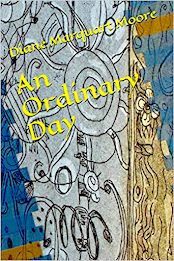
Martin and the Last Tribe was written for middle grade and young adult readers and should be released in May. The painting on the cover was rendered by my brother; the design by my grandson Martin. Those readers who saw the movie, Beasts of the Southern Wild may recognize the compelling setting. More about the book closer to publishing date. My desk is moving to higher ground!

Saturday, January 26, 2013

PROMPTING THE MUSE WITHIN…


At a recent poetry reading, “A Midwinter Night Poetry Reading” at A and E Gallery here in New Iberia, where I read alongside Julie Kane, Louisiana Poet Laureate and Lafayette poet Clare Martin, I met several new writers and editors who are promoting creative writing in the area. One of them, Jonathan Penton, is a poet and editor of “Unlikely Stories, Episode IV” an online literary journal and a coordinator of Acadiana Wordlab, “an uncensored weekly writing workshop” in Lafayette, Louisiana. I sat across from Jonathan at the dinner following the reading and was briefly introduced to the idea of Jonathan’s weekly literary drafting workshop in Lafayette.

I had no idea that I was being “auditioned,” for lack of a better word, but yesterday I received a message from Jonathan inviting me to be a February presenter at the Wordlab. The Lab requires no formal membership and serves as a space where people can gather every Saturday from 2 p.m. to 4 p.m. to work on their writing craft at Cite’ des Arts in Lafayette. It focuses on art as a writing prompt, but the prompts aren’t confined to literary art – visual artists, filmmakers, and musicians have contributed to the work of the Lab.

The relaxing component of the Acadiana Wordlab is that it’s a drafting workshop, rather than a critique workshop. A presenter features a work of art, a lecture on the craft, or a discussion of art and then asks participants to respond by writing for twenty minutes or more. After writing, the participants read their creations aloud, and if time permits, the presenter makes a second prompt, followed by more writing and reading aloud.

I understand the process because about fifteen years ago, I formed and coordinated a writing group called “The Reflections,” an adult education class at the Episcopal Church of the Epiphany in New Iberia, Louisiana. At meetings in the “Upper Room” of the parish hall, I’d present a short lecture on a spiritual book, request members of the group to respond for twenty minutes, then to read their “reflections.” The results were amazing – illuminating quick sketches that I called the “feminine face of God” – spontaneous, poignant, strong and nurturing responses written in the spirit of both pathos and humor, which reflected the essence of the female soul. As I wrote in the chapbook, Meditations of My Heart, that we later produced, “they educated my own heart and enriched my spiritual journey.” Other members of the group said that the experience engendered the same responses in them.

Four members of the Reflections group of twelve participants went on to become authors of books: Margaret Simon, author of the young adult book, Blessen; Dr. Victoria Sullivan, author of the speculative fiction, Adoption and of the nature guide, Why Water Plants Don’t Drown; Mary Wyche Estes, author of Mending of the Heart and of Bass Reeves, Deputy U.S. Marshal, 1875-1902; and Janet Faulk, author of Road Home, a collection of essays about growing up “southern.” One “Reflections “songstress has become an outstanding voice in the music group, “Blue Merlot,” and co-wrote, with Grammy Award winner “Bubba” Murrell, the lyrics and music for the recording “Women at the Well.” Folk artist Jean Wattigny continued her work as an artist of whimsical paintings for which she has gained regional recognition.

Here’s a passage I read from The School of Charity by Evelyn Underhill:”We too have our share in the creative process. We live and die within the workshop …accepted as pupils and partners with our first movement of generosity in action, prayer, or love…we, in our measure, are allowed to stand beside Him; making little things, contributing our action to His great action on life. So we must use the material of life faithfully, with a great sense of responsibility…”

And here’s Jean Wattigny’s response to that passage: “When we speak of creating, I think of the creative process as action – doing, not comparing. There is no creation without full emptiness – total immersion in the present moment. Looking back to see what should have been done and looking forward to see what we may have ahead of us makes us nothing in the Now. If we’re thinking too much about the painting when we’re mixing the colors, we’re ahead of the process – we’ll only have muddy colors. Creation is in the moment of doing and doing is God’s work, God’s way.”

I might add that my own writing catapulted ahead light years following this two-year experiment in prompting the Muse!

Cover drawing of Meditations of My Heart by Paul Schexnayder, renowned New Iberia artist.

Tuesday, December 25, 2012

CORNBREAD DRESSING AKA STUFFING

Nothing arouses an appetite so much as the smell of cornbread “dressing,” as we southerners call it, baking on Christmas Eve. On the day that the kitchen becomes the central room in the house, memories of my childhood Christmases spent in the old Victorian home of my grandmother Nell rise to my consciousness. I know it is Christmas, not by the scent of candles and evergreens, but by the mixed aroma of turkey fat and cornbread cooking!

Myriad recipes for dressing aka stuffing fill cookbooks: bread and oyster stuffing, bread with mushrooms stuffing, giblet stuffing, wild rice stuffing, sausage stuffing, chestnut stuffing…but no recipe can surpass the one for a good southern cornbread dressing, for which I have no written recipe. The ingredients and approximate measurements for dressing passed from my Grandmother Nell to my Mother Dorothy and then to me, and I think that most southern cooks probably don’t “go by” a recipe, they just put together a dollop of this, a dash of that, crumbling and pouring, mixing and baking to produce this quintessential dish that complements a baked turkey.

My good friend Janet, who was born and bred in southeast Alabama (the heart of red dirt country), talks about that cornbread dressing, as well as other southern delicacies in her charming book entitled Road Home, which emerged a few years ago from folders she had labeled, “Things to Think About.” The last chapter in the book is entitled “The Road Home,” and is a delightful chapter about holiday food, including a few sentences about having dinner with friends at Chapel Hill one Thanksgiving and being forced to partake of Mushrooms Berkeley as the main dish, a food swimming in what she calls a “dark, brooding sauce…”

In the chapter entitled “The Road Home” Janet tells about her grandmother’s famous cornbread dressing, which she explains had to be made in two different pans – one for cornbread dressing with onions and one without onions for the children and her adult uncle. “Food from this part of the country tends not to be highly seasoned; onions were the exotic seasoning in our kitchens, and you had to admit, even if you didn’t like the taste of onions, the smell was fabulous…” All of the food from the Christmas dinner was stored on the kitchen counter, covered with the oldest tablecloth on hand, and was left unrefrigerated until supper time, but Janet relates that no one ever became sick after a holiday or a Sunday meal. And, of course, everyone always took some of the remnants home with them.

The best part of the cornbread stuffing vignette in Road Home has to do with storage of leftover food. Janet writes: “My sister, who as an adult is a fastidious housekeeper, wins the prize for the most creative ‘to go’ storage container. One holiday when she was eight years old, unbeknownst to the rest of the family, Jennie left Granny’s house with cornbread dressing, sans the onions [thank goodness], wrapped in aluminum foil and tucked way down into the toe of a knee-high sock. Unmindful of her cargo, we returned home, and my sister took the sock directly to her room with her other belongings. Weeks later, when a peculiar odor caused my mother to track down the sock, which had found its way to a resting place under Jennie’s bed, she was the only one who could unequivocally identify the sock stuffing as cornbread dressing…”

I hope you “passed a good Christmas,” as the Cajuns say, and perhaps enjoyed a scoop of cornbread dressing aka stuffing.

Monday, October 29, 2012

WHY WATER PLANTS DON’T DROWN


My good friend, Victoria Sullivan, has written a book, Why Water Plants Don’t Drown, about aquatic and wetland plants, beautifully illustrated by Susan Elliott, artist, ecologist, and writer with Pinyon Publishing, a quality press located in the U.S. Rockies in Montrose, Colorado. Pinyon published the book on October 15, and we arrived in New Iberia Friday to find boxes of it safely stored with our friend, Janet Faulk-Gonzales.

Vickie, a writer and botanist, has a Ph.D. in biology from Florida State University and is a former professor with the University of Louisiana in Lafayette. She has published numerous botanical papers, fiction, and non-fiction, including the speculative novel, Adoption, also published by Pinyon. Vickie was recently honored by a new flower species Eupatorium sullivaniae being named after her, crediting her extensive scientific research on the Eupatorium genus.

Susan Elizabeth Elliott studied botany and French at Humboldt State University and has a Ph.D. in biology from Dartmouth College. She has published fiction and nonfiction, and her paintings are showcased in Open the Gates: Poems for Young Readers by Dabney Stuart, as well as in Why Water Plants Don’t Drown. Her drawings and paintings in Why Water Plants Don’t Drown greatly enhance and clarify the scientific text.

The following is an interview with Vickie in which she talked about this basic biological and ecological text:

Moore: I know that you wrote one version of Why Water Plants Don’t Drown in the 90’s and didn’t write this later version until last year. What prompted you to “begin again?”

Sullivan: I wrote a children's version of Why Water Plants Don’t Drown, which was bought by Franklin Watts, a division of Grolier that was then bought by Scholastic. My manuscript got sidelined in the buy out, and my editor there didn’t continue with Scholastic. I asked to be released from the contract with Scholastic and began looking for a new publisher. Pinyon Publishing became interested, but wanted the book pitched to nature enthusiasts of any age and to contain more science. I rewrote the manuscript, keeping the title and general categories of water plants. Gary Entsminger, the publisher, and Susan Elliott, the illustrator and botanist, provided excellent comments and suggestions for additions (and subtractions) from my draft manuscript.

Moore: What do you mean by Survival Strategies of Aquatic and Wetland Plants?

Sullivan: Plants that normally live on dry land cannot live in water or wet places for very long. Aquatic and wetland plants can only do so because they have adaptations that allow them to thrive in such habitats. Regardless of where they live, all plants have basic needs that must be met. They must have adequate light and concentrations of needed gases, the body must be supported, and they must be able to reproduce.

Moore: Why is light a problem for water plants?

Sullivan: Plants make food using sunlight or artificial light in the case of aquaria, but when light passes through water some wavelengths they need are filtered out. Plants living submerged in water must compensate by being more efficient in absorbing the light waves that they need.

Light and need for gases are linked in water plants. All plants need two gases, carbon dioxide and oxygen, and these are not as concentrated in water as they are in the air above the water. Water plants trap gases in air spaces in their bodies for later use. The same plant tissue that traps gases also allows them to float in water, in other words, to be supported by the water. If you examine a water hyacinth plant, a common floating plant in parts of the US, especially the southeast, you'll see that much of the plant is made of air spaces. Being supported by water is important because if water plants sink too deeply below the surface, they’ll be below the level of adequate light penetration for photosynthesis.

Being stiffly supported by hard stems and tough leaves, as in land plants, is a disadvantage in water. Water currents flowing across such stiff plants would tear them apart. Water plants that grow submerged tend to be soft and flimsy providing little resistance to the currents.

Moore: How do plants reproduce in water? On land, plants have flowers that make seeds. Do water plants have underwater flowers?

Sullivan: Reproduction by seeds varies in water plants and may occur after pollination underwater in some species or above water in flowers that attract pollinators. Underwater flowers are very nondescript and even hard to recognize as flowers. A common feature of water plants is to reproduce by cloning without seeds that is by breaking apart with parts growing into new plants. Hydrilla, the invasive scourge, and other water plants are able to spread as carry pieces of plants are carried from place to place on boats, wading birds, etc. In addition, hydrilla and others like it produce underground buds in great abundance that lie dormant for periods of time.

Flooded soils are low or lacking in oxygen, which is a problem that rooted aquatic and wetlands plants must overcome. Roots need oxygen and land soils have oxygen in air pockets among the soil particles. The aquatic and wetland plants I call snorkelers, pump oxygen to the roots in various ways from the surface. Water lilies, for example, take in gases through stomates in their floating leaves. As the sun heats the leaves, the gases expand and get pushed down through column in the leaf stalks, all the way to roots. Excess gases are pushed out into the underwater soils providing oxygen to other organisms. Methane, or marsh gases, and carbon dioxide from the roots move up the columns within these plants and are leaked into the atmosphere through stomates of older leaves.

Moore: in talking with Lorraine Kingston, owner of the New Iberia Books along the Teche bookstore, she suggested that the book should attract Louisianans because of the interest in environmental concerns – salt water intrusion and the demise of vegetation along the coast. Do you think your book will provide insights into Louisiana environmental problems? What about wetland plant loss?

Sullivan: Lack of sedimentation is a major problem for wetland habitats, and finding a means of replenishing flow of sediments is needed and being worked on. Over 40% of wetland habitats in the U.S. occur in Louisiana, and between 1932 and 2010, Louisiana lost 25% of its wetlands. Levees channelized natural waterways preventing overflow, robbing wetlands along the watercourse and coastal marshlands downstream of a flow of nourishing sedimentation. Without a sediments supply, marshlands erode and plants die leaving behind open water.

Intensive oil and gas industry development in Louisiana has damaged coastal wetlands. Spoil from canals dug to access well sites is piled along canal banks, smothering plants and impeding the flow of water and sediments. Also, the extraction of oil and gas from underground causes the marshes to sink and be replaced by open water.

Assessment of the impact of the British Petroleum Deepwater Horizon oil spill is in its early stages. Marsh plants growing 15-30 feet from the shoreline were killed, and as this happened, roots could no longer hold sediments, and erosion from wave action along the marsh edges more than doubled.

Moore: How does sea level rise affect coastal wetlands?

Sullivan: Sea level rise affects coastal wetlands worldwide. Over time, elevations of marshes rise naturally through sedimentation and vegetation decay. However, if sea levels rise too rapidly, natural sedimentation can be outpaced, and coastal wetlands retreat inland, if possible or disappear. The EPA has predicted that during the next century, sea levels will rise 6 to 13 inches, which would inundate coastal wetlands. Over time sea levels rise during interglacial period, like this one, but the current pace of rise is higher than previous interglacial periods.

Moore: Tell me a little about each category of water plants you wrote about:

Sullivan: There are four categories of water plants and each one has a particular set of strategies or adaptations for surviving in water and wetlands. Diver is the playful name I give to plants that grow submerged in water. They float in the water at levels where there is sufficient light for photosynthesis, and are enabled by special air filled tissue to do so. A few are water pollinated, but some like Bladderwort produce lovely yellow or purple flowers above the water. Bladderworts are carnivorous plants that trap small aquatic animals in bladder traps. The cover illustration of Why Water Plants Don't Drown is of a bladderwort in flower and shows the underwater traps. Some of the most noxious aquatic plants such as hydrilla and water milfoils are divers. Many species of divers in marine habitats provide important nursery grounds for shrimp and fish.

Floaters include a disparate variety of species such as water hyacinths, duckweeds, mosquito fern and others. As the playful designation implies they float on the water surface, un-rooted in the soil. The leaves of water hyacinth act as sails and colonies like great rafts move on lakes and waterways. Water hyacinths invaded from South America and spread throughout the southeastern U.S. from plants given away at the International Cotton Exposition held in New Orleans in 1884. The exotic, purple flowers, with yellow encircled bull's eye nectar guides, attract pollinators.

The water lily and lotus are floating-leaf plants familiar to everyone. The circular or heart shaped leaf blades attached to long leaf stalks and float on the water surface. The leaf stalks attach deep underwater to horizontal buried stems. Inside the leaf stalks are hollow passageways for movement of gases from leaf blades downward to roots and back upward to leaf blades. I have dubbed this process snorkeling, which is common among the fourth category of wetland plants.

Waders are in the category of plants that grow in wet area with the upper part above water. The depth of water in which they grow varies. Many waders have proven to be snorkelers that are beneficial in oxygenating soils and ridding soils of methane. A few examples include cattails, the several species Spartina, bull tongue, mangroves, bald cypress, and cardinal flower. Leaves receive full sunlight unfiltered by water, have stiff supportive above water plants, and reproduce by seeds. Many in this category are wind pollinated grasses and sedges, which typically have reduced flower parts. Others such as the cardinal flower, with its spectacular red flowers, attract pollinators, in this case insects and hummingbirds.

Moore: Artist Susan Elliott is an ecologist as well as an artist, and her illustrations are beautiful. How did you and Susan coordinate the writing and illustrations for the book?

Sullivan: I feel very lucky to have found Susan to work with me on this book. Not only is she a wonderful artist, but she has a PhD in botany. We have never met although I feel like I know her. We worked entirely online, and our work began with my preparing a list of what I thought a reader would find helpful to have illustrated. She honed a method by trial and error aided by her knowledge of technique and software. A method evolved in which she emailed a "pencil" sketch attachment of each illustration, on which I commented as necessary, and she would adjust. She then colored using some computerized method, which is still mysterious to me.

Moore: Did the two of you have an audience in mind when you began work on the book?

Sullivan: I guess you could say we were passionate about making a book that would interest and entertain readers as much as we were interested in the topic. Aquatic and wetland plants are like desert plants in the sense that are found only in certain places. That enhances their specialness for me and digging into the natural history of water plants reveals layers of mystery.

Moore: Why is flooding a serious problem for plants if water plants don’t drown?

Sullivan: The title is a tongue in cheek because of course, drowning is a phenomenon that happens when lungs fill with water depriving us and any other land animal of oxygen. Plants don't have lungs, but their cells do need oxygen. When soils are flooded, water fills the air pockets between the soil particles and microorganisms use up the rest of the oxygen dissolved in water. Root cells become deprived of oxygen, which they need desperately. Water plants have ways of getting oxygen to the root cells that other plants don't have, and this is why they don't "drown."

Moore: Do you and Susan plan to work on another book together?

Sullivan: I’m open to the possibility, but we haven’t discussed it.

Sunday, October 28, 2012

PATH OF LIGHTNING

Yesterday, when I arrived back in New Iberia, Louisiana for my winter sojourn, I found a package of books from Pinyon Publishing in Montrose, Colorado, one of which I had ordered several weeks ago, a spiritual autobiography entitled Path of Lightning by Barbara Schmitz. The book lives up to its title as a path of lightning as the author takes readers on her zigzagging search for God that begins with her Roman Catholic childhood in Nebraska and continues into her apprenticeship with Shahabuddin Less, a Sufi teacher with the Sufi Order of the West.

Schmitz’s journey is a long, circuitous one that takes her from Naropa Institute and study with Allen Ginsburg, (who was invited there by the Tibetan Lama Chogyam Trungpa), to a Peace Vigil above the Wailing Wall in Israel, with travels along the way in Bali, India, Turkey, and Kashmir.

Schmitz, an English teacher and writer living in Norfolk, Nebraska, also studied Carl Jung, Joseph Campbell, and Paramahansa Yogananda, made pilgrimages to sacred places around the world searching for mystical experiences, and ultimately found her place within the Sufi tradition by practicing Sohbet (spiritual discourse) with Shahabuddin, her teacher and mentor.

During her journey through “two year intensives,” and the deepening of her spiritual experiences, Schmitz began to feel despair and experienced the “dark night of the soul,” a period of boredom and aridity accompanied by stagnation of will and intelligence. She quotes from one of my favorite authors, Evelyn Underhill, the Anglican mystic who wrote the “bible” on the enhancement of consciousness, Mysticism: A Study of the Nature and Development of Man’s Spiritual Consciousness, and who advocated that the dark night is a natural balance to the highs of spiritual exultation and the reception of the Holy Spirit. Underhill would have applauded Schmitz’s long journey as she wrote that “we are all the kindred of mystics…”

I particularly appreciated the section relating to the famous Turkish-born poet Rumi, who has gained popularity in the U.S. with the publication of his famous poem (included in Path of Lightning): “This we have now/is not imagination. /This is not/grief or joy. /not a judging state, /or an elation, /or sadness. /Those come and go. /This is the presence/that does not…”

Schmitz is a poet who has been recognized by Natalie Goldberg as someone who “endeavors to understand the mystery and beauty of being alive. I name her the Queen of Constancy for her devotion to meditation and never letting up or giving up on her spiritual journey.” One of Schmitz’s minimal poems in Path of Lightning, which she wrote on a pilgrimage to Turkey, illustrates her training in and mastery of metaphor, as well as her appreciation for the style of Sufi poet Rumi: “In Turkey/in the cemeteries/the uncut grass/on graves above/grows long/competing/with the uncut hair/beneath.”

Schmitz struggles through the four C’s on her journey: “Compare Not, Complain Not, Criticize Not, and Condemn Not” and remarks, “If I really do these, there’s not much left to talk about. I made a small sticky note with the four C’s on it and attached it to a photo on my desk at work to remind me to practice them at school. I gave it a stab – glad I didn’t have to report to anyone on how well I did them…” Those four C’s resonate throughout the Path of Lightning and are good guideposts for anyone engaged in a deeper search for spiritual enlightenment and compassionate treatment of fellow human beings.

On one of Schmitz’s trips to India, she pays loving tribute to her husband who has made his own spiritual journey alongside her to various countries and through her many illuminations. The sincerity of this passage impressed me deeply: “I sometimes don’t notice right at the moment, but Bob is as much my teacher as Shahabuddin, probably from the moment I made the decision to trust that my love for him (Bob) would lead me to God. He is always beside me, clarifying, discussing, helping, redirecting me when I get mixed up or confused…”

This is an unusual book written in a highly accessible style by a highly enlightened person who was given the name Vajra by her Sufi teacher after her first trip to India – a name that means “transformation by the lightning bolt,” and the Path of Lightning is filled with illuminating flashes that will attract readers interested in further developing their spiritual growth.

An incisive note by Schmitz on the compassion advocated throughout Path of Lightning: “Our path is to live with others, to learn to be a human being, Self analysis is looking at the self in relation to one’s family, peers, and friends…and I remember Shahabuddin teaching in one of our seminars, ‘We are sitting on a pile of gold. Why do we want to pick up rocks?’” After reading this personal odyssey about self awareness and growth toward “otherness,” we might ask, “Why indeed?!”

Available at Pinyon Publishing, 23847 V66 Trail, Montrose, CO 81403.

Monday, October 15, 2012

A SONG IN THE NIGHT


Over a year ago, I accompanied Vickie Sullivan to meet with Kim Graham of St. Martinville, Louisiana to discuss editing a book Kim was writing about the loss of her youngest son, Pvt. Mark W. Graham, who died from critical injuries sustained in the Iraq conflict. Kim and her husband live in an old, Victorian home that has what I call an onion-topped roof on the Main Street of St. Martinville, a lovely home that Kim has been restoring and decorating for seven years. She took us to lunch at a small café alongside St. Martin de Tours Catholic Church, and we talked about her heartache following the loss of her son, which she had written about in a manuscript entitled A Song in the Night.
As my personal inclinations are pacifistic, my responses to the death of Kim’s son in the awful conflict in Iraq were feelings of rage that such a wonderful young man had been brutally injured when his vehicle was hit by a roadside bomb and everyone in the vehicle perished except Mark. He had been scooped up by a medical helicopter unit and flown to Baghdad, but lost both legs and a kidney and had third degree burns on more than sixty percent of his body. Five days later, he died.
Kim’s book covers her spiritual journey from the point of a dream presaging the death of her son a year before he was killed, through months of grief and a search for the grace she developed by following her Roman Catholic faith. In the dream she glimpsed a heaven that sustained her through the aftermath of Mark’s senseless death.
She writes, “I think God prepares us for our biggest moments with smaller ones leading. We had our share. Financial or marital problems are normal in any family; ours were extreme. Flood, debt, separation, and a family torn apart led us on a tremendous journey of ‘faith searching’ and blessedly, ‘faith finding.’ Flat on your back with arms reaching upward is the time God can come, when we are literally open to Him in every sense of the word. Yes, each moment led to the next and prepared our hearts and our faith, but we never knew how much we would need that strength or faith for the journey to come…”
In March, 2006, Kim had a dream in which she encountered God while she searched for her family, walking down different roads that she thought would lead to those family members. In her encounter with God, He embraced her, and she “felt as joyous as a mother would feel when her son returns home from a war…it was clear, this feeling, with all it implied,” the feeling that a mother has when a son who has battled and suffered and grown returns safely. “I knew all he (the son) had been through clearly, and I knew the love, safety, and warmth of his (God’s) hug, and I knew, as well, that that was what heaven felt like. I had just had a glimpse of heaven.”
In the dream, Kim also saw groups of four and five men who were of different nationalities – “men of Arabic nations, Chinese, and Africans in colorful dress.” She was instructed to tell them about God’s embrace, about His love and joy that waits for them in heaven. One year after Kim dreamed what she later defined as a parable, Mark was killed.
Part of Kim’s recorded journey concerns her experiences as teacher of a memoir writing class that helped her survive the loss of Mark, a class that included bankers, inventors, civil rights leaders, stay-at-home moms who blossomed in their time. The students, of varying ages, wrote about events that, for Kim, resembled parables, “snippets of time and not always in clear detail, but we remember the atmosphere of an event, the feeling of the room, how someone made us feel. We remember our most important times, when they are most vivid in our mind, not because they were everyday events, but because they were special and almost always they cost us something. Sometimes it was our innocence.”
After Mark’s death, Kim was also consoled by the appearance of dragonflies which she considers to be the spirit of Mark and a reminder that God is omnipresent. Since the appearance of the first dragonfly, dragonflies follow Kim and her husband Neil throughout their yard in St. Martinville, almost every time they go outdoors. Her first instinct is to greet her son as she really feels that he accompanies her in the form of that beautiful insect. “I was told that if you think the Holy Spirit is with you, and you feel its presence, then you are correct in that assumption. If it’s in your head, then God put it there, I guess I’m always justifying that the bird (a yellow and black bird that appeared to her shortly after Mark was injured) and the dragonfly are Mark.”
Pvt. Mark W. Graham
A Song in the Night is the poignant story of a mother’s loss of a beloved son, one that will give hope to the thousands of mothers who have lost sons in senseless conflicts. Kim is a brave woman who recorded a hard journey, but readers will feel inspired from having read her bittersweet account, an account that she feels she was instructed to disseminate after having the special dream a year preceding her son’s death.
We hope to visit with Kim again when we return to Cajun country. She’s an inspiration, and, by the way, she makes wonderful fudge brownies!

A Song in the Night was published by Dragonfly Press. Click on the title to order.

Wednesday, September 5, 2012

EVERYTHING IS BLUE


This morning, I have been re-reading one of my favorite poets, Robert Francis, a New Englander and contemporary of Robert Frost. Francis always inspires me because he was an example of a poet who persisted in being authentic in his life and work, living in virtual poverty after he built a house called Fort Juniper in the woods and fields near Amherst, Massachusetts. Francis built his poet’s retreat with an inheritance of $1,000 from his father’s life insurance. He survived on a few hundred dollars a year for at least sixteen years while he wrote poems, gave music lessons, and owned, as I once wrote about him, “freedom and leisure.” A vegan, he subsisted largely on produce from his home garden and, for many years, walked to town for needed supplies.
In a journal that Francis kept for the years 1930-1950, he records that he received 641 rejections for his poetry before he was finally published, and, then, he was never as well-known as his friend, Robert Frost. He noted that two of the portraits in the Jones Library at Amherst, Massachusetts, were of poets, and he was one of the two. Francis writes: “It [his portrait, which was labeled “poet”] gives me something of a start and also a satisfaction to be summed up in one word. I submit to the label. I am enough of a poet to be called a poet. Some day I may be more poet still…” And later in life, he did become more of a poet but utilized less and less words.
Francis’s words resonated with me today when I finally sent to press Everything Is Blue, my 14th book of poetry and 32nd book. Friends once chided me because I wouldn’t claim the title “writer,” even while I churned out articles, poems, and, finally a book in 1980. And until less than ten years ago, I didn’t claim to live so rich a life as that of a poet. This morning as I re-read Francis, I identified with his final submission to the idea of being a poet.
Everything Is Blue was inspired by one of my brother Paul’s paintings–a seascape rendered entirely in shades of blue, with the slight contrast of a silver sea gull winging through the blue sky, and his painting provided the cover for my 32nd book of poetry. My grandson Martin, who designs all of my book covers, designed the cover using Paul’s painting.
Everything Is Blue contains a title poem inspired by the painting, poems about travels to southern locales–including deceased writers’ homes–meditations about the sea, a wry poem about robots’ place in the post-modern world, the value of growing mint, and others concerning the spiritual life, with an end poem about the place of memories in a contented life.
Here’s one of the shorter poems I wrote for Everything Is Blue:
AFTER EASTER,
a pileated woodpecker hammers
the impenitent bark of an oak,
dogwood petals scatter
under the crooked tree,
dark angels are blinded and banished,
God has corrected all his mistakes.

We have come to this coolness,
precious Spring in the branches
of the crooked tree,
the cry in the night, a useless sound.

Now the thick silence
makes no announcements,
only the woodpecker protesting
the end of steady suffering,
white petals falling softly
as millions of bodies are reborn,

their lips forming notes of risible music
rising in the unseeing air,
the sound of light
traveling through my shadow.

Everything Is Blue can be ordered online by clicking the title, or by snail mail from Border Press, P.O. Box 3124, Sewanee, TN 37375 after September 20, 2012.

Monday, September 3, 2012

SOME LIBRARY TALES…

Jesse Ball duPont Library
on rainy Labor Day

A few days ago, I walked over to the university library here on the campus of the University of the South at Sewanee, Tennessee and was amazed at the quietness inside the place. Of course, libraries once boasted large “Shhh,” signs, and silence was strongly enforced. Actually, centuries ago in England, libraries were dark, museum-type buildings with books chained to the tables. Now, they’re well-lighted multimedia centers that offer patrons expansive check-out privileges.
When I walked into the stillness of the university library, memories of the city library in New Iberia, Louisiana, where I once worked as a Public Relations Director, drifted through my mind. I almost laughed aloud at the memory of the day a shy newcomer joined our staff and was surprised to find that quietness didn’t always prevail in a small city library.
The most-remembered noisy incident took place on the day of the newcomer’s arrival when Louise Fisher, assistant librarian, had to administer “Second Aid.” Louise was constantly on call to doctor street victims and technicians who often cut their fingers servicing the copy machine. She was dubbed a “Second Aider” because she moved with slow and perfect calmness and usually arrived with a band-aid or ammonia after the accident victim had reached point of hemorrhage or expiration.
The day the shy staff member discovered that the New Iberia Library wasn’t a quiet haven, we were drinking coffee in a back room overlooking the Bayou Teche and suddenly saw a woman running toward the bayou at the pace of a hysterical gallop. We also heard a high-pitched wail that sounded as if she was about to attempt a high dive or was screaming for last rites.
Second Aider Louise went into action and actually raced out the back door, tackling the woman before she could fling herself into the rusty Teche that runs behind the library. For perhaps an hour, our second aider sat in the cab of the woman’s truck and counseled her, finally relinquishing her most seriously-impaired victim to a relative who had been summoned.  That day she gained a promotion to "First Aider."
“Does this happen very often?” our shy newcomer asked. “Oh no,” we assured her. However, I recall that the same week of the near-suicide, a drunk wandered in and wobbled into the back rooms of the library,  looking for -- you guessed it -- Louise.  This incident was followed by Louise's encounter with a voyeur who hid in the poetry stacks and tried to frighten one of our spinster librarians. No, quietness didn’t always prevail in this city library!
All of the members of the New Iberia library staff  practiced second aid when one of the crew came to work in a blue funk. A rich vein of humor ran from the front desk, down the back hall, and into the coffee lounge. One day when I went to work with a case of vapors, several staff members helped to evaporate my bad humor. At break time that day, the library secretary, who later retired to await the delivery of twins, decided to alter my mood with a story about pregnancy.
“My dog had to get in on the act,” she said. “One afternoon I came home and found him in a corner, his stomach badly swollen, looking like a good imitation of me. Now, mind you, this is a male dog. He lay there awhile and finally emitted this low-throated ‘aarp’ that convinced me he wasn’t feeling well. We discovered that, in envy of my balloon-like state, he had decided to mimic my habit of eating everything in sight. When he finished off his bowl of food, which we had increased daily, he chewed up and swallowed the sponge wax mop I had left lying about. The combination wax and sponge quickly blew him up to desired pregnancy size. We had to rush him to the vet for an x-ray. He was worse off than a woman with morning sickness for awhile.” Needless to say, I had difficulty nursing a bad mood after hearing the story.
That afternoon, another anecdote came into the coffee room via a staff member who had observed this interaction between Louise and a young patron who had begun to annoy our second aider by continuously turning a huge world globe until it seemed perilously close to spinning out of orbit. “Miss Louise,” he yelled across the library. Louise, busy reading the stacks, kept shushing him. Finally, in desperation, the boy called to her: “Miss Louise, if you don’t come here...” and gave the globe a vicious twirl. Outdone, Louise quickened her usual slow pace and reached the boy prepared to administer second aid by taping his mouth. “Show me,” the boy demanded, “show me on this thing where God lives.” The only answer he got from Louise was that God is in heaven and all is right with the world, and our second aider decided to work in the back room of the library the remainder of the day, providing second aid to people with physical and emotional needs, rather than theological ones.
When Louise died, I preached the homily for her funeral and talked about the writings she had done for the "Reflections" group, a women’s creative writing group that I taught at the Episcopal Church of the Epiphany in New Iberia. She penned her own epitaph in the book I edited for this group entitled Meditations of My Heart. In one of the sessions with the group, I had read aloud a passage from the poem entitled “A Passage From Religious Leanings” by e. e. cummings, the last few lines which read: “Winter by Spring, I lift my diminutive spire to/Merciful Him whose only now is forever…”
In response to these lines, Louise wrote: “It is hard to accept the thought of death, either your own or a loved one’s. When death faces you, so many thoughts run through your mind, but the main one is about what will happen to the loved ones you leave behind. The talk of death reminds me of my bouts with cancer,” she said. “The first time I was told I had cancer, I thought: ‘this is pretty bad.’ The second time they told me I had another cancer, I thought, ‘Goodness, I’ll take out a nursing home policy.’ The third time I thought, ‘oops, maybe I had better make funeral arrangements.’ Yet, I haven’t taken any of these actions in the face of my resurrections! As Cummings said, ‘I lift my diminutive spirit to merciful Him whose only now is forever’…”
Louise lived through many sufferings, enduring four bouts with several kinds of cancer and working at the New Iberia Library during most of those bouts, Since her death, no one has applied for, or been hired for, her noteworthy position as “Second Aider.”  She probably took her Second Aid kit with her.

Photograph by Victoria I. Sullivan (in the rain)

Tuesday, July 31, 2012

WILLAMEENA MOONBEAM…


"I was the night sky."

I once had a friend from Yugoslavia who had been through the strife of WWII and who often talked about the poverty she endured during her childhood. “I never had beautiful children’s books like the ones your mother bought you,” she said. “We were glad to get good bread and soup and have a warm stone at our feet when we went to bed.” At the time, I felt dismayed when she talked about her impoverished childhood, and I appreciated even more the books that my mother bought for us at Claitor’s Bookstore in Baton Rouge, Louisiana back in the 40’s. A passage in the introduction to my book entitled Their Adventurous Will: Profiles of Memorable Louisiana Women refers to Mother’s love of books and the trips to Claitor’s: “Every month for years, Mother would take one of the three children in our family to Claitor’s Bookstore to choose two books for our nightly reading session. She was the first family member to open the books, touching the pictures with credulous delight. My mother began to fly in the heavens long before Mary Poppins opened her first umbrella to make her wonderful flights…” I was privileged to grow up with beautiful books, and my appreciation for children’s books probably equals my mother’s enthusiasm for them. I’m sorry that every child doesn’t have the opportunity to grow up with access to good books.
Yesterday, I received two copies of a children’s book entitled Willameena Moonbeam, written and illustrated by Ben Blanchard, a young friend of mine who has done paintings for two of my books and who illustrated a long poem that became a small book for my grandson Joel. When I opened Willameena Moonbeam, I thought immediately of the words that I penned about my mother touching books “with credulous delight.” That’s how I felt when I touched the illustrations in Ben’s book.
Ben illustrated Willameena Moonbeam using collage and watercolor techniques and printed, by hand, the text of his long poem. The theme of the poem concerns Willameena and her young friends wishing for and actually lengthening a day to one of constant sunlight, a day when the sun “grew weary …weary of waiting for moon…” Children playing in the fields longed for more sun, danced and pretended that the day would lengthen…The day did lengthen, but the youngsters became hungry, and one of them cried out, “Surely we’ll grow thinner/if we keep on playing/without any dinner.” Unfortunately, the parents of Willameena and her friends decided they couldn’t call their offspring indoors while it was still light, and the children became aware that they had achieved more than they had bargained for.
One of the beautifully-illustrated scenes in Willameena Moonbeam shows the children trying to capture darkness by getting under umbrellas, but even then, the sun doesn’t vanish, and they’re forced to solicit the help of their grandparents to bring on the night. According to “The Elders,” the solution involves the use of a patchwork quilt dress that Willameena must wear and dance in so that she becomes part of the night sky. “I was twirled by my music and from afar/my long dress made a canopy of quilted stars,” Willameena explains. “Like a thousand pearls…all strewn/were actual stars in procession with moon…” Willameena dances the day into night, the moon finally rises, and all is well in the skies above. Ben brings his poem to a close as Willameena bows her head and finally accepts the fact that “it’s time for bed.”
Ben Blanchard is originally from Lafayette, Louisiana and currently lives in Austin, Texas. His multimedia projects include works in music, film, and collage. Willameena Moonbeam is the first book he has written and illustrated. Ben graduated from the Raw Food Preparation and Organic Gardening School sponsored by the Tree of Life Rejuvenation Center in Arizona and practiced as a raw foodist for a few years in Sedona, Arizona and Lafayette, Louisiana. One of his delicious raw food specialties that I’ve sampled is “Third Eyes Cream,” a dessert made with frozen bananas, raw chocolate, and Goji berries. Ben’s original drawings also appear in a book we published together entitled The Beast Beelzebufo. We share a mutual interest in the comic strip “Peanuts,” and have shared ideas in artistic sessions held at tables in Starbucks.
Willameena Moonbeam is an artistic achievement that will engage the interest of any child…as well as grown children like me and my fantasy-loving mother (deceased).
You can order Willameena Moonbeam from Ben Blanchard, 1200 Elm Street, #114, Austin, Texas 78703.

Sunday, July 8, 2012

MAKING THE LOOP TO LEIPER’S FORK


Joe Natural's for lunch at Leiper's Fork

Last week, a friend in Louisiana wrote to me about a small town near Franklin, Tennessee called Leiper’s Fork, knowing well that this information would incite my peripatetic senses. It seems the town was showcased in a recent article that appeared in Country Living magazine and is one of those quaint back roads villages that has been rejuvenated and caters to Franklin and Nashville citizens who look for a place to spend a week-end in the country. I let the message from my friend sit on my desk for two full days before setting out to see why Leiper’s Fork had filled several pages of Country Living.
Like Bellbuckle, another small town in Tennessee that I often visit, Leiper’s Fork is one long main street lined with galleries, gift shops, and wonderful restaurants. We stopped at Joe Natural’s for lunch because the restaurant advertised fresh, natural ingredients and organic, homemade cuisine. Some of the fare included gluten-free breads and cookies and grass-fed burgers, but I opted for a cold soup containing pureed avocado, celery, and tomato, seasoned with homegrown herbs. The piece de resistance was a home-baked cookie made of beets and chocolate. I know the ingredients sound not-so-palatable, but it was one of those “give me more” occasions!
My book addiction led me farther down the street to Yeoman’s In the Fork, a rare book and document gallery inside an old mansion with the traditional four white columns on the porch. I was surprised to discover a gallery with over 50,000 rare books, documents, and maps. The bookstore features rare antiquarian books from many historical periods, with a special focus on Colonial America, including historical documents hand signed by some of America’s founding fathers.
Randal Bedwell explaining bookbinding at
Yeoman's in the Fork
I wandered toward the back of the gallery and discovered a man sitting at a desk engaged in bookbinding who offered to help me if I needed information about the gallery. Instead, I struck up a conversation about his bookbinding work, and he showed me a large book with leather binding that he had just finished cleaning and mending – it was a copy of the works of Euripedes, a Greek tragedian living in the 5th century B.C. The volume was published in 1694, and the print was as clear as the day it was published on fine, unblemished paper resembling parchment!
Bedwell established a Guild Bookbindery in 1987 in the basement of his parents’ home in Paris, Tennessee and reports that he began his business repairing and rebinding old Bibles, as well as Civil War volumes. We found that we had a mutual acquaintance in Oxford, Mississippi --Richard Howorth, owner of the famous Square Books bookstore in Oxford. Bedwell pursued his Masters in History at Ole Miss and later started a publishing house called the Guild Bindery Press and a literary magazine, Southern Reader. He published his own books through the press, authoring many books on southern history and culture and later sold his May I Quote You, General? Civil War Biography Series to Cumberland House Publishing and three other titles to Random House in New York City.
Bedwell showed me a copy of General Lee and Santa Claus: An Adaptation, a children’s book that he authored with Louise Clack about the unlikely pairing of General Robert E. Lee and Santa Claus, which he plans to reprint this year. However, his real passion is bookbinding, and he’s searching for more bookbinding equipment as this service will soon be expanded at its present location so that the work of conserving, preserving, and bookbinding rare books continues at Yeoman’s.
Bedwell also teaches History at Nashville State Community College and is working on his doctorate at Trevecca Nazarene University, but his dissertation isn’t concerned with bookbinding – it’s about online learning. He authors a blog, one of which tells the story of the loss of the famed jeweled book, The Rubaiyat by Omar Khayyam when the Titanic went down a hundred years ago. This book, with more than 1500 gems in its cover and worth $45,000, was recovered and then lost again. But I won’t retell the story because interested readers can read the complete story on Bedwell’s blog Sinking of Titanic Spawns Bookbinding Legend -- The Great Omar.
As I’ve said before, no telling who or what will turn up when you take a trip through the hills of Tennessee, and Yeoman’s in the Fork is one of those rare places where you’ll find serendipity.

Monday, June 4, 2012

MUCH ABOUT MOON PIES


Yum! Yum!
Last month I spent several days in Chattanooga, Tennessee and accompanied my daughter and her husband on a shopping spree. Mostly, I watched them shop, but when we went into a bookstore, my shopping spirit suddenly came alive. I picked up a copy of David Magee’s MoonPie: Biography of an Out-of-This-World Snack and began reading about one of the snacks that has been consumed by millions of southerners since a recipe was created for the pies in 1929 at the Chattanooga Bakery.

My experience with MoonPies dates back to fishing trips in the late 1950’s, which I'll mention in a subsequent blog. MoonPies were an indispensable part of lunch when we floated the Bogue Chitto River fly fishing near Franklinton, Louisiana. We didn’t take along RC Cola, but I’m told that this drink was a popular and inexpensive complement to the pie. During the 50’s the song “Gimmee an RC Cola and a MoonPie” became popular and celebrated the success of this inexpensive workman’s lunch.

The MoonPie is a dessert sandwich that consists of two moon-shaped graham cracker cookies, filled with marshmallow and coated in chocolate, banana, or coconut. It isn’t a high fat concoction but the sugar in it is deliciously high. It was first concocted by a chef at Chattanooga Bakery in Chattanooga, Tennessee following the instruction of Earl Mitchell, a salesman for the bakery, who had learned from miners in Kentucky that they wanted a filling snack shaped like the moon for their lunch pails. Mitchell returned to the Chattanooga Bakery with the idea to stack one round graham cookie on top of another, sandwiching marshmallow in between and covering the snack with a layer of chocolate. The concoction sold for a nickel and was a big seller in the coal fields, later becoming popular throughout the South, from the Carolinas to Georgia and Tennessee.

David Magee reports that the Chattanooga Bakery doesn’t expend large quantities of its time and resources telling customers how great their product is – the little round dessert pie, about four inches in diameter, sells itself. Of course, there’s the famous MoonPie festival in Bell Buckle, Tennessee, approximately an hour’s drive from Sewanee, attended by more than 20,000 festival goers. It features a run, a parade, and the crowning of a MoonPie king and queen. I’ve always been a week late for the Bell Buckle celebration, but when I want to ship this dessert to my daughters, I shop in Bell Buckle for the snack. I don’t know whether New Orleanians throw the pies from their parade floats, but Mardi Gras krewes in Mobile, Alabama have been known to throw MoonPies, in addition to the traditional beads, to clamoring crowds.

According to David Magee, 100 million MoonPies are produced annually, and the Chattanooga Bakery is believed to be one of the largest producers of marshmallow in the world. The MoonPie has a phenomenal shelf life of four months.

In the introduction to MoonPie: Biography of an Out-of-This-World Snack, David Magee quotes from one MoonPie consumer in Clayton, North Carolina who claims that the first breakfast she ever fixed for her husband was a MoonPie and an RC Cola, and his book is filled with similar anecdotes extolling the flavor of this snack.

When Magee questioned Sam Campbell IV, third generation leader of the MoonPie company, concerning the number of MoonPies that have been produced in its history of over eighty years, he estimated that three to four billion of the flavorful snack have been produced since the first pie was baked!

Author David Magee is a newspaper columnist and non-fiction author who lives on Lookout Mountain, Tennessee. He has also authored The John Deere Way and Turnaround: How Carlos Ghosn Rescued Nissan.