During the mid-20th century, "little magazines"
began to burgeon in the U.S. Vital independent publishers emerged and have
continued to proliferate since that time, and literary and art magazines have
become an important part of the intellectual life throughout the country. The Pinyon Review, a journal birthed by
Pinyon Publishing in Montrose, Colorado, has joined this burgeoning movement
and has a mission of producing quality literature, art, and scientific essays
through the efforts of Gary Entsminger, Editor, and Susan Elliott, artist and
Managing Editor of the magazine.
Although the Pinyon
Review is a relative newcomer to the
literary scene, it has gained distinction as a little magazine that nurtures an
eclectic group of writers and artists from various parts of the U.S., ranging
from Colorado to New York. The latest issue, #6, of the Review just arrived in my mailbox this morning, and I think that it's
the best issue Gary and Susan have produced.
The lead poem in Pinyon Review #6, entitled "Why I Became A Vegetarian" by Barbara
Schmitz, features the flower children, vegans, LSD users, and advocates of free
love prevalent during the 1970's when young people felt threatened by ideas
about the human race being annihilated by the "Big Bomb."
"Why I Became A Vegetarian" captures the essence
of the hippy movement in 17 stanzas of masterful, descriptive lyrics narrated
with tongue in cheek humor. "Because we read vegetarian cookbooks/like the Grub
Bag with delicious recipes/like cucumbers in sour cream and essays/like the one
advocating if people were made/to eat what they killed there would be less/
murder...and All We Need Is Love/Maybe
It's the Time of Man/We were Looking
for a Heart/of Gold in the eggplant/and in the zucchini." The writer
of this poem confesses to being a part of the 70's crowd that extolled
vegetarianism, food coops, consciousness raising, and other indicators of a
non-conventional movement; but, today, she teaches a writing class and is
interested in writing as a spiritual practice.
After spending time in New York City, painter Georgia
O'Keefe searched for the light that would illuminate her paintings and found it
in New Mexico. It seems that Jay Friedenberg has been on a similar search and
discovered that light in "New Mexico Canyon Country," a center of
Pueblo culture during the 9th-13th centuries. His hard pastel entitled
"Chaco Ruins," located in Chaco Canyon, shows the late afternoon
light as it "begins to darken details in the vertical rocks." Friedenberg
writes that the adobe and grass hues brighten the landscapes in a pastel that
reflects his appreciation for light and for the sweep of the New Mexico
landscape. Another pastel of Chaco Cliffs features rocks and vegetation at
midday in bright orange and red hues. A final pastel entitled "Canyon Morning" shows light filtering into
the Chaco Canyon and is reminiscent of O'Keefe's work in which she often uses
deep violet and blue hues to accent dark rocks. These arresting pastels are
part of an exhibit that is featured in New York galleries, and I'm sure the
exhibit attracts art lovers who appreciate the value of light in desert and
mountain paintings.
A dual contribution of poetry and art by Britny Doane and
David Burton showcases Corvus the Raven, a bird that would charm Edgar Allen
Poe from the "other side." It's an exposition of the bird most people
regard as a nuisance but whom Doane defines in "The Sensualist" as..."the
sage of tricksters/changing night to day and day to night. / If you listen to
my whispers/you may hear the gossip of time/I will never be starved/like my
rottenly friends..." Burton's painting features the raven poised on a tree
stump rising from a mist, regarding the viewer with "cunnai" (Cajun
for cunning) eyes. The painting has a mystical quality Poe would have
appreciated. Poet Doane's work will be featured in a book of poetry published
by Pinyon Publishing in 2015.
Michael Miller, a regular contributor to the Review, gives readers a brief look into
"The Next Room" with a wry description of a couple making love that
is overheard through the walls by the narrator. The concise poem eclipses the
passage of time and ends with an ironic twist characteristic of Miller's
explicit tropes about Passion.
I liked the brief lyrics concerning age in Jean Zipp's
"Haunted," in which a "withered, wheelchair worn" man sits,
"his mouth agape/ In wonderment gone awry" (that last line is a
starkly true line about the aged) and bestows a kiss on Zipp's hand, while she experiences "A lambent moment/Fleetingly retrieved/Who did he think I was?" A
Tucson writer, Zipp has written a fascinating book, Windows:
Letters to Ayla, published by Pinyon earlier this year.
Editor Gary Entsminger contributes a poem to this issue entitled
"Old Bach" who "danced into life with/occult dissonances...and
linking new grace notes/and his high wire canons... rubbed his eyelids
until/the metal edges and wooden pipes/converged into an image/of wind chests
trackers and bellows/saw himself playing the most/complex machine of the 17th
century..." Gary, an accomplished musician who plays both country and
classical music on several instruments, brings old Bach to life in a portrait poem
that will incite readers to call for more of his lyrics.
And, finally, I enjoyed writing the review of Luci Shaw's Adventure of Ascent, a memoir that tells
the story of turning points in the career of an aging poet who takes the time to
reflect on the spiritual movement in her life as an octogenarian.
The works reviewed above that appear in the latest issue of Pinyon Review are only part of an
outstanding literary journal celebrating the arts and sciences, a journal that continues
to gain momentum in a literary world devoted to "little magazines."
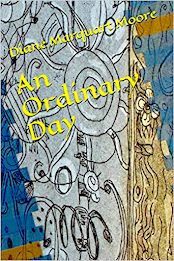
P.S. The cover and frontispage photographs by John Johansson
are striking, and Susan Elliott's beautiful design work underlines the quality
of this distinguished journal.
Order The Pinyon Review from Pinyon Publishing, 23847 V66 Trail, Montrose, CO 81403.