Showing posts with label Megan's Guitar. Show all posts

Monday, May 2, 2016

THE BAYOU TECHE

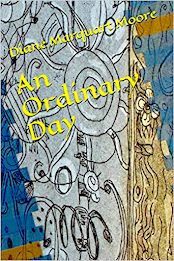
This beautiful image will appear on the cover of my latest book of poetry about Bayou Teche entitled A Slow Moving Stream, which will be published this month. The glasswork for the cover photograph was rendered by Karen Bourque of Church Point, Louisiana and is an interpretation of the Bayou Teche as it flows past the town of Arnaudville, Louisiana. The glass piece is entitled “Beneath the Surface,” and an afterword by Karen describes the elements included in the piece. She writes an eloquent explanation, an excerpt of which follows: “Spring, the dominant seasonal reference to the piece, is symbolic of the time of renewal. Spring, either as time measure or as metaphor, marks that time when the soul awakens inside the crossing of a water barrier, that time when unconscious mind and conscious mind surface and co-exist in the balance of renewed beginnings.”

Darrell Bourque, who is a former Louisiana poet laureate and author of Megan’s Guitar and Other Poems from Acadie, “if you abandon me, comment je vas faire: An Amédé Ardoin Songbook” and forthcoming “Where I waited” and Love Bridge, describes my book: “Diane Moore reminds us that poems begin in memory and in interrogation. The grand march of history holds one version of who we are. Mostly hidden grace notes and terrors hold other versions, and language tied to memory perhaps the truest version. Moore’s pathway to the sacred is through the word and she knows with the right inquiry we can also know in the ways that trees know, and clouds, and crows, and streams, and the whole earth. The universe she creates in the poems in A Slow Moving Stream is a universe where the obvious and the imperceptible, the mundane and the magnificent, the political and the personal are talking, where everything large and small is talking to the other all the time.”

Border Press announces that A Slow Moving Stream contains poetry that “follows the languid Bayou Teche from its source at Port Barre to Morgan City, Louisiana where it empties into the mighty Atchafalaya River, making a journey that traces some Acadian origins in a lovely and sometimes lonely landscape. During the journey, the poet unveils some of the characters and events of early Acadian settlements, as she imagines the history taking place, from the time the Acadians fled their native Pisiguit, Nova Scotia to a present-day oil wealthy Acadiana. This volume contains poems about the Great Flood of 1927, a Civil War battle near Franklin, Louisiana with an attendant drawing by the late Morris Raphael, author of The Gunboat Named Diana. Moore includes descriptions of swamp life and explores spiritual ties that have bound the people who built homes and enterprises along ‘a slow moving stream’ in one of the United States’ most colorful cultures.”

While A Slow Moving Stream alludes to historical events and people, it is, as Karen Bourque writes, “a poetic recreation of people and experiences” as I imagined them to be. Photographs by Victoria I. Sullivan, a botanist who formerly taught at the University of Louisiana at Lafayette and author of Why Water Plants Don’t Drown, Adoption, and Rogue Genes, enhance the poems in this volume and add to the reader’s experience of that slow-moving body of water called “The Teche.”


I conceived the idea for the poetic work last year while lunching on the deck of The Little Big Cup Restaurant in Arnaudville, Louisiana, watching the bayou flow by, with Vickie, Darrell, and Karen. Actually, the poetry has been hovering in my mind for a long time, and an account of one journey I made along the route of the Teche appeared in Tour Guide: Louisiana’s Beautiful Scenic Byways, Part I that Trent Angers commissioned me to write for Acadiana Profile magazine in 1996.


Monday, June 2, 2014

DEPARTURES

"My soul is constituted of thousands of images I cannot erase...I'm a grainy old, often silent, often flickering film," Charles Simic writes in his book, The Monster Loves His Labyrinth: Notebooks. This line spoke to my condition when I began writing my latest book of poetry, available on Amazon in a few days. Departures is the name of this volume, and a few people have asked me if the title indicates I intend to throw away my pen, or computer, as the case may be, and hang up my poetry hat. The answer is "no," as I'm already settled on The Mountain at Sewanee, Tennessee, working on another volume.

Departures explores the lives and departures of loved ones—parents, siblings, aunts and uncles, grandparents, an infant nephew, memorable teachers, godparents, musicians, an old friend—the faces of people who have passed on and left their imprint on my life...and about whom I often dream. The book is dedicated to my friend and mentor, Darrell Bourque, former Louisiana poet laureate and author of Megan's Guitar and if you abandon me, who read the original manuscript of Departures.

I know that I just published a book of essays entitled Porch Posts with Janet Faulk-Gonzales, but Departures has been waiting in the wings for some time, and since I had a painting for the cover that my brother Paul rendered a few years ago, the book almost birthed itself and begged to be "out there."

An example from Departures entitled "Sister's Blue Baby:"

the only boy among three girls
was buried in blue satin

in a tiny steel box
that held the porcelain body

and a heart that struggled
against death

before his time;
his crippled valves

leaking a love
never expressed...

and only his mother felt.

I hope that those of you who read my work will take a look at those people whose "points of departure felt...the faces appearing often enough...[have left] enough of themselves with me."

Departures also available online at www.borderpressbooks.com. If snail mail is your preference, send orders to Border Press, PO Box 3124, Sewanee TN 37375, along with $12 plus $4 for shipping.

Tuesday, November 19, 2013

MEANDERING IN TECHE COUNTRY LOUISIANA


GLC Meat Market, Loreauville
During a visit with Darrell and Karen Bourque of Churchpoint, Louisiana recently, we talked about Darrell's newest book of poetry, Megan's Guitar and Other Poems From Acadie. Darrell, former poet laureate of Louisiana, has been researching the place where Joseph "Beausoleil" Broussard, leader of the Acadians who fled to Louisiana during Le Grand Derangement, first settled. Broussard is one of the colorful characters in Darrell's book of poetry, and this auspicious figure is believed to have established a village near Fausse Point, present-day Loreauville, Louisiana, which is a fifteen-minute drive from my home in New Iberia.
My interest was piqued by Darrell's research and fanned by a friend who told us about a place in the small town where grass-fed beef is sold, so we set out one morning last week to explore Loreauville again. The population of the town at the last census doesn't quite reach the 2,000 mark, and 91 percent of the citizens are native-born Louisianians. Many of Loreauville's inhabitants still speak Cajun French, and the hamlet has an appealing Old World quality. Bayou Teche flows along its western edge, and Lake Dauterive, only a few miles away, offers fishing and boating recreation. Fishing and hunting remain the livelihood of many of the citizens, and sugarcane farming is a vital part of the economy.  
The town was once named Dugasville after one of its founding citizens and was later named Picouville after another of its outstanding families. Citizens finally settled on the name Loreauville in honor of Ozaire Loreau who was instrumental in the burgeoning of agriculture and industry in the small town. One of the more notable industries of which Loreauville can boast is Breaux Brothers Boats, a boat manufacturing business that has attracted national and international boat buyers.
For those who hanker after grass-fed beef, the major attraction in Loreauville is a meat market on the town's main street. One of the owners of this market can trace his penchant for raising cattle back to the 18th century when in 1767, Francois Gonsoulin of St. Martin Parish began running a herd of cattle with a brand that is now the ninth oldest registered brand in the U.S. Today, one of his descendants, Dr. Shannon Gonsoulin, and his partner Stuart Gardner of St Landry Parish, raise Beefmaster and Brangus with red and black Angus bulls. The cattle run on 175 acres near Loreauville and 500 acres near Sunset. The growth period of these grass-fed cattle is three times longer than that of corn-fed calves, but the demand for the beef has been steadily increasing due to the meat's nutritional value.  
Gonsoulin, a veterinarian who practices in Breaux Bridge, Morgan City, and New Iberia, researched the nutrition benefits of grass-fed cattle and found that this beef is higher in omega-3 fatty acids which reduce inflammation and help prevent risks of chronic diseases; e.g., heart disease, cancer, and arthritis. The Gonsoulin beef is dry-aged rather than processed in water, and other nutritional benefits of the meat include fat-soluble vitamins like beta carotene, alpha-tocopherol, and water soluble vitamins like riboflavin and thiamin.  
We went, empty-handed, into the GLC Meat Market located in the old Post Office on Main Street in Loreauville and came out with packages of beef, grass-fed lamb, and grass-fed pork underarm. Earline Ransonet, the manager of the meat market, told us that GLS supplies restaurants and large grocery companies in New Orleans and Lafayette. Gonsoulin touts that a pound of raw meat from grass-fed beef won't shrink burgers on the grill and that none of the cattle have been treated with hormones or antibiotics.  They're also raised in a stress-free environment and are humanely treated.
St. Joseph Church, Loreauville
We didn't locate the exact place where Broussard settled the Acadians, or explore All Souls Cemetery in Loreauville where Clifton Chenier, the famous Zydeco musician, is buried, but we did find serendipity in a main street meat market that supplied us with meat enough to provide several weeks of flash frozen, vacuum-packed nutrition. We hope to return for the Wednesday afternoon Farmer's Market held in the same building as the meat market—and sample more of Acadiana's natural foods.

Tuesday, September 3, 2013

IN A CONVENT GARDEN

For those readers who responded so enthusiastically to my last blog about Penny, the dog who aspires to the diaconate, I’ve included a poem about her in my newest collection of poetry entitled In a Convent Garden and Other Poems, which will be published in a few weeks. The volume is a product of this summer’s writing, and rather than review my own work, I’m including the acknowledgements of fellow authors in this blog for those who read the poetry I write while I’m sojourning on The Mountain here at Sewanee, Tennessee. The acknowledgements are humbling and affirming, and I’m happy to share the endorsements of gifted writers and discerning readers:

“I do not profess to know the mind of the talented Diane Marquart Moore but I do know something of its grasp of the essential, in things both ordinary and extraordinary, from the poems collected in In a Convent Garden and Other Poems. Moore is an intuitive, fiercely intelligent, and contemplative poet who renders each poem with a precision of language that makes her ideas of the metaphysical palpable and clear. Her poems, propelled by still, but spirited narration, captivate. We are taken many places: the convent garden, a fortress on the bluff, No Name Road, the plains of Khuzestan—each place absorbed by Moore through all of her senses then conveyed in sharp but measured detail to her readers, for the purpose of leading us to higher ground. This life, seen by Moore, is never spare or hopeless, which is the true gift of this book. In fact the whole book is an urging to hope. She does not spare us the truth of the ‘marrow of bondage’ all of humanity shares, but her poems promise freedom. Moore assuredly directs us to an ineffable Source. Grace surmounts the suffering of this world, and we are led into a revelation of holy shimmer that drizzles on dogs and cats, stone angels, and gratefully on us.”
—Clare L. Martin, poet and author of Eating the Heart First, Press 53, 2012.
"Time out to reveal the heart"—such is the work Diane Marquart Moore has made for herself as a poet. Remembering to breathe inside the lines, remembering to delight in the gifts of the spirit, she turns In a Convent Garden and Other Poems into a new book of common prayer. Nothing escapes her heart and eye: the elder nuns, slugs, the convent cat, songs in dreams, wandering, the dog's way, Brother Rabbit, Appalachian dulcimers and the songs of katydids.
—Darrell Bourque, former poet laureate of Louisiana, author of Megan's Guitar and Other Poems from Acadie.
My heart leaps up when Diane Moore brings out a new book. She seems to breathe in life, then breathe out poetry—she "poems" with such ease and grace. Her poems are strikingly original and challenging; she makes the reader work hard, but the rewards are great.
—Jane F. Bonin, retired professor of English, University of Louisiana, Lafayette, and author of Major Themes in Prizewinning American Drama and Mario Fratti.
Diane Moore is the rare poet who has the courage to probe the exquisite wounds of human existence: loneliness, despair, suffering, want, night terrors, and betrayal. Just when the reader is at the point of pressing the button for a narcotic to dull the pain, with imagination and skillful craft, she swings through with the wry humor of a raccoon singing barroom ballads, a demonic cat dusting her allergies with dander, a sweet Sister instructing a Psalm reader to break at the asterisk or risk being swept away with the wicked, and, most healing, with joy-filled lessons learned in the course of her God-centered life.
—Anne Simon, Louisiana District Judge, Retired.
Diane Moore's eye is more precise than most painters, and she uses that eye to make a sacred music full of love and sympathy for what often gets ignored or forgotten. She is a wonderful contemporary amalgam of Emily Dickinson and Walt Whitman. Read her now and be delighted.
—Chuck Taylor, author of Magical, Fantastical, Alphabetical Soup.
Diane Moore has become a master of seeing, describing, and immersing herself in other lives. Her retired nun, Sister Mary Zita, "enters a dark cell / but her soul is not asleep;" a sculpture, "the stone angel is laughing;" and of Thomas Wolfe, she writes, "Each time I want his ghost / to give me a stone, a leaf, a door"… In A Convent Garden consists of meditations on spirituality, dreams, art, writers, travel, music, and nature.
—Gary Entsminger, author of Ophelia's Ghost and Fall of '33.
The cover photograph of In A Convent Garden and Other Poems was taken by Sr. Madeleine Mary, sister-in-charge of St. Mary’s Convent, Sewanee, Tennessee, and cover design was rendered by Martin Wayne Romero. Order copies from amazon.com after September 15, 2013.