Some mornings I get up wanting to write and feel a certain fogginess of mind and absence of subject matter that reminds me of E. B. White and his essay of “Writer at Work.” In March of 1927, he wrote that Edna Millay was contemplating a trip to Washington, D.C., and he quotes a Washington news story: “to have this tender poet here in cherry blossom time and to hear her version of this glorious spectacle [would be great].” E.B. White, who is obviously struggling to create his essay for the day, remarks that “Even the theme is laid out for her, like clean linen.”
E. B. White says that a writer is always straining his eyes, peering ahead and around so that when the moment of revelation comes, his eyes are poppy and tired and his sensitized mind has become fogged by the “too frequent half-stimuli of imagined sight…”
I sat here, reading those lines, waiting for my mind to clear, and wondered if there were new ridges there that prevented clear thoughts. What appeared to me was an actual vision of ridges —chenier ridges south of the Intracoastal Waterway in Louisiana. I could almost smell the marshy air and see oak trees in the distance — old beach ridges or cheniers. The sand in the ridges is above the marsh so that oak trees abound in the dry soil there. According to an entry in Roadside Geology in Louisiana by Darwin Spearing, the ridge, Little Chenier, marked the position of a beach 2800 years ago. The town of Creole is strung out along another chenier where Chenier Perdue, 2500 years old, and Pumpkin Ridge, 2200 years old, merge.
The largest beach ridge plain in Louisiana is near the Caminada-Moreau Coast with as many as 70 sandy beach ridges that began to grow about 700 years ago. Of course like much of Louisiana coastland, the Caminada-Moreau coast continues to erode.

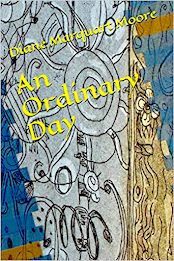
I’m more familiar with the ridges near Creole, Louisiana because I explored that territory when I was writing my book for young adults entitled Kajun Kween. Those ridges provided the setting for this tale about a young girl named Petite Marie Melancon who wasn’t so petite and who became the heroine in a comic strip. I have an envelope of photographs showing scenes of cheniers that includes a beautiful one which Dr. Sullivan snapped, and I framed for a wall of my study. There’s even an alligator in a corner of the photo, and it’s a scene that has not only inspired me while I was writing Kajun Kween, it became the cover of a book of. poetry entitled Old Ridges in which the opening poem describes the scenery I encountered back in the early 2,000s.

Although the theme wasn’t “laid out for me, like clean linen,” as E. B. White wrote, my nostalgic thoughts sent me to the bookcase where I found Old Ridges and began to read:
OLD RIDGES
Writing a story of persiflage
I found a place of legend,
a station of shade
cool enough to wade in,
no voice, no sound,
an alligator hiding on the bank
sliding into murky water,
breaking the silence and the shade.
Further back, I could see ancient ridges,
oak groves, wild grapevines overarching
marshmallow, yucca, and oleander,
some distance from the Intracoastal Canal
where I once rode in a boat
bound for Cheniere au Tigre,
weaving through a network of canals
and anchoring at a wooden dock
that may have been near the old town.
We climbed an old-fashioned stile
astride a barbed wire fence,
searching for an abandoned hotel,
and found: the bones of a cow,
the feather of a crow,
the leaf of a toothache tree --
mystery.
Old oaks stood sentinel, asking:
Do you think it’s too late?
I haven’t forgotten how it is
to die before dying,
consider my age,
consider this shade,
no voice, no sound.
What was I looking for?
The corpse of a cowboy lying
among bones of Brahma and Charolais?
a chest of Lafitte’s treasure?
the old watchtowers of WWII?
the tiger that mauled a boy a century before?
Hackberry trees grew among stands of oaks
and in the center of one grove,
a house of silvered cypress,
torn screen on the sagging porch,
door ajar, as if someone had just departed,
the abandoned house among trees
buffeted and twisted by Gulf winds.
Like the trees, it seemed to say
I haven’t forgotten how it is
to die before dying,
consider my age,
consider this shade,
no voice, no sound…
and a tiger lurks over the ridge.

Some mornings I get up wanting to write and feel a certain fogginess of mind and absence of subject matter that reminds me of E. B. White and his essay of “Writer at Work.” In March of 1927, he wrote that Edna Millay was contemplating a trip to Washington, D.C., and he quotes a Washington news story: “to have this tender poet here in cherry blossom time and to hear her version of this glorious spectacle [would be great].” E.B. White, who is obviously struggling to create his essay for the day, remarks that “Even the theme is laid out for her, like clean linen.”


Hackberry trees grew among stands of oaks