Sunday, April 28, 2013

MARTIN AND THE LAST TRIBE


Rain the last two days reminded me of deluges in Louisiana that we call “frog stranglers and root soakers”–devastating floods that I recall inundated Louisiana as far back as the 40’s when my mother rescued a dog paddling in high waters near Lake Arthur, Louisiana. The latest from the “Sewanee Classified,” which reports all the happenings in this small community on The Mountain of Sewanee, Tennessee, is that the road to Cowan and Winchester has washed out, and crews are presently at work clearing a path into the valley. However, deluges here on The Mountain seldom cause the kind of damage experienced by citizens in my second home in Louisiana at lower elevations.
As sea levels rise in coastal Louisiana, places like Isle de Jean Charles, a ridge of land between Bayou Pointe-au-Chien and Bayou Terrebonne, experience destructive flooding, and this island is gradually disappearing into Terrebonne Bay. The population of the Biloxi-Chitimacha tribe and other community members has dwindled to 25 families because water is swallowing up the land, and the places where community members used to hunt, trap, and plant gardens are vanishing. The island is often battered by floods and sinking of land, along with rising ocean levels, which make future habitation almost impossible.
The small band of people descending from Choctaw, Houma, Biloxi, and Chitimacha Indian tribes who grew up on Isle de Jean Charles cling to their home and traditions, but their future is uncertain because it lies past the levee alignment which is currently under construction for the Morganza to the Gulf of Mexico Hurricane Protection Project.
Readers may have seen several documentaries about this small population on the Louisiana coast–Can’t Stop the Water, Last Stand on the Island, and a fictional treatment in a movie entitled Beasts of the Southern Wild.
I've been fascinated with the story of this island for over a year and spent the last year researching and writing a middle-grade novel, the third in a series about a young boy traiteur who goes down to Isle de Jean Charles to talk to his Great Uncle Joe who has barricaded himself in his cabin rather than move to higher ground. Martin attempts to treat his unhinged uncle and meets a lovely Island girl who is ill, but he runs into trouble when he tries to use his healing powers on an injured person who doesn't want his folk medicine. While he’s on the Island, he’s caught in a battering storm, experiences the aftermath of an oil rig exploding in the Gulf, and witnesses threats to the Island and surrounding marshes.
Environmental issues, tribal conflicts and Indian lore, romance, and the introduction to various herbs used in healing by the 11th century nun, Hildegard of Bingen, are woven into the story. Followers of Martin Romero, the protagonist, will enjoy the young traiteur’s latest explorations as “Master of Adventure” in Martin And the Last Tribe.
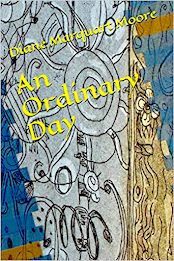
The cover painting of this book for young readers was rendered by my brother Paul Marquart, and book design by my grandson, Martin Romero (for whom the protagonist is named). Copies of this middle grade and young adult novel can be ordered online from amazon.com, or from: Border Press, PO Box 3124, Sewanee TN 37375.

Sunday, April 21, 2013

INTO THIS WORLD


I went into the Barnes and Noble University Bookstore this morning and came out with a children’s book entitled Timmy Failure: Mistakes Were Made that I seriously thought about reviewing in this blog. However, readers were saved from my foisting the choice of a notable volume of juvenile wit on them by the arrival of the morning mail. A trip to the post office yielded more serious literature in the form of my favorite genre–a book of poetry, fresh from the press of Pinyon Publishing in Montrose, Colorado.
Publisher Gary Entsminger has done it again–published the work of a prize-winning poet of unmistakable talent. Michael Miller’s Into This World rivals the latest blockbuster novel in terms of being a page turner–I read the 73-page volume in one sitting and closed the book with thoughts about Donald Hall’s evaluation of poetry: “Poems are not about anything because they are about everything.” Michael Miller’s work encompasses that everything–love, war, the natural world, death…ladybugs, bumblebees, dogs, polar bears…
Miller’s poems achieve the balance of darkness and light, of the intrepid heart pitted against a broken world, each poem rendered with grace and a sense of the invincible spirit of humans; e. g., “Private Bayless:” “Before the dark shoulders of mountains/setting forth on a night mission/With the wind’s breath/Blowing across his face, pricking him/With invisible needles of sand,/ He smells death in the air./ “The Taliban, the Taliban,” a voice/Gnaws at his mind and he prays/to leave Afghanistan alive, intact./Should a bullet sever his spinal cord, He will make love to his wife/With his eyes, blinking signals/For the acts he cannot perform.”
This is only one of the war poems that indicates the deftness with which Miller handles human woundedness, condensing emotions into short lyrical bursts in poems bearing the names and ranks of soldiers: “Private Wheeler,” “Corporal Bedford,” “Lance Corporal Webster”…and ending this section with the reflection about “Corporal Sayers:” “…He never saw the faces of the men he killed./The war is over,/The dead will not run across a ridgeline,/And he has returned,/Refusing to kill a spider.”
There is no artifice in this poet’s ruminations. A keen observer of human passion, he writes a spare poem about how a man “ignited from within brightens the night…singeing the grass/alarming the milkweed.” In the section entitled “Song of the Body,” Miller’s poetry sings in what I’d call wry rapture --songs containing the lyrics of an enduring married love that challenges the shallowness of post-modern promiscuity. He creates and recreates scenes of marital intimacy: “X. Their blue sheets are the color/Of the irises blooming in their garden,/Bordering the two-foot stone wall;/They planted the irises,/They built the wall,/Their hands know earth, stone,/And now they continue to seek/The undiscovered regions/Of each other’s body, /The new concealed within the old.”
As I’m a writer in my 70’s, I quickly identified with Miller’s commentary on aging in his poignant signature of acceptance entitled “Dusk.” “…Like the long grass of late September/On the meadow where I walk at dusk, /Knowing the darkness will arrive/With a part of me welcoming it.” Again, that quality of wry rapture is caught in another poem about age entitled “No Matter Our Age,” the last nine lines illuminating his acceptance of growing older. “More than your body/I wanted the love/Which flickered in your eyes./So our unwritten history began/Which I value each morning,/Waking to its freshness/No matter our age/Or the architecture/Crumbling around us.”
Approximately 20 years ago, my spiritual director told me I should stop writing “little poems” and begin writing “great poems,” a task which I've attempted for years, and I do know when I read “great poems.” Michael Miller achieves the kind of emotional intensity and integrity that make poems in Into This World “great poems;” in which ordinary themes provoke much serious contemplation.
Cover photograph by Gary Entsminger, editor and publisher of Pinyon Publishing, 23847 V66 “Trail, Montrose, Colorado 81403. 

Tuesday, April 16, 2013

IN THE AFTERMATH OF “THE BOSTON MASSACRE”

Tomorrow by Paul Emerson Marquart

Every Tuesday while we ‘re sojourning on the Mountain here in Sewanee, Tennessee, we go out to St. Mary’s Convent for Morning Prayer and Eucharist, and this morning I was glad to enter the convent chapel to meditate and pray after viewing scenes of yesterday’s bombing at the site of the Boston Marathon. Like so many shocked Americans, I was mesmerized by scenes that flashed on the television screen all day. The scene that keeps replaying in my mind is that of first responders, members of medical teams, and other “helping” groups rushing toward those wounded, tearing down fences that had held back those who had come to view the winners at the finish line to get to victims maimed in the blasts. Those helpers ran forward without thinking about the possibility of encountering more bombs that could have exploded and taken their lives. Their action was an amazing show of courage and caring in the face of a horrifying act of terrorism --coincidentally, or perhaps not so coincidentally, we read Psalm 31 at Morning Prayer, and I was struck by the appropriateness of the verse: “Blessed be the Lord! For he has shown me the wonders of his love in a besieged city…”
I also thought about a comic strip that I frequently use in my sermons–Peanuts. The particular strip that came to mind was that in which Lucy, accompanied by Linus, is pointing to an outline of a heart imprinted on a fence. She says, “This, Linus, is a picture of the human heart.” And in the next frame, she explains to vulnerable Linus, “One side is filled with hate, and the other side is filled with love. These are the two forces, constantly at war with each other.” Linus looks away from Lucy who is, of course, staring intently at him, and says: “I think I know what you mean. I can feel them fighting.”
Most of us today are probably experiencing that same kind of battle going on within us, for how else could we feel in the face of the killing field in Boston that flashed on our television screens endlessly yesterday? I don’t think any of us could honestly say that anger didn't well up in us as an initial reaction when we watched people falling down in a street overshadowed by the smoke from two bombs. Most of us harbored a lively hostility for the unknown perpetrator(s) who dared to invade the city that could be called our birthplace of freedom.
I think that we struggle daily with this dichotomy of Linus love/hate. But we go on. We go on mostly because we’re a faithful people….and a loving people. After 9-11, I remember President Bush quoting at a service in the National Cathedral in Washington: “Adversity introduces us to ourselves. This is true of our nation as well.” We were introduced to this notion that Americans are models for the world immediately around us…and those in the world who are farthest from us. That awful time taught us that we’re often observed, with great scrutiny, under circumstances of acute distress and horror, to see how we’ll react. And what those who looked at us yesterday saw was that with grace working in the hearts of those “helpers,” evil was broken down and destroyed. I’m sure there were many stories of generosity and goodness being lived out in Boston yesterday, and some scribe should write them down so that other generations can read them and be inspired.
Most of us who are Christian believe in peace and in an inward and invisible grace we receive at baptism. One writer has said that the grace that God gives us works like salt–it preserves every grain of goodness it can find and heightens its flavor. We have that salt because we have something called the theology of hope. And although we often groan inwardly, we wait and work in hope. That wonderful theology of hope stands against destruction, conflagrations, and the madness of terrorism. Through our faith… hope… and God’s grace, we’re always being given a transforming gift–something called the gift of love.
Anger is a human and normal emotion and I think we have it, sometimes, to arouse us from deadly lethargy. Psychologists remind us we have anger to protect ourselves, and yet we’re called, if we are people of God, to move through that anger to arrive at transforming love. A tall order, but those first responders yesterday certainly gave us an authentic example of sacrificial love. Proverbs tells us: “Above all else, guard your heart for it is the wellspring of life.” And Teilhard de Chardin wrote in a haiku: “At the heart of matter/a world heart/the heart of a God.”
I sat in the hushed chapel of the Sisters of St. Mary this morning and meditated on these quotes from Proverbs and Teilhard de Chardin, especially praying for the helpers who rushed forward in one great swell of caring, to help the victims of the Boston massacre. What we witnessed moving through the smoke of a horrific crime in the city streets of Boston were rescuers who had “guarded their hearts.”
Painting at beginning of blog is entitled “Tomorrow” by my brother Paul Marquart.