Showing posts with label Savannah. Show all posts

Wednesday, May 1, 2019

BEACH YEARNINGS

The Beach by Diane M. Moore

The above picture is one of the very few pictures I’ve painted during my lifetime and, of course, is in the rank of "very amateur art.” Now that summer is approaching, it represents my envee (desire, yearning, etc., in Cajun French) for beach life. The picture was executed on a visit to Gulf Shores, Alabama, and my visit there actually occurred in late spring almost twenty years ago. 

I recorded this experience in a journal, then painted the picture. A week spent in sun and sand engendered a feeling of peace, which being near the ocean often does, and I was unencumbered enough not to care if my art “got out there,” as we often say about the dissemination of artistic effort. I wrote: “The umbrella lady comes at high tide, unlocks a painted white box, and many umbrellas, royal blue, spill out, accompanied by matching chairs. Set up, they represent linear thought, each bather’s pole placed in the sand in line with neighboring umbrella, plumb bob straight. A grove of blue palms under which lobster red legs jet toward the sea becomes visible. Waves vibrate monotonously… the sands are heavy with leisurely thought…On the beach everyone searches for something…gifts of the tides.”

This part of the calendar year I live on The Mountain, as it is called here at Sewanee, Tennessee (April 1to October 15) and develop a yearning for water and beach every year. However, we’re likely to schedule leisure time at other elevations; e.g., this weekend in a state park called Pickwick Landing on Pickwick Lake, not too far from the Shiloh National Military Park where my great-grandfather fought as a captain in a Tennessee regiment.
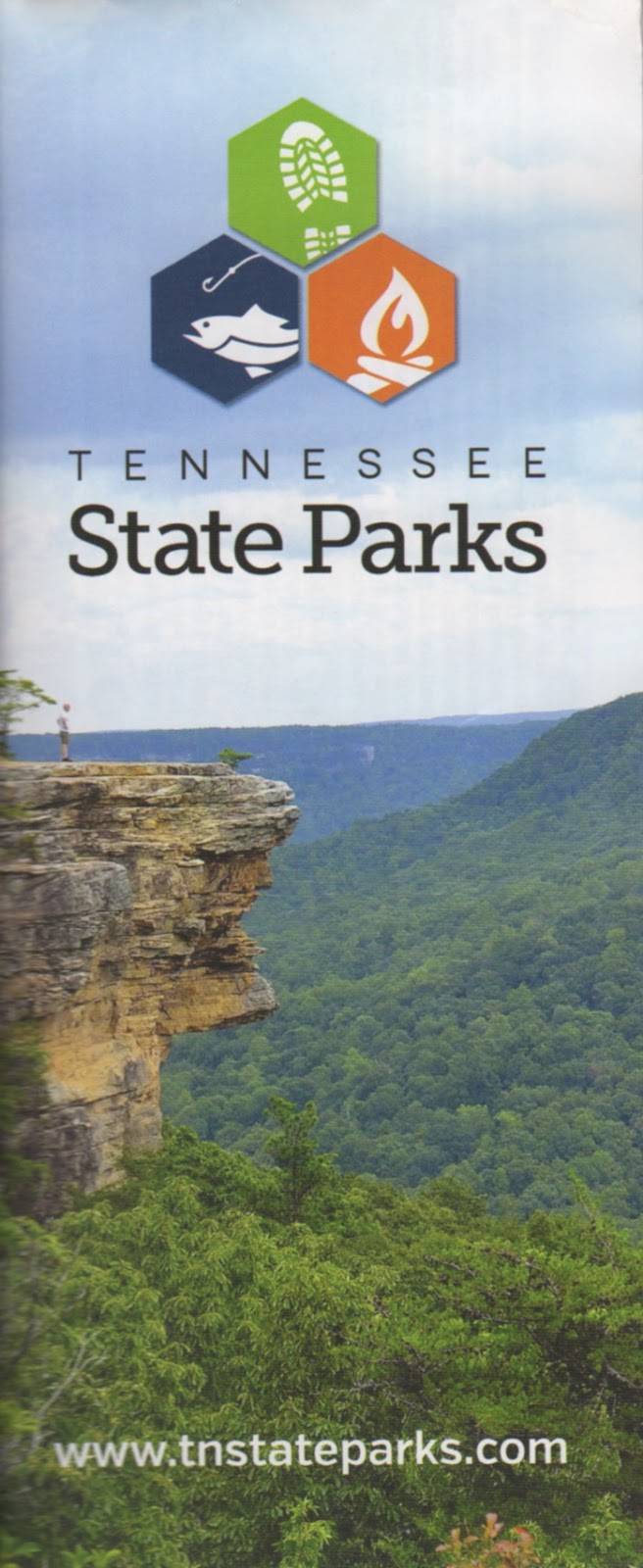
One of the recreational perks Tennessee offers is its state park system—56 of them located in all corners of this wide state. We’ve visited only four of them during our eleven-year sojourn. Many were built by members of the CCC and WPA who were part of programs instituted by President Franklin Roosevelt. Roosevelt established both programs in an effort to provide employment for indigent young men who needed jobs following the Great Depression.
Anyway, I won’t get to the beach this early in the season…and probably not at all…but we’ll enjoy a few days near a lake in a 1516-acre state park a few miles away from historic Savannah, Tennessee and the Tennessee National Wildlife Refuge. I doubt if any art will result from the experience, but the thought of relaxing near a grand body of water is enough to satisfy my yen for sun and sandy beaches…for awhile.


Tuesday, March 14, 2017

RESURRECTION FERN

Resurrection Fern on tree along Jump Off
Mountain Rd., Sewanee, TN
In the spring before Easter resurrection, the old live oaks in New Iberia, Louisiana begin to show large clumps of fronds unfurling that become green and show signs of new life – the resurrection fern, an epiphyte fern that clings to its host tree branches, comes to life, and to me, it is symbolic of the resurrection of Christ. During dry, winter periods this epiphyte fern becomes a grayish brown and looks as if it has shriveled up and died. However, the plant can lose up to 97 percent of its water content and stay alive. A few rain showers lately have caused the fern to unfurl and transform into the bright green that forms on our old oaks. Some plant experts say that the fern can stay in a dried-out state for 100 years. 
In 2014 when I was writing Between Plants and People, a volume of poetry about the interrelationships between people and the plants around us, I asked Dr. Victoria I. Sullivan, a botanist, to take photographs of the plants I wrote about for the book. At the time, I was spending my half year on The Mountain in Sewanee, Tennessee, and Sewanee was experiencing a gracious plenty of dry weather. When I decided to include a poem about resurrection fern, we searched every habitat on The Mountain and couldn’t find a “model” for the poem. We finally decided to drive some distance to Savannah, Georgia to find this fern that reproduces by spores, not seeds. We knew that Savannah has a plethora of old oaks — also, we were often known for suddenly deciding to embark on a trip just to recover a detail for our writings, or to satisfy a yen for peaches or apples… we were called to live up to our rep for uncovering serendipity on such trips. 
Resurrection Fern on Live Oak, Savannah, GA
We walked through the streets of Savannah and finally found a dried up specimen on a venerable oak in the parking lot of a legal firm where we were chased out by a guard but not before we had taken a few quick snapshots. We then drove back to Sewanee. The trip clocked out as a twelve-hour round trip, and when we had recovered, we were told that a patch of the fern grew on a tree not more than five miles away from Sewanee! It was bright with green life, and the intrepid botanist took a photo. Both the green specimen of the fern at Sewanee and the un-resurrected fern in Savannah appear on a page of Between Plants and People
Resurrection fern doesn’t steal water or nutrients from the old oaks and cypress on which it most often appears, and it has the distinction of having been taken into outer space aboard the Discovery space shuttle so that space travelers aboard could observe this plant at zero gravity. The fern was able to effect resurrection even without gravity and was named the “first fern in space.” 
The resurrection fern is an amazing plant, and when spring rains begin to fall, or at Eastertide, you might want to look upward at topmost tree branches of our ancient oaks to witness an awe-inspiring resurrection. This member of the plant world has withstood many droughts and seeming-deaths but remains alive and healthy. I’d say there’s a message therein! 
Photography by Dr. Victoria I. Sullivan


Saturday, August 2, 2014

TRUCKIN' DOWN TO SAVANNAH

Resurrection fern shriveled on
oak limb
If you're foolish enough to look for resurrection fern in a mountain environment, you'll find it isn't an easy search. In fact, finding plants for a botanist to photograph to accompany poems about plants that appeal to this poet's sensibilities calls for travel further south than the Cumberland Plateau in Sewanee, Tennessee. So last Wednesday, we set out for the coastal country near Savannah, Georgia to search for ancient live oaks that were home to the epiphyte, resurrection fern.

This city, touted as one of the Top 10 Travel Destinations in America, was really not that far from Sewanee—six hours and fifteen minutes, according to travel maps online, but the maps didn't reckon with the mighty eighteen wheelers that crowded the interstates leading to one of the most beautiful cities in the U.S. When I began thinking about writing a blog featuring a city that inspired films like Midnight In the Garden of Evil—the architecture, history, and, yes, hauntings—I had in mind a romantic piece about a place of hospitality and charm.

However, the song of the open road soon soured as we began dodging trucks on the Interstate, especially on I-16, and the congestion leading from Macon, Georgia to Savannah involved many of these big tanks with "Safe and Courteous" written on their tail ends. Sometimes their doubling up in both lanes made me fearful for the safety of prisoners picking up trash on both sides of the highway—I wondered how many pounds of peeled off truck tires the sweating men had been hauling off daily. We hit several of these black rubber teeth as we sped along and later had to inflate all our car tires from rolling over the trucks' discards.


Trucks on I-16, GA
As we whizzed past, I snapped a few photographs of trucks moving hot and heavy, their red underpants flapping in a breeze they stirred up and mimicking trains by carrying train cars on their flatbeds—oversized tanks with launching ports of Salinas, California, Rushville, Indiana, Mobile, Alabama emblazoned on drivers' doors. The truck traffic near Atlanta was daunting, and ten miles out of Savannah, I lost any respect I might have had for the trucking industry when we stalled for one hour on Highway 16 before turning around and finding an outlet to Hwy. 80, which led into Savannah. We heard reports that earlier in the morning when a heavy fog had made highway travel dangerous, seven eighteen wheelers had crashed and caused a 27-car pile-up... and at 4 p.m., the highway still hadn't been cleared.

"Hhmph," I told my botanist friend, 'This vehicle makes wide turns' should be written on the sides of automobiles traveling down here instead of on the rear ends of eighteen wheelers—we're the ones who've had to make wide turns and retrace our route because of their 'safe and courteous driving.'"

The above was the beginning of a rant, which is what one of my former associates once dubbed a newspaper column I wrote for the Daily Iberian in New Iberia, Louisiana, but it isn't the first time I've made noises about Jimmy Hoffa's offspring—the mighty trucks that have replaced my favorite mode of travel—trains.

Yes, "the open highway" is a phrase of the past and has been replaced by "Where is the next exit?" but we did find the resurrection fern, curled up, in need of resurrection and many rains, in Forsyth Park, a green space that was created in Savannah in 1851. We took photographs of a fern clinging to a 300-year old oak in the private parking lot of the law school across from the park and were chased off by a security guard.

As usual, I was doomed to stand in the street before a "closed" sign on Flannery O'Connor's childhood home—her home will be #3 for authors' homes that are usually closed on the days of my visits—the other two being William Faulkner's home in Oxford, Mississippi and Marjorie Kinnan Rawlings' home near Cross Creek, Florida.

Beach at Tybee Island, GA
I think we got lost enough times to view the 24 Squares that are a part of Savannah's charm before we set out for Tybee Island to find the open sea...behind a fence of sea oats! Low Country Georgia's cuisine equals Cajun fare in taste and rich diversity. Backyard fishermen often catch shrimp, crab, oysters, and flounder from backyard docks, and trawlers bring in catches of whiting, mahi mahi, grouper, red snapper, and Spanish mackerel from the Atlantic Ocean. Savannah cuisine carries the flavor of Spanish, French, and West African cooking. On our return trip to Sewanee, farther up the road at the Harvest Moon Cafe in Rome, Georgia, we enjoyed a flavorful dish of collards cooked with onions and apples.


We only had three days to savor the "coastal empire," but we advise readers to spend at least a week in this city featured in Conde Nast Traveler, Travel and Leisure Magazine, Southern Living and TripAdvisor.com. However, book a flight when you begin planning the trip! Or better still, board a train!