Showing posts with label Night Offices. Show all posts

Monday, June 19, 2017

TO SLEEP, PERCHANCE TO DREAM

There's nothing like a Monday morning after a night of insomnia. If I had a “regular” job, I’d be disturbed knowing I would experience a non-productive day. However, even in my retirement jobs, lack of restorative sleep during “night shifts,” gives me pause. I don’t feel comforted knowing that half of us humans have insomnia at some time during a given year. And the fact that 40% of women in the U.S. experience nocturnal awakenings doesn’t lessen my dismay over lack of sleep.

There’s a lot of information about overcoming insomnia circulating in the world of information today, including threats of health problems if the condition persists.  Counting sheep isn’t one of the cures for sleeplessness, but treatment includes use of drugs, ingesting plant potions such as lavender and chamomile, abstaining from alcohol and caffeine but no permanent “fix” has proven useful for insomniacs.

People are often reluctant to talk about their insomnia because a stock answer from good sleepers is: “You must have a bad conscience.” In the soliloquy by Hamlet in Shakespeare’s drama, Hamlet, Prince Hamlet, who laments his mental and moral anguish in the phrase, “To sleep, perchance to dream,” expresses his longing for dreamless sleep but questions whether he’ll find peace even after death. And sometimes when insomniacs long for a night of peaceful sleep, they wonder if they’ll ever achieve that state where dreams and nightmares won’t interrupt tranquil snoozing.

In 2014 I published a volume of poems entitled Night Offices in which I explored the uses and cures for insomnia, famous characters who have suffered from this malady such as W.C. Fields, Groucho Marx, and Thomas Edison, and wrote that “four vigils of the night you wake/with desolation for a pillow,/phantom crucifixions hover:/monsters that pull your soul from sleep/peer over the edge of a ceiling fan…” and commented that no matter where I closed my eyes, “shadows still played on the ceiling, /memories walked in on crutches/long past their curfew,/ a lightship lowered its anchor in the room…”

Well, that bit of serious deliberation about lack of sleep should awaken insomniacs! Actually, at a book sale showcasing all of my poetry books, I ran out of Night Offices because so many insomniac readers appeared. Anyway, the sun is out, predicted rain hasn’t fallen, and here’s hoping you got a good night’s sleep and didn't get up on the wrong side of the bed this morning!

PS: I know the character above appeared in this blog earlier, but she did change the color of her outfit overnight and her suffering posture doesn't indicate that she consumed chocolate this time.


Friday, December 26, 2014

A BOX IN THE MAIL

Diane, Paul, Sidney Sue:
Christmas early 1940's
Two weeks ago my older brother Paul died in a nursing home on the rugged northern coast of California. His wife had moved to Big Bear City in southern California just a few weeks before Christmas and had sent me a box of notebooks filled with photographs of all his paintings and the beautiful gardens he had created in his yard.

His life passed before me, and my grief is deeper than sentiment, blood thicker than all the sins he buried in the garden he made for his wife, colors made bolder in a place where he could not hide his soul. "The place" dead-ended in a small wood and was surrounded by a tall cedar fence. Several small bungalows flanked a stone and cedar house with a square bay window in front. Flowers covered every space in the yard—yellow nasturtiums, red salvia, petunias, hollyhock—blossoms hovering over stones and settled among small pieces of driftwood. Birdbaths nestled in clumps of elephant ears and fern; begonias in
wooden tubs. It was a place of nooks and wooden bridges, and at the farthermost point of the yard, a forest of cedars and redwoods loomed.

The first time I visited him in this paradisiacal setting, he told me: "This is life here." That  life followed years of profligate behavior, and he had created a habitat that reflected only aesthetic intention. His paintings hung everywhere—landscapes of California or Louisiana, and a  
group of abstracts that looked like the beginning of creation, cosmic explosions in brilliant reds and blacks.

Ineffably, part of him will go down into the soil that nourished his plants; the rest will ride the wild, blue waves of the Pacific that he was always painting. And I have the photographs in the notebook and the covers of most of my poetry books for which he rendered beautiful paintings—valuable keepsakes that reflect a kind of artistic endurance.


Requiescat in pace, Paul.XXX


Wednesday, October 8, 2014

QUESTIONS ABOUT LUCID DREAMING

This morning when I got out of bed, I walked out on the front porch and squinted at the heavens to see if I could glimpse the blood moon that was forecast to appear. I had been reading about the eclipse for several days and anticipated that I could glimpse it if I searched the heavens long enough. Outdoors, all I saw was the effects of a blustery storm that had passed through Sewanee last night—limbs down, heaps of wet leaves, and more of the crop of large green acorns shaken from the white oaks surrounding our cottage.

At the breakfast table, the topic of conversation moved quickly from "no blood moon" to lucid dreaming, a subject about which I know very little. However, a blurb on the Internet intrigued me because the lucid dream trainer talked about keeping a dream journal, a practice I once tried. I confess that I failed miserably in my attempt to enhance creativity and poetry writing through the process of recording dreams.

The basic premise of lucid dream training is that the dreamer can gain some control over certain actions in a dream or can manipulate the experience within a dream to assure him that the dream isn't real. Better still, nightmare sufferers can benefit from learning techniques for controlling dreams to develop an awareness of how to dispel the boogabears that plague them. Sometimes lucid dreams occur naturally when a dreamer experiences a strange happening, and when she stops to determine if the dream is real, she realizes she's in a dream. I guess you could call this a "reality check." Readers will be surprised to read about the number of trainings in lucid dreaming that appear on the internet and about the number of advocates of the lucid dreaming practice.

After I read several Internet entries, I pondered Wittgenstein's famous saying, "We are asleep. Our life is a dream. But we wake up sometimes, just enough to know we are dreaming." Was Wittgenstein a lucid dreamer?

Last month, I published Night Offices, a book of poetry about insomniacs who "recite the night offices," and this morning as I re-read it, I wondered if the inspiration for writing poetry occurs naturally within a lucid dream state and is responsible for the awake "aha" moment of creative expression that follows the nighttime dream. Many famous musicians conceived nocturnes and symphonies during night hours, and sleep experts often advise us to "sleep on it" when we have a particular problem that we can't solve during the daytime. Are we in a natural-occurring lucid dream state at that time?

The subject fascinates me because I'm not only an insomniac, I'm a victim of nightmares, and I'd like to lay to rest the phantoms of the night that often assail me.

Here's an example of a poem in Night Offices that may or may not have been born in a lucid dream:

"THE SOUND OF AN INSOMNIAC'S INK

If I were to arise
and go into my study,
watch shadows flicker on the walls
rather than entangle myself
in the warm sheets of insomnia
that Benjamin Franklin
would have left to cool awhile
while he battled his sleeplessness,

I would open the blind
to the sight of stars scattering
in the inky sky,
their silver points piercing
my Unconscious, bringing up
words to a blue screen
winking on a fresh page,

and I would ponder
how I miss, at night,
(and during daylight hours)
typewriter keys clacking
in a disharmony of sound,
executing words with loud taps,
making sure the darkness knew

I had not written my last stanza,
a sound signaling
that someone out there
would soon be turning pages
in a quiet room,
and the poems,
by their noise alone,
would know they had a right to live."


Note: This poem may have been more of a lament for an old-fashioned typewriter than an ode born in a state of lucid dreaming!!

Monday, July 14, 2014

NIGHT OFFICES

Straight from the blurb written by Border Press regarding my newest book of poetry available on amazon.com in a few weeks:

"If you've ever suffered from insomnia or if you're a person who composes nocturnes of any kind during the night hours, Diane Marquart Moore's Night Offices, her nineteenth book of poetry, will "speak to your condition." Moore explores the uses of and the cures for insomnia, famous characters who have suffered from this malady; e.g., W.C. Fields, Groucho Marx, and Thomas Edison. With characteristic wit and irony, she records the sleeplessness of various family members and friends, including her own propensity to recite the night offices, writing that "in four vigils of the night you wake/with desolation for a pillow./Phantom crucifixions hover--/monsters that pull/your soul from sleep,/peer over the edge of a ceiling fan..." She confesses that no matter where she closes her eyes, "a lightship lowers its anchor in the room."

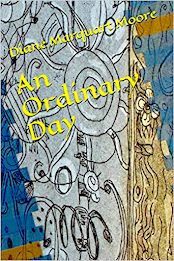
Paul Marquart, my brother in northern California, rendered the painting for the cover design of Night Offices, and Martin Romero, my grandson, designed the front and back covers.

A sample of the poetry in Night Offices entitled "Opus Dei:"

Sister Elizabeth's slippers,
the feet of prayer,
hurry along sacred corridors
bringing vials of care
between the aisles
of Compline and Lauds,
reciting the night Vigils,
her arms encircling
Sister Lucy, Sister Mary Zita
whose needs demand
God's love and mercy
each hour of the night
against the threatening void,
their souls suspended,
as a saint with callused feet
lights the lamp
for His arrival.

Thanks again to Border Press for launching Night Offices. I might add that another book of poetry, which will contain poems about humanistic botany and photographs of plant life taken by botanist Victoria Sullivan, is in the writing stages. It's entitled Between Plants and People. Most collections of my poetry are listed on amazon.com and on the borderpressbooks.com site. Thanks for reading!