This is the first Pinyon Review without Gary Entsminger, former editor and publisher, at the helm, but Susan Entsminger, his wife who is co-editor and publisher of this journal, hasn’t missed a beat in her “troubadour’s” (as she calls Gary) song, launching the new edition with excerpts from Gary’s poems that appear in Two Miles West. Susan Entsminger poses rhetorical questions about her talented husband who died in early fall, then answers them in “The Troubadour Sings A Love Song”; e.g., “Was it the parents’ country guitars that first vibrated at a frequency which awakened in Gary that silver thread of Jungian collective memory, the Castanedaian glimmering energy with that which frees us from ourselves so that we might glimpse the source of Plato’s shadows on the cave wall and hear the songs of our ancestors?…” She also acknowledges writers and artists who have appeared in the pages of his brainchild, The Pinyon Review: “…Gary’s imagination and quest for truth are alive in his sculpted prose, his guitar improvisations, and the exceptional family of artists we call Pinyon. The Troubadour sings love songs.”
Readers are also given a glimpse of Gary and Susan’s work in progress, Egypt ’78, in which the characters Rosalina and Robinson have decided to embrace fiction and non-fiction simultaneously. “They had invented characters, who themselves had ideas about their lives, and she would meet and talk to them here in the cottage or garden, on the hillside, by the ocean, at Robinson’s tower…” I don’t know how much copy of this co-authored work Gary and Susan had achieved, but I feel sure Susan will honor her talented husband by completing the manuscript. At one point following Gary’s death, she told me that his spirit still lives in the canyon near their cabin in Colorado. “I asked Gary the other night:/Do you miss talking?… I think he said:/What does it look like where you are?” she writes in this issue of Pinyon Review.
Toni Ortner, a newcomer to Pinyon, writes about grief in a brief poem entitled “How to think about grief": “It is futile to ask when it will subside…Grief is water running down a mountainside. The rivulet twists/ and turns through every nook around every rock and crevice. It/cuts like a knife into the dirt and washes away the leaves plants/and pebbles. It becomes a stream. Season after season it slices/and chops the dirt to silt. Then it is a river./Dream whatever you want it will make no difference.” Although this poem has an “inevitable” quality, the transcendent tone of nature somehow provides soothe to readers.
When readers turn the page, they will discover new life in “Baby Lucy’s Quilt,” a display of quilts that Laurel Brody, A Chinese Medicine practitioner, co-created for the arrival of a friend’s baby. Along with friends of the parents, she embroidered, and others machine quilted the vibrant quilt with purple edgings that inspired the parents to paint the infant’s room a matching shade of purple. Brody writes: “The process nourishes. The outcome is tangible and lasts through the years. There’s a reason women have been doing this for generations.”
Diane Vreuls returns to Pinyon with three works, including a poem entitled “Fifth Grade.” I could readily identify with this bit of nostalgia as I’ve often said that life, for me, began in the third grade. Vreuls takes readers back fifty years, bringing alive amusing and comforting memories: “…Carol got to do the shamrock because she was Catholic./We watched it sun out the windows. Watched it cloud,/rain, snow. It was always warm in the room. Nothing bad/ever happened. No one was sick for long, or moved away./It’s been over 50 years now. I close my eyes: there’s my desk,/the children reading aloud, the rocking chair,/Mrs. Fern…” Vreuls treats readers to a profound recollection using evocative concrete detail. A former professor at Oberlin College in Ohio, she has also published short stories, children’s literature, and poetry.
The photographs of Fabrice Poussin, arresting scenes in Oregon and Utah, showcase the work of an artist whose work has gained recognition in over 200 art and literature magazines in the U.S. and abroad. In his “A Gentle Dream,” the photograph captures a dusty road that curves around a rock formation and perhaps suggested to Gary “the turn beyond” when he was reviewing work for this issue that was initiated while he was still alive. Gary was always mystically inclined, sought harmony in nature, and engaged in philosophical searches. Poussin’s work centers on western landscapes in both black and white and color, taking readers “beyond the gate,” the title for his art contribution.
Susan described this issue aptly in her opening summary: “a fifth-grade classroom, the light touch of a friend, mystery deep in hemlock roots, radiator clank echoing clinking rings, an overgrown orchard, mountain meadow, embracing bodies, dusty trail…the liberating spaces of the mind’s eye, perhaps a small tickle of a deeply repressed memory…”
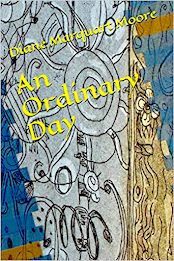
Pinyon #16 is a meet tribute to Gary Entsminger, “the troubadour” whose life mission was to celebrate the arts and sciences and whose wife Susan continues the mission. I also have a poem in this issue and appreciate the recognition as one of Pinyon’s “family.”
Available at Pinyon Publishing, 23847 V66 Trail, Montrose, Colorado 81403.