Saturday, May 13, 2017

ESPRIT DE FEMME

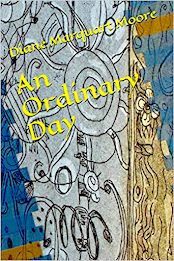
This morning, the fog on The Mountain blanketed trees, homes, and roads with an impenetrable curtain that could have caused feelings of morning gloom at Sewanee, Tennessee. However, when I went into the dining room for breakfast, I looked up at the windows facing our backyard and saw the latest glasswork of Karen Bourque that I brought back with me last week. A piece of purple colored glass with a hawk winging its way in the background cut through the somber world outside, and I decided to unveil this piece before it appears on the cover of my latest book, Above the Prairie, forthcoming through Border Press in June. There's no other word for Karen's new work — it's stunning!

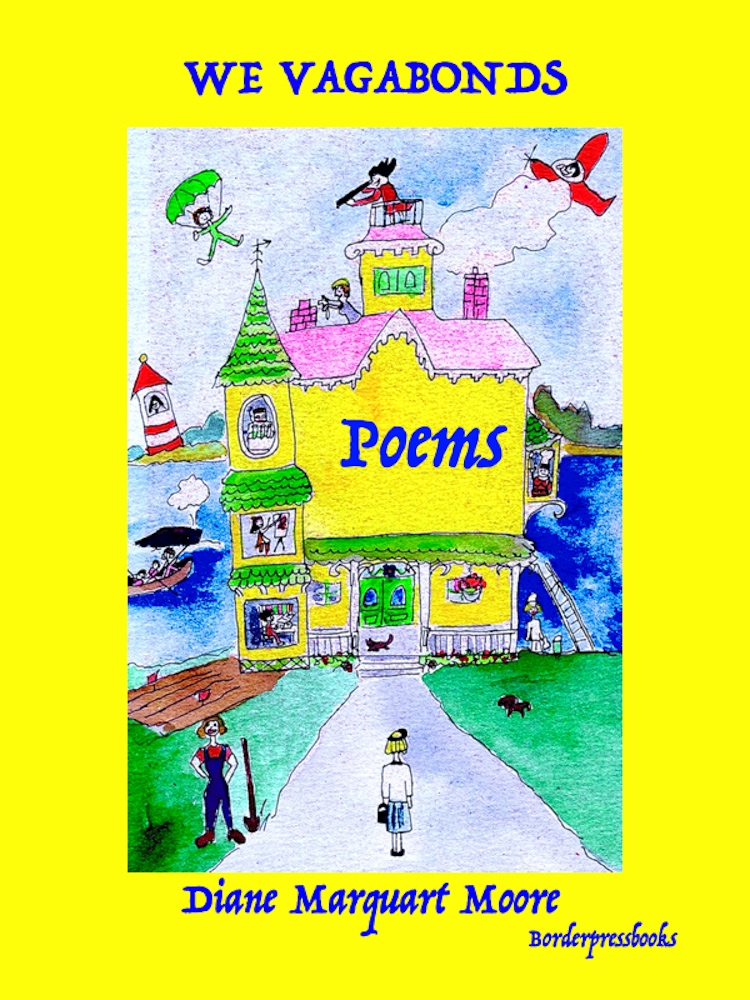
Karen and I've been working together on covers for my books of poetry during the last decade, and have the kind of synchronicity that births an almost instant process: Border Press publisher, Vickie Sullivan, and I meet for lunch with Karen and her husband, Darrell Bourque, former Louisiana poet laureate, and before we fill our plates, I perceive an idea for a book of poetry, along with the title — presto. I tell Karen about the idea, sometimes sending her a photograph or the first poem, and before I can produce a dozen poems, she has begun work on one of her beautiful pieces. In today's slang about synchronicity, she "gets it."

In another life, Karen was a lab technologist, a working mother, and wife, but when she retired, she began to dedicate her talents to glasswork, and her pieces have appeared in churches, spiritual centers, the Ernest Gaines Center at the University of Louisiana in Lafayette, at the Louisiana Book Festival, and other cultural institutions and homes throughout Acadiana. She never advertises her work because the word is out about her brilliant talent. As soon as she completes a commission, and even before she completes a glass piece, someone else is at the door to her studio, seeking her artwork.

I know that my book isn't published yet, but this morning when I looked up at the soaring hawk above the Louisiana prairie in prisms of glass, my spirit lifted, and I was compelled to share this stunning glass piece with readers. I'm always as excited about my book covers as I am about the poetry within and hope you'll look for what's coming next...

P.S. At the risk of sounding like a Grandmother braggart: After Karen produces a photo of the glass piece, it is sent to Martin Romero, my grandson in Louisiana, who makes a handsome design around the glass piece for the cover.


Friday, May 12, 2017

INTO THE SILENCE

Border Press has produced many "first novels," and its latest, Into the Silence by John Gibson, is among the press's growing list of excellent fiction writers who base their work in southern locales. Gibson, a physician who spent over thirty years on the faculty of an academic medical center in Mississippi, sometimes speaks of his novel as a "medical novel," but I think that Into the Silence could be called a "metaphysical novel" and reveals that Gibson, an Episcopalian, has spent a lifetime of study about esoteric religions, including his own Anglican church roots.

Gibson gives the reader a substantive view of a state that has produced some of the finest writers in the U.S. One of his characters, a farmer, provides readers with well-crafted passages about "connecting with something that's bigger than the soil, bigger than the ground you're working on...Some people say it's people who make history. But I think it's the land — it's the land and the rivers that make all the difference...take the Mississippi Delta, for instance: just by being there the Delta enticed man to dig in its soil, to cut and shape the land to suit man's needs...by just choosing to live in the Delta instead of the hills, man was shaping himself, his culture, his politics, his ability to earn and spend money..."

Gibson knows his region, as well as the politics of hospital administration and swiftly propels the reader into a story set in the emergency room of a bustling hospital where readers meet Dr. Todd Sutherland and his patient, Anna Chadwick, who suffers from Ebstein's Anomaly, a ventricular dysfunction. It's Christmas Eve and Sutherland is standing in for another physician; the woman is beautiful and charming, and the scene seems primed for an unlikely romance. However, beneath the surface of Sutherland's obvious attraction to Chadwick, lie questions related to life and death that take the reader into issues far deeper than the introduction of a romance. Sutherland becomes a frequent visitor at the bedside of Chadwick, and ultimately she undergoes a surgery. When she enters into a coma, Sutherland begins sitting with her, and during the vigil at her bedside, he undergoes a dark night of the soul, pondering where her soul must be as it relates to the difference between life and death. As the story progresses, he is accused of shutting off her respirator and endures an ethics trial.

Sutherland, in a state of grief, wrecks his car in New Orleans and ends up in Ochsner's Hospital where he experiences a state of consciousness near death and begins to probe the condition of his soul: "I moved through the walls and out in the open air and even more quickly rushed through a kind of tunnel and out an opening at the other end. While I came out of the tunnel, I could see a bright light. When I moved toward the light, a figure came into view..." The man is identified as Parmenides, an ancient healer who heals by prophecy and informs Sutherland that since he is a healer, he needs to learn to go "into the silence." Sutherland begins a study of Parmenides with a New Orleans professor who suggests that the physician put himself in a trance called Orphic Shamanism to contact the Divine for the purpose of healing.

Gibson's knowledge of Greek literature, Christianity, shamanism, meditation practices, philosophy, and metaphysics is extensive, and he interweaves these subjects into a suspenseful storyline without becoming didactic. Characters emerge from his medical background showing his adeptness at creating authentic personalities, and his extensive knowledge of healing — ancient and contemporary forms — strongly suggest the quality of care this compassionate, well-intentioned professional practiced during his career as a physician and teacher.

Gibson also rendered the pen and ink cover image of Into the Silence that is one of many works of art he has created and exhibited in Jackson, Mississippi as part of his lifework. Several years ago, he provided the pen and ink pointillism drawings in Illuminate, a book of poetry by his daughter Margaret Simon that communicates the beauty and mystery of the manifestation of God in the world. He also received an award in the 2012 Annual Cedars Juried Art Exhibition.

A Renaissance man actively working in retirement, Gibson is another author who joins Mississippi's impressive gallery of writers and artists.

Order from Border Press, P. O. Box 3124, Sewanee, TN 37375 or amazon.com

Monday, May 8, 2017

RESTORING THE PRAIRIE

At entrance crediting Drs. Charles Allen and
Malcolm Vidrine with establishment

Although I'm a native Louisianian, I had never visited Eunice, Louisiana until last week when I descended from The Mountain at Sewanee, Tennessee, where I reside in the spring and summer months, to Cajun country for a week. My mission was to further explore prairie Louisiana and gather inspiration for a book of poetry I'm writing entitled Above the Prairie. This forthcoming book contains a section about the Cajun Prairie, an area once called "the Garden of Louisiana."

In Eunice, we toured the Cajun Music Hall of Fame Museum and the Eunice Depot Museum, the latter of which held the full cowboy uniform of "Boo" Ledoux on the lower level, a tonsillectomy chair (!) and an ancient department store cash register from Wright's Department Store in the lobby area, but our mission concerned environment rather than artifacts, and we were directed to a prairie restoration project on a ten-acre plot within the city of Eunice.

Member of the mint family
In 1988, ecologists collected seeds from prairie remnants along railroad rights of way and stored them dry until they were planted within the plot of the restoration project. Sod was also rescued from remnants in danger of being destroyed by hand digging and were propagated in containers from both cuttings and seeds. The seeds were distributed by hand by individual collectors, and this resulted in the production of a heterogeneous matrix of prairie plants. Harrowing worked the seeds into the soil, and plants in containers and sods were transplanted. The process has been described in depth by Malcolm F. Vidrine, author of The Cajun Prairie: A Natural History and a prime mover in the project who also established a Prairie Garden Project in the yard of his home — another model for restoration efforts in southwest Louisiana.

Baptisia, wild indigo

We visited the small Eunice site where a diversity of perennial prairie plants have been established, astonished that a swatch of prairie vegetation had been restored within the limits of a city. Vidrine declares that by 2010, the Cajun Prairie Restoration Project had become successful; it was carried out by members of the Cajun Prairie Habitat Preservation Society who removed the non-native tallow trees that threatened the site, transplanted prairie plants, paved a trail, and now maintain a parking lot and a covered metal shelter at the site. The restoration site has become a classroom for ecologists and has also become a model for other projects pertaining to the restoration of prairies with native plants in natural settings.

Tripsacum, a grass ancestor of corn
As I included several poems about the flowers and grasses of the Cajun Prairie in Above the Prairie, the discovery of this project involving the tallgrass prairie in southwest Louisiana was a bit of serendipity for me. Less than 100 acres of a 2.5 million acre wilderness remain in narrow strips that are identified as critically imperiled by the Louisiana Natural Heritage Program, and I was excited to see this work by restoration ecologists.

As I've often said, one photograph is worth a thousand words, and I'm including a few photographs that my botanist friend Vickie Sullivan snapped while we were walking the short concrete trail amidst this place of natural beauty.