Wednesday, September 18, 2013

RETURN TO ASHEVILLE

Asheville street band singing
Jambalaya, crawfish pie...
It's nice to open the windows at night and let in the fresh air of the southern Appalachians. Although we refer to a sojourn  in Asheville as a "Busman's Holiday" because we have the same type terrain on "The Mountain," Asheville does provide a dose of city life we don't get in our village of Sewanee, Tennessee.

We're staying in a renovated Queen Anne style home in Montford, the National Historic District of Asheville. The neighborhood is a homogenous area touted as having 600 structures that reflect a diversity of architectural styles that were built between 1890 and 1920 when Asheville began to burgeon as an important city in North Carolina. Due to the vision of a lumber magnate named George Willis Pack, residences began to spring up in an area designated as Montford near the turn of the 20th century. Some of the residences became boarding houses similar to those immortalized in Thomas Wolfe's Look Homeward Angel, but most of the imposing structures were the homes of businessmen, attorneys, doctors, and architects who represented the upper middle class of Asheville.

Although the architectural style of the homes in the neighborhood is described as Victorian, the prevailing style at the turn of the century was Queen Anne, a style with which I'm familiar because as a child I spent summers in my Grandmother Nell's Queen Anne style home in Franklinton, Louisiana. It's a style that has corner turrets and towers and irregular rooflines—Grandmother Nell's home reflected that description, and her roof boasted a cupola with a stained glass window.

27 Blake Street, Montford historic district, Asheville, NC
We're enjoying a room in the home of Carolyn Spain who once ran a boarding facility and now rents out one room for tourists, a lovely room with woodwork painted a soft shade of mauve and high ceilings, filled with antique oak furniture and an authentic clawfoot tub in the bath. From one side of the room, we can look out at a series of interlocking gardens filled with sunflowers, roses, azaleas, morning glory vines, Echinacea and a gracious plenty of dogwood trees. Carolyn, our hostess, pointed out a small pond that a few days ago held prize coy fish before a blue heron flew in and devoured them.

Carolyn's home is the Bosse Bryan House, circa 1897, a Queen Anne style residence, built by J. H. Bosse who migrated to the U.S. from Germany in 1866. He owned and operated a grocery on Haywood Street and constructed this residence 31 years after coming to Asheville. Later, the Bryan family occupied the house from 1920-1970, and Carolyn bought it during the 1980's when she began massive renovation work. The house's architectural style is described as having "notable features that include irregular massing, a prominent polygonal tower clad in shingles at the upper level, and a recessed porch with Montford brackets." This residence is located not far from the famous sanatorium founded by Dr. Robert Carroll who treated Zelda Fitzgerald, wife of F. Scott Fitzgerald, for a psychiatric disorder. Zelda was among nine women who perished in the 1948 fire that caused the main building of the hospital to burn to the ground.

Another residence in Montford historic district,
Asheville, NC 
The artistic influences of notables like Bruce Price and Frank Lloyd Wright can be seen in several houses in the Montford neighborhood. The homes reflect the upscale segment of society that existed in Asheville at the turn of the century and for several decades thereafter.

We sat on the side porch that is the private entrance to the room in the Bosse Bryan House and enjoyed drinks with Carolyn and her friend, Berry Bate, who does ornamental ironwork and sculptures, one of which is featured in Carolyn's garden—a giant replica of dogwood flowers rendered in copper and iron. Berry has created a plethora of artistic pieces for historic places in Asheville, including the pedestrian entry gate to the Biltmore Mansion and a rhododendron wall piece for the Grove Park Inn.  She has done metalwork for over 2,000 residences, and for cities, universities and corporations.  Berry says she's inspired by forms found in nature and that her mind whirls with new ideas for artwork.  Her studios are located in Asheville and Lake Toxaway, North Carolina.


Adjacent to the Montford residential section is the Riverside Cemetery, known for its natural landscaping and for the gravesites of two of my favorite authors, Thomas Wolfe and O'Henry. Thomas Wolfe used the cemetery as the background for a moving scene in Look Homeward Angel shortly after Ben Gant (Wolfe's brother) dies—a place that Wolfe has a character describe as one in which "…you can get a nice view of the town…" 

Saturday, September 7, 2013

WIRES OVER THE HOMEPLACE

If the arresting title of Pinyon Publishing’s latest poetry publication, Wires Over the Homeplace by Paul Dickey, doesn’t attract readers, the sharp black and red cover painting entitled “Bold Painting” by Ira Haber will certainly entice poetry lovers to look within. However, readers don’t have to read far for their interest to be captured by poems of energy and variety that introduce a poet who writes at the center of things.
Paul Dickey crosses the boundaries of space and time in the opening section of Wires Over the Homeplace, entitled “Frontier Ancestors,” in the poem by that name, “bearing the full baggage of history, stowing the ancient instruments/that no more predict the future” and moving on to “where the rivers part…” in a late 18th century Pennsylvania frontier, then across the U.S. into the postmodern era. He transports readers into harsh places of the Midwest--at a public auction of the revered family farm and to a scene where “plump and skinny wives crow of granddaughters with money and day jobs in Milwaukee…” reaching out to every generation with his wry style conceived in democratic introspection.
My favorite section, entitled “A Knack to Losing Things,” shows Dickey’s ability to execute a bit of partner poetry in which he dialogues with the deceased American poet Elizabeth Bishop, author of “One Art.” He links himself with Bishop’s lines about significant personal losses with his own lines “What had been lost along the casual way/will not come back to me another day,/and to be frank, it often will not do/to keep a useful thing its use past due…” This “union in identity” carried out by many poets has been explicated in David Lehmann’s preface to The Best of American Poetry, 25th Edition, in which Lehmann explains how poets often “take note of an ancestor, ally, or rival” and begin a dialogue with a deceased poet about a mutually-inspired subject.
Dickey’s philosophical inclination exerts itself in many of the poems included in “The Knack of Losing Things” section; e.g., his “A Thief We Barely Noticed,” a poem with succinct lines about the inevitable journey toward life’s end, penned in metaphors that speak of ordinary household events: “A thief is living with us/tearing threads of wallpaper, pulling threads from the carpet./Every night it is the same./Footprints wear the linoleum./Luster is stolen from the silverware…”
In the section “We Never Know,” Dickey confronts aging, writing poems that are so poignant they cannot be dismissed by those who have reached the evening of their lives; e.g., “A Retiree Ponders His Day,” in which Dickey ponders his “morning of many rooms” and likens his life to a phonograph needle, listening to the “scratches, hisses, the pops that even now sound like the many years of himself…” These metaphors are woven into poems of sustained power throughout the section and affirm Dickey’s poetic strength in illuminating ordinary objects and people so that readers easily connect with his vision.
Dickey belongs among the Best of American Poets, and Wires Over the Homeplace is a significant work of contemporary poetry – each poem in the volume is a polished gem. He adds another star to Pinyon’s galaxy of outstanding American poets. Dickey is a poetry and philosophy instructor in Omaha, Nebraska and has published poetry book reviews, poetry, fiction, plays, and creative non-fiction in over 100 journals. His recent books include They Say This is How Death Came Into the World and Liberal Limericks of 2012, a collection of humorous political poems.

Order Wires Over the Homeplace from Pinyon Publishing, 23847 V66 Trail, Montrose, CO 81403.

Tuesday, September 3, 2013

IN A CONVENT GARDEN

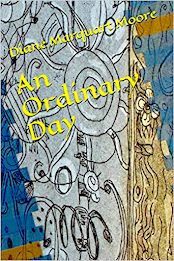
For those readers who responded so enthusiastically to my last blog about Penny, the dog who aspires to the diaconate, I’ve included a poem about her in my newest collection of poetry entitled In a Convent Garden and Other Poems, which will be published in a few weeks. The volume is a product of this summer’s writing, and rather than review my own work, I’m including the acknowledgements of fellow authors in this blog for those who read the poetry I write while I’m sojourning on The Mountain here at Sewanee, Tennessee. The acknowledgements are humbling and affirming, and I’m happy to share the endorsements of gifted writers and discerning readers:

“I do not profess to know the mind of the talented Diane Marquart Moore but I do know something of its grasp of the essential, in things both ordinary and extraordinary, from the poems collected in In a Convent Garden and Other Poems. Moore is an intuitive, fiercely intelligent, and contemplative poet who renders each poem with a precision of language that makes her ideas of the metaphysical palpable and clear. Her poems, propelled by still, but spirited narration, captivate. We are taken many places: the convent garden, a fortress on the bluff, No Name Road, the plains of Khuzestan—each place absorbed by Moore through all of her senses then conveyed in sharp but measured detail to her readers, for the purpose of leading us to higher ground. This life, seen by Moore, is never spare or hopeless, which is the true gift of this book. In fact the whole book is an urging to hope. She does not spare us the truth of the ‘marrow of bondage’ all of humanity shares, but her poems promise freedom. Moore assuredly directs us to an ineffable Source. Grace surmounts the suffering of this world, and we are led into a revelation of holy shimmer that drizzles on dogs and cats, stone angels, and gratefully on us.”
—Clare L. Martin, poet and author of Eating the Heart First, Press 53, 2012.
"Time out to reveal the heart"—such is the work Diane Marquart Moore has made for herself as a poet. Remembering to breathe inside the lines, remembering to delight in the gifts of the spirit, she turns In a Convent Garden and Other Poems into a new book of common prayer. Nothing escapes her heart and eye: the elder nuns, slugs, the convent cat, songs in dreams, wandering, the dog's way, Brother Rabbit, Appalachian dulcimers and the songs of katydids.
—Darrell Bourque, former poet laureate of Louisiana, author of Megan's Guitar and Other Poems from Acadie.
My heart leaps up when Diane Moore brings out a new book. She seems to breathe in life, then breathe out poetry—she "poems" with such ease and grace. Her poems are strikingly original and challenging; she makes the reader work hard, but the rewards are great.
—Jane F. Bonin, retired professor of English, University of Louisiana, Lafayette, and author of Major Themes in Prizewinning American Drama and Mario Fratti.
Diane Moore is the rare poet who has the courage to probe the exquisite wounds of human existence: loneliness, despair, suffering, want, night terrors, and betrayal. Just when the reader is at the point of pressing the button for a narcotic to dull the pain, with imagination and skillful craft, she swings through with the wry humor of a raccoon singing barroom ballads, a demonic cat dusting her allergies with dander, a sweet Sister instructing a Psalm reader to break at the asterisk or risk being swept away with the wicked, and, most healing, with joy-filled lessons learned in the course of her God-centered life.
—Anne Simon, Louisiana District Judge, Retired.
Diane Moore's eye is more precise than most painters, and she uses that eye to make a sacred music full of love and sympathy for what often gets ignored or forgotten. She is a wonderful contemporary amalgam of Emily Dickinson and Walt Whitman. Read her now and be delighted.
—Chuck Taylor, author of Magical, Fantastical, Alphabetical Soup.
Diane Moore has become a master of seeing, describing, and immersing herself in other lives. Her retired nun, Sister Mary Zita, "enters a dark cell / but her soul is not asleep;" a sculpture, "the stone angel is laughing;" and of Thomas Wolfe, she writes, "Each time I want his ghost / to give me a stone, a leaf, a door"… In A Convent Garden consists of meditations on spirituality, dreams, art, writers, travel, music, and nature.
—Gary Entsminger, author of Ophelia's Ghost and Fall of '33.
The cover photograph of In A Convent Garden and Other Poems was taken by Sr. Madeleine Mary, sister-in-charge of St. Mary’s Convent, Sewanee, Tennessee, and cover design was rendered by Martin Wayne Romero. Order copies from amazon.com after September 15, 2013.