Showing posts with label porches. Show all posts

Thursday, February 20, 2014

FOR PORCH SITTERS

While sojourning at Sewanee this past year, I jumped track from writing poetry and sat on the front porch composing essays about one of my favorite subjects—porches. I invited my friend Janet Faulk-Gonzales to contribute some of the vignettes for a book I began compiling because she and I share a mutual liking for these outdoor appendages to homes. At Christmas, I usually give Janet a calendar featuring porches, and we spend a lot of time discussing the virtues of the porches photographed for the calendar.

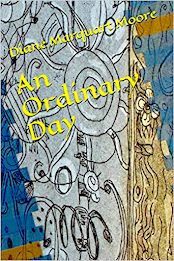
PORCH POSTS contains vignettes and stories about the "so-called passive life that goes on in the porch world," and features eight whimsical drawings by New Iberia artist Paul Schexnayder, as well as an arresting cover, a photograph of a lovely glass piece done by Karen Bourque, a glass artist who lives in Churchpoint, Louisiana. The vignettes range from descriptions of porch structures to tales recounted on galeries, as the French in south Louisiana call them. The porch settings cover wide territory—from Louisiana and Alabama to Iran and Qatar, but all of these observation posts offer a different view of the world as seen from the vantage point of two porch sitters.

Here are two snippets from the Foreword of PORCH POSTS, the first is from me and the second from Janet:

"The word 'porch sitter' describes, in unflattering vernacular, someone who is a lazy, good for nothing person. However, in more sophisticated settings, porch sitters are people who enjoy their galleries for evening gatherings in a space where they can relax, talk, sip libations, create good memories, and elevate their spirits... My childhood memories include porches of various types and architectural design, ranging from a simple, round concrete floor, painted red, with a slight overhang that my father constructed when we returned from a foolhardy trip to California, to a large one with lacy Queen Anne posts that my Grandmother Nell called her 'gallery'..."

And from Janet:

"For the most part, when we think of porches, we typically think of outside spaces, but I see them as places that hold the point for transitions of all sorts. On the porch, one is really neither in the rain, nor out of the rain; in the night nor out of the night; might be leaving but not yet gone; might be returning, but not yet settled—neither in nor out... At this moment, I can say that the two things which make the porch THE PLACE, whatever its dimension and decor, are its propinquity with the natural world and the fact that unexpected time on the porch comes as close to the still point of presence as any time anywhere..."


Look for PORCH POSTS to appear next month. It will be available on amazon.com, and I will provide a link at that time.

Friday, August 24, 2012

PORCH SITTING AND MINT


Porch at Sewanee
Each evening in late summer, we schedule porch sitting time, a time when we relax and enjoy slight breezes while sitting in the shade of enormous oaks and a lone maple tree.  Our front porch in Sewanee, Tennessee is actually a back porch facing the woods on our property and is a far cry from the broad gallery of my grandmother’s day. 
Grandmother Nell’s gallery was a wrap-around porch that held tall-backed rockers, pots of pale green Boston fern, and a green slat-backed swing that creaked when we pushed it back and forth with our bare feet.  From the vantage point of that porch, my grandmother could see everyone who drove by on Tenth Avenue, or walked on the sidewalk in front of her Victorian house with its cupola that boasted one stained glass window.  Those “passings” supplied topics for evening conversations.
Our very small Sewanee porch with its plethora of wrought iron is a place where we sit in late evening to garner a bit of peace and to listen to cicadas, crickets, and tree frogs, all singing in a monotonous cadence, a summons to enjoy nature’s plainchants.  Also, in late summer, the distant cries of boys practicing football on the university field pierce the quiet of our porch sit, announcing that Fall is about to commence.  As E. B. White once quoted from Thoreau: “…slight sound[s] at evening lift me up by the ears, and make life seem inexpressibly serene and grand…”
Porches of any kind incite nostalgia in me, remind me of evenings at some outdoor retreat where cool drinks are served and of the old custom of serving mint juleps on the verandah at Belmont Plantation in New Iberia, Louisiana.  On the long porch, painted a forest green, at 5 p.m. daily, the Wyche family gathered with friends for evening libations and to tell family stories or to discuss politics, food, and books.  I might add, there was never any silence.  “Big Jimmy’s” special mint julep held a sprig from his own patch, and he claimed that if a man couldn’t grow the plant, he was hen-pecked.  I have no clue regarding the origin of this story, nor do I understand why a man’s ability to grow mint depends on his relationship with his wife.
While thinking about Jimmy’s cool libation, I remembered my father’s love of mint and the many patches he had grown near the porches in my childhood, and even into adulthood, the last patch being beside a screen porch in Franklinton, Louisiana.  During my father’s demise, he sat on that porch daily, winter or summer, a melancholy figure looking out at his backyard garden of pole beans, tomatoes, lettuce, and field peas, silent and suffering from the lung cancer that would take his life.  In several of the books I’ve written, I mention that he did indulge in sudden outbursts while sitting on the screened porch – recitations of “Invictus,” in which he claimed he was the “master of his fate, and the captain of his soul,” believing that he could control both his life and the time of his death.  He was wrong, of course.
View of woods from porch
While sitting on my Sewanee porch this morning, I enjoyed 68 degree weather and proofed my new book of poetry, Everything Is Blue, now in press.  One of the poems is about mint, and several excerpts from the long poem seem to belong with this blog:


IN MEMORY OF MINT (verses one, two, five, and six of six verses)

It was not a sentimental act –
planting the mint
although my father planted a patch
every place we lived,
every time we moved,
and the underground runners
took over our backyards,
a space of its own forever.

He would have liked modernity
and what it has claimed
for the use of mint:
mint rubbing,
otherwise known as wasting time,
a way of achieving peace and calm,
rubbing mint leaves
between the fingers for two hours,
a scent, sweet and aromatic,
hovering above the head,
relaxing the brain.

I suppose mint symbolizes indolence,
the long plantation porch
and between the white columns,
a wicker table holding glasses
beaded with condensation,
filled with bourbon, ice, sugar,
a mint leaf drooping from frosted rims.

Porch sitting, mint rubbing, wasting time,
always the easy air of summer,
bees droning around a plant
pungent enough to defy my querulous line:
“it was not a sentimental act,”
as I bend to break a leaf,
rubbing it between my fingers,
a sacred but trivial salute
to my father.