Showing posts with label Sunni Brown. Show all posts

Saturday, January 30, 2021

THE SECOND DOODLE


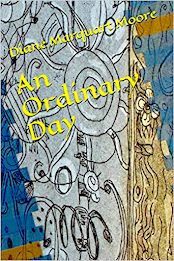
A few years ago I wrote a blog about doodling, and not long afterward, a doodle drawing I’d done became the cover of my book entitled iDoodle. However, this volume contained word doodles, rather than doodle drawings. I explained that word doodles, like drawn doodles, help people to focus and process what’s going on around them. Frequently the doodles present a humorous viewpoint about a serious subject.

This morning as I leafed through a portfolio I keep on my desk, I unearthed another doodle I drew. The vivid red in that doodle caused me to wonder if I’d been angry at the time of painting this weird piece of art. I’m always curious about the inspirations behind doodles. If I had been angry, the flaming color represented some kind of an emotional war going on. And I hope I was only angry with myself.

Doodles have become serious styles of random abstract art and contemporary drawings have morphed into mandalas that reflect serious thinking. These doodles have been the province of President John F. Kennedy, Thomas Edison, and Henry Ford, to name a few notables of Doodle mark making. Today’s doodle queen is a Brit named Hattie Stewart, and the doodler Sunni Brown has written an entire book about the process of doodling entitled The Doodle Revolution. Doodles have now been divided into technical categories, and I’m certain that readers will get out their pencils or pens and start doodling if I begin to explain these technical categories.

Although doodling began as a playful activity showing chicken scratches on the walls of caves, today those marks could occur during a long telephone call or could appear as an exercise to calm the very nervous by helping them to solve knotty emotional problems. Doodling open eyes could represent a person’s inner Self; but if the eyes appear closed, the person could be refusing to look within.

I’m sure this is all readers ever wanted to know about doodling, but creating those doodles could inspire persons to smile about a serious subject if the artists can let their minds dawdle long enough to impart a little irony when they encounter a serious problem. In The Rector of Justin Louis Auchincloss says that taking one’s self too seriously is, after all, the highest form of conceit.


Saturday, February 23, 2013

DOODLING…


My doodle!
 Yesterday, as I talked on the telephone with a friend in an extended conversation, I crossed the threshold of an exercise I hadn’t done in years – doodling. I looked at the doodle after I hung up, wondering why I had crossed that threshold since the conversation hadn’t involved a boring exchange; in fact, I had been intensely interested in brainstorming about the subject. For years, I’ve thought that when you doodled, you had a strong disinterest in the conversation, lecture, or sermon, and that doodling was a way of entertaining yourself when you were bored with the subject.

Doodling is associated with absentmindedness, and the origins of the word hark back to “fool;” thus the word gives readers the idea that the doodler may be just wasting time or dawdling, creating scribbles that are meaningless. Most of us can remember doodling in class and have dismissed it as a useless exercise, a way of daydreaming, rather than concentrating on the lecturer’s discourse. Not so!

According to experts on visual-spatial learning, some visual learners are doodlers and actually learn more effectively by doodling. Doodling reinforces ideas and has an effect on memory retention, helps the brain to focus, and actually keeps our minds from wandering! So if you’re a doodler you shouldn’t be ashamed of this useful exercise – you may be processing data.

On the negative side, the author Sunni Brown says that the most offensive definition of doodling that’s touted today is “To doodle officially means to dawdle, to dilly dally, to monkey around, to make meaningless marks, to do something of little value, substance or import…to do nothing…” Obviously, the author of this definition has no sketching ability and I might suggest, has a poor memory!

I’m not defending my doodle at the beginning of this blog, but when I looked at it, I entertained myself by attempting to analyze the picture, especially the lower part where I seem to be levitating, while my head has all these sprockets that look like the choices I was trying to make while conversing on the telephone. A friend saw the result and suggested that I keep it to remind me that I’m creative on days when I say that I have nothing creative to share with the world, or perhaps just to bring a belly laugh that we enjoyed while viewing the picture.

Famous doodlers include Thomas Jefferson, Bill Clinton, and the poet John Keats. Then there’s Sylvia Plath, the confessional poet, who ended her life by sticking her head in an oven and turning on the gas – which really isn’t a very reassuring example of a prime doodler.


Signature doodler
Signature doodlers represent another form of doodling. In fact, some signatures, particularly those of physicians, are challenging forms of scribbling and impinge on the definition: “meaningless marks.” Isabel, my neighbor and good friend in Iran doodled a self portrait each time she signed her name, and I am including that doodle signature to conclude this essay in defense of the activity of doodling. As a postscript, I read that mathematician Stanislaw Ulam developed the Ulam spiral for visualization of prime numbers while doodling, which is a good enough endorsement for me.
Happy doodling!