Showing posts with label Street Sketches. Show all posts

Monday, February 8, 2016

STREET SKETCHES

Karen Bourque
Karen Bourque, glasswork artist
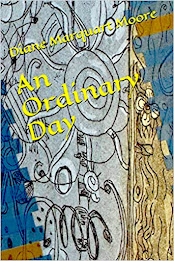
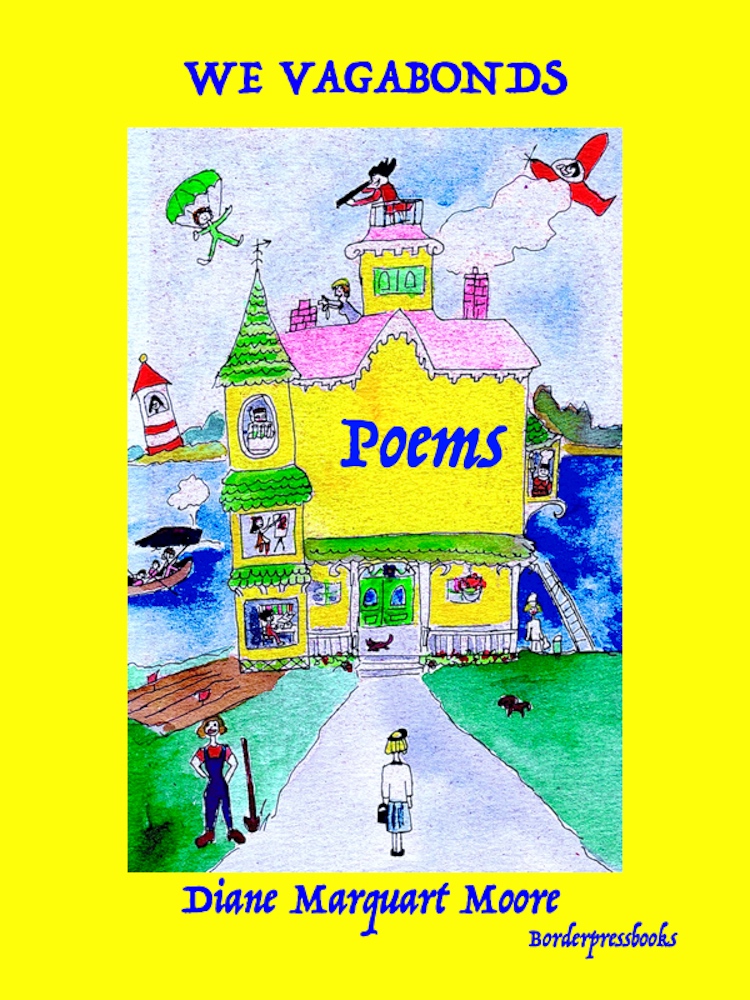
When a writer/poet commissions Karen Bourque to illustrate the theme of a book by creating a new glasswork, Karen responds by bringing all of her intuitive gifts to the project, and the resulting cover for the book is a masterpiece.  I know because she has rendered glasswork pieces that I’ve photographed for the covers of four of my books of poetry. Karen, who works in a studio behind her home in Church Point, Louisiana, not only creates the glass piece, she always writes an accompanying text that explains the symbolism of the stones and other objects contained within the artwork. I’ve begun to include a Note By the Artist in the books for which she creates covers, and I feel they enhance the themes represented in the poetry.

In a few weeks, Street Sketches, perhaps the only book of poetry that I’ll produce this year, will be published, and for this volume, Karen created a brilliant glass piece entitled “Lumina.” Karen says that this piece is entitled “Lumina” because it is compositionally and metaphorically about light, and “each source is a beginning point for further contemplation, a possible departure point in a meditation
 front cover of Street Sketches
on light: a red light as a signal to stop, look and listen to what is happening on or in street lives in cities and towns across the globe that often go unnoticed…the moon, a yellow jasper cabochon, a stone of endurance, perseverance, and tenacity…attracts others for friendship or to help with a goal…a street lamp, an agate cabochon which is a stone of strength and removes and releases energies of resentment and bitterness…a final source of light in the work emanating from the steeple of a church at the end of the street with a small cruciform encased in paler glass surrounding it. The steeple, the cross and the surrounding light suggest the power of spirituality or connection to a higher power…”

Each time I obtain the glasswork of this talented artist, Vickie Sullivan and I enjoy a visit with Karen and Darrell Bourque, her poet husband (former poet laureate of Louisiana) and we’re immersed in visual and verbal art for at least three hours. Each time before I visit, I say that I’m not going to write any more books, and each time I leave the habitat of these two inspirational artists, I return home, pondering a theme for another book…

Border Press describes Street Sketches in the following blurb:

“Alleyway, cobblestone, asphalt or concrete, streets are shared by all types of people who engage in diverse interactions; they are places of commerce or are residential in nature where aggregates of cultures gather. In Street Sketches, Moore captures the atmosphere and people who traverse streets that she has lived on or visited… from the busy streets of Ahwaz, Iran where she lived and observed beggar street people spreading their household goods on an Oriental rug and using it for a residence… to the elegant boulevards of Paris, Munich, and New York City, places where contrasting life in an urban environment takes place. She also probes the “Thoroughfares of the Mind,” “troubled roads winding among weeds/beside the ruffled waters of old lakes/and back alleys inside the brain. /Scandals and undisguised tragedies/mingling in closets of paranoia.” The concluding poem, “All Roads Lead to Home” reflects on her homesickness for streets everywhere she has lived and visited, lamenting that she “would probably spend a lifetime sitting at a window overlooking the streets of all those places, sketching what I viewed with words that express languishing nostalgia…”

Street Sketches is available on amazon.com or can be ordered by writing to Border Press at borderpress@gmail.com or P.O. Box 3124, Sewanee, TN 37375.


Saturday, December 12, 2015

THE CASE OF THE DISAPPEARING CROWS

A mad crow as depicted by Diane Moore
In both places that I live, Sewanee, Tennessee and New Iberia Louisiana, I’ve always enjoyed the company of crows – those black, glossy bodies flapping, then gliding across the sky, landing on trees in my yards. They usually recognize me, and lately I’ve missed their strident conversations when I walk outdoors. I’ve begun to wonder if the felling of the pines in my front yard had anything to do with their disappearance. Or they could have become ill with West Nile Virus since the mosquitoes in my neighborhood have been breeding apace. Whatever the reason, I strain to hear their familiar caws and hear only a few cardinals singing “cheer, cheer, cheer” near the backyard coulee.

I’ve read that crows have real family values. Their offspring stick around to help with younger siblings, often feed Mama Crow and the siblings, and defend their home territory against invaders. Families can include step-parents, nephews, brothers, and even orphaned crows, and in New York some crow roosts boasting as many as a million birds disappear in March when breeding season begins.

Since breeding season hasn’t begun, I don’t know why my crow families have disappeared, but I suspect that their absence has something to do with the murder of the three large pine trees, which had often been their perches. The sound of those trees falling was like a bomb dropping on the street and frightened several neighbors who came out of their houses to see if we’d been victims of an ISIS attack. Usually, the crows had responded to the whisking sound of my broom as I swept off the leaf-strewn patio and drive — a futile exercise that invited their raucous laughter.

I’m including in this blog a new crow poem from a book of poetry that I’m working on entitled Street Sketches — one that will have a cover photograph of a glass piece based on one of Georgia O’Keefe’s paintings and rendered by the master glass artist, Karen Bourque, of Church Point, Louisiana.

RETURN TO CROW LANE

They circled overhead
like buzzards on the desert
waiting for us to tip the ladder
as we cleared overflowing gutters,
streets they perceived to be theirs,
landing fields closest to the empty house,
streaked windows they had peered in
and seen unlit lamps.

Was I only deceiving myself
about the intent of dark birds
others feel are dressed in misfortune,
thinking they’re heavenly agents,
creatures that speak in parable
strutting in the garden
and bringing messages of good will
directly from the angels?

When they left their roost in a dead pine
and soared into the sky
it was laden with the raucous noise
of a new language they had created
because we had gone away
leaving their streets untended,
the defiant sound of prophecies
we struggled to interpret.