Showing posts with label Poetry. Show all posts

Tuesday, May 4, 2021

ABOUT "LITTLE ESSAYS"


Fourteen years ago, I began writing blogs, or as two of my friends called this medium, "writing essays." When I think back to the inception of "A Word's Worth," I hear those two voices urging me to record short pieces about people and events, "exploring the fullness of life," as Rebecca Dale said of E. B. White's essays in The New Yorker. Some weeks I hear the "thud of ideas" White described as the action of his Muse. On other days, I hear the roll of thunder without the lightning of ideas.

Today is noisy enough with occasional thunder rolls, but the lightning flashes are confined to memories. And that's OK because most subject matter in my on-the-cusp-of 86 years old mind lies in the depository of memories. This rainy day I probe the memory of my decision to become a poet.

I was in the sixth grade and had returned to civilization after my father's great folly about the family becoming gypsies via tent camping, sleeping on roadside park tables, bathing in rivers en route to California in 1946. I was eleven years old and sighed in relief when we returned to the small southern town of Franklinton, Louisiana. There, I decided to become a poet in my sixth-grade classroom filled with what I called "country people" (offspring of farming parents). I'd been reading in a sixth-grade reader and delighted in a section on poetry. "I can do that," I thought, and promptly wrote a few lines about my new home: "away from the town's noisy din/from the roar of the cotton gin…" I wrote this following the example of my mother's hero, Robert Louis Stevenson. It's one of the very few rhyming verses I've left to posterity. Well, it does sound a bit better than "A birdie with a yellow bill/hopped upon my window sill…."

For approximately thirty years, I thought about becoming a poet, read a lot of poetry, and finally submitted a poem to The American Weave (now defunct) magazine, which published "My Father's Hands." The American Weave was a literary journal that paid me $18 from the Hart Crane Memorial Fund. Did I become a poet? No, this publishing event occurred in 1967, and I spent twenty more years reading and studying poetry and writing poems "underground." I did not return to thoughts about publishing poetry until 2008, when I moved to Sewanee, Tennessee. It is here that the biggest lightning strike in my life occurred, the flash in 2020 when I wrote Ridges, now on sale*. It's a book featuring my poems that accompany Don Thornton's wonderful paintings of Louisiana chenieres.

And so much for rain-inspired blogs and "come lately" poetry books. Tomorrow the weather may be sunny.

My latest book of poetry, Ridges, is available from me at P. O. Box 3124, Sewanee, Tennessee 37375 and from Pinyon Publishing, 23847 V66 Trail, Montrose, CO 81403. 


Friday, April 23, 2021

PINYON REVIEW 19, SPRING 2021, LIMITED EDITION

Chenier, a glass piece by Karen Bourque


This pocket-sized literary and art journal is another hand-sewn treasure produced by talented Susan Entsminger, editor/publisher of Pinyon Publishing in Montrose, Colorado. Susan, who began her artistic work alongside her husband, Gary Entsminger, (deceased) a decade or more ago, has continued designing and producing unique poetry and art books since Gary’s death. She has expanded this independent press's list to include international writers, photographers, and artists.

Susan has added poetry to her painting, drawing, and design repertoire in this issue of Pinyon Review 19 with an introductory poem entitled “Cured.” As I read the poem, I imagined the voice of my former editor (Gary) speaking to Susan: “She only heard/one message from the other side/he said, do not waste your joy/Sun on snow… Crows kept calling on the telephone wire/long after she had forgotten his number…” While reading author bios in this issue of Pinyon Review, I also discovered that Susan has been publishing poetry in Mudfish, Main Street Rag, and SAL. As I read, I envisioned Gary agreeing that she hasn’t “wasted her joy.”

In this hand-sewn edition, the poets Susan showcased  include renowned Luci Shaw, whose “Wishing Flower” is a poignant verse featuring a small child who observes “…dandelions proliferated enough/to cover the field with a tablecloth of gold/stars blowing in the wind…” Shaw, a long-time contributor to Pinyon, is Writer in Residence at Regent College, Vancouver, and received the 2013 Denise Levertov Award for Creative Writing.

I’ve had sporadic correspondence with the poet, Chuck Taylor, former Creative Writing Coordinator at Texas A&M who operates Free Slough Press. Chuck, also an accomplished photographer, contributed four lovely nature photographs, “Seeing More Than You See,” in this issue of Pinyon Review. He showcases his photographic work through shows in galleries, literary magazines, and on the web.

My dear friend, Karen Bourque, contributed a glass rendering of Ridges, my recent book of poetry and Don Thornton’s paintings published by Pinyon. The art piece features chenieres of Louisiana that publisher Susan describes as “vivid, visceral paintings.” Karen used stained glass, Apache tear, and kyanite to create her portrayal of the chenieres. It’s an arresting art piece that accompanies selected poems from Ridges, my book Susan will release in May.

Four haiku by Gary Hotham, a long-time contributor to Pinyon Publishing, will delight readers of “Dark Matters, ” a quartet about “early stars/fireflies changing/places.” Hotham is the Vice-President of the Haiku Society of America and has received several book awards for his haiku contributions.

As I said earlier, Pinyon #19 is a treasure created by Susan Entsminger, from the cover art and design of the High Country, Ouray Colorado to the last untitled poem by Simon Perchik “…in ashes, making room on the stove/in rest by a river/where there was none before.”

Limited Edition. Order through Pinyon Publishing, 23847 V66 Trail, Montrose, CO 81403


Thursday, February 25, 2021

FOOTNOTE TO GINGER

Ginger Alive and Dreamy


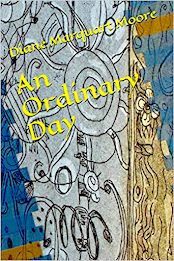
A large response from readers of the Ginger blog caused me to give it better press than the photo of dead plant specimens in my yard that I published last week. This morning when I viewed a photograph of it alive and well that appears in An Ordinary Day, a book of my poetry, my melancholy mood lightened considerably.

Botanist Vickie Sullivan’s photograph of the plant when it was green and glowing gave me hope for the Ginger patches scattered about our yard. I know that New Iberia, Louisiana has a plethora of dead Ginger vegetation, and our yard tender tells me that we’re on a long list of customers clamoring for the removal of dead plants. So I look at the photograph Vickie took when our plants were at their best and wait for the drooping tan leaves to be cleared.

I know that after the dead leaves are removed, and by the time we return to New Iberia in the Fall, our Ginger patch will have resurrected and will look like the photo of this plant that makes New Iberia landscapes look luxurious and paradisaical. 
 
Photograph & Treatment by Victoria Sullivan  


Wednesday, December 2, 2020

RIDGES IN GLASS

Cheniere glass art by Karen Bourque


I have the good fortune of owning fourteen glass pieces created by Karen Bourque, the masterful glass artist of Church Point, Louisiana. Many of these pieces have been photographed for the covers of my books of poetry and now hang on the glass porch of our Celeste residence here in New Iberia, Louisiana, and in the windows of our home on Fairbanks Circle in Sewanee, Tennessee.


Karen’s latest glass piece is her interpretation of a Louisiana Cheniere, or ridge, and will be featured in the spring edition of Pinyon Review along with several of my poems. The featured poems derive from Ridges, a book of my poetry that Pinyon Publishing will publish this summer.


Karen’s latest piece is a beautiful work of stained glass, Apache Tear, and Kyamite that she created this year. It now hangs on the glass porch of my home here in New Iberia, Louisiana. As I look at the purple sky overhanging a cheniere, I’m lifted out of the Covid doldrums and remember a brighter day's visit I made to Cheniere au Tigre many years ago when three female companions and I traveled by boat to this site.


Diane on way to Cheniere au Tigre

Karen’s renderings always evoke strong emotional responses in me. A unique non-traditional glass artist, she creates most of her work in a studio beside the Bourque home that she shares with the former poet laureate and humanist, Darrell Bourque. Before the dreaded Covid caused me and my friends to sequester ourselves, I often visited there.


Karen’s work is featured in the Ernest Gaines Center at the University of Louisiana at Lafayette, in a window depicting the Holy Spirit at Christ the King Roman Catholic Church near Opelousas Louisiana, at the Louisiana Book Festival, in an issue of Pinyon Review, and many other venues and homes.


As the maxim reads, “One picture is worth a thousand words,” and this photo of Karen Bourque’s latest rendering affirms that critique. Briefly said, her work is a spiritual experience. 


Thursday, March 19, 2020

Grandma's Good War Remembered Today


We are battling a virus, Covid-19, today which many refer to as "war." I'm reminded of WWII that happened during my childhood when significant sacrifices were required of all who lived during that time. My book, GRANDMA’S GOOD WAR, A Verse Retrospective of the Forties, published during the Great Recession of 2008, provides a point of identification with a period of reoccurring history that has become an important part of our modern life. One reader wrote about this book, “wherever we lived in this time our lives seemed to be almost identical, even to the knitting for war victims.” The title poem of the book recalls sacrifices of that time reminiscent of today's war against Covid-19 and the hopeful feelings we will experience about victory over this pandemic.

Grandma's Good War
I was a child during World War Two
burdened with adult tasks to do,
in backyard plots planted row after row of garden seed,
cleared away clump after clump of coco weed,
collected scrap iron by the wagonload
and stacks of newspaper, crinkled and old,
the iron to be melted for weapons of war,
the paper recycled and sent afar,
bought war stamps and war bonds from Uncle Sam,
savored lunches of Vienna sausage, tins of Spam,
complained about rations of chocolate kisses and coca-cola,
played thick, black records on an ancient Victrola,
sang “Off We Go” and war songs galore,
in air raid drills, lay stiffly on oily wood floors,
loved to say aloud “Tojo, Hitler, and Mussolini,
Okinawa, Guadalcanal, and Iwo Jima.”
On V-J Day, celebrated war’s end in a dancing crowd,
ignoring the shadow of a mushroom-shaped cloud,
was proud to be a patriot who loved the victorious USA,
remembering WWII as the period of a better day,
at armistice, believed all wars would cease …
and the world would bask in the sun of peace.

Grandma's Good War is the only book among 52 I've written that contains rhyming poetry. Stay vigilant, stay well. Plant a Victory Garden.


Friday, November 1, 2019

LET IT BE A DARK ROUX


Twelve years ago, I began writing a blog called A Words Worth and have published at least four posts a month each year since that time. I’ve been faithful to this schedule during that period while living in both Louisiana and Tennessee. This past month I decided to pursue posting only sporadically, probably book reviews and literary events, rather than weekly blog posts written about a variety of subjects. As soon as I made that decision, books by friends and authors, and author events began to show up, and for a while, I may seem to be writing on a schedule, but I’m not. Three books are sitting on my dining room table, and the Pinyon Review that Susan Entsminger published as a salute to my former editor/publisher, Gary Entsminger, is en route, so…

Wednesday night, I attended a Festival of Words event in Grand Coteau, Louisiana that featured Sheryl St. Germain, Louisiana’s Writer of the Year, 2018, who read from two of her books of poetry I purchased that evening. Yesterday morning I opened and read through them in one sitting as St. Germain “spoke to my condition” in her intense, un-self-conscious voice. Of the two volumes I purchased, I chose to write about Let It Be A Dark Roux* because I think it best expresses St. Germain’s lifetime purpose, e.g., in “Flambeau Carriers”:

…I wanted it to be the poet’s job:

to carry the burning night

to hold high our stumbling,

astonished,

street-dancing selves. 

Here is the finest poet I’ve read in a long while, one who has a sensuous, heart-exploding voice, who is unafraid to pour out in exquisite and accessible poetry expressions of pain, nostalgia, femaleness, able to incite nostalgia and sadness, sometimes with deft, sharp blows, but always with this amazingly un-self-conscious voice. I might add that she also has an amazingly soft speaking voice, even when she reads her harshest poems and impresses her audience in Grand Coteau with her humility. Usually, I cite other poets who may seem to be predecessors in the same style as the poet I’m reviewing, but this awesome female poet is uniquely outspoken and dissimilar to any I’ve known or read. She touches readers to the bone.

St. Germain’s Cajun origins emerge throughout Let It Be A Dark Roux, and I was drawn to her “Mother’s Red Beans and Rice,” feeling that no one of Cajun origin can flip the page when St. Germain describes the

…ham bone and marrow

to make the gravy thick,

salt pork to make them meaty, smoky

…The beans would cook all day, filling the house

with their creamy onion pork smell, the sauce slowly

thickening, the beans slowly softening

…I eat them like joy.

St. Germain does not gloss over the agonies of addiction and the woundedness of a family afflicted with the diseases of alcohol and hard drugs — father, brother, son, Sheryl herself — but readers will be moved by her candid witness to these agonies and her courage displayed in recovery. Much of the raw story to which she witnesses is told in the second volume I purchased, The Small Door Of Your Death, published in 2018, but I chose to write about the healing memories/experiences of which she wrote that revealed the redeeming aspects of Art. 

Again, returning to food — the joy of every true Cajun’s life — when I read “Bread Pudding With Whiskey Sauce,” I was reminded of my paternal grandmother’s kitchen (a Vincent descended from Nova Scotian stock), and, as St. Germain writes: 

how sorrow can be transformed
into bread pudding

… dry hard pieces into soft moist bits.
Add raisins and peach halves.
Beat eggs with sugar and cinnamon,
freshly grind allspice and nutmeg.
It will smell like Christmas,
It will smell like your mother’s
happiness. Mix it all together,
bake. The house will fill
with goodness, with the smell
of grace… 

I went hunting for Cajun fare after reading that tribute to good food (and found gumbo on a cold day in Acadiana). 

Perhaps readers will not be able to breathe easily when Germain writes of the heavy breath of God and features vultures in “In the Garden of Eden.” Still she surprises these readers with an unusual take on the giant birds that sometimes cause anxiety in humans when they come upon carrions gathered on highway roadkill: 


their unfeathered heads the red jewels
of the sky of the garden.

They were vegetarian then. 
There were no roadside kills,
no bones to pick, no dead flesh to bloom, ripen.

And they were happy.
They could not imagine
what they would become. 

Here is a poet’s poet, one who brings poets and other readers to the point of redemption and reminds all of us that “…poetry is best at howling/it’s the only way to say the unsayable.” This is what St. Germain does without mawkishness or hopelessness, bringing readers to a deep appreciation of her undaunted spirit.

Sheryl St. Germain is a native of New Orleans and is of Cajun and Creole descent. She is now retired from Chatham University in Pittsburgh, PA where she taught poetry and creative non-fiction and is noted for her work as co-founder of the Words Without Walls program. 

*Published by Autumn House Press. 


Wednesday, April 4, 2018

LET THE TREES ANSWER


Back on The Mountain at Sewanee, Tennessee for the spring and summer seasons, I shiver in temperatures dipping to the 30’s and 40’s and winds blustering out of the North today. I’m warmed by the sight of the cover of my new book of poetry, Let the Trees Answer, designed by my grandson Martin Romero from a photograph of the Gebert oak taken by Victoria I. Sullivan. Dr. Sullivan, a botanist and writer, photographed the trees included in this salute.

The book of poetry is my contribution to National Poetry Month and is slated to be published by Border Press within this month. A description of the poems and an acknowledgment by Dr. Mary Ann Wilson, Professor of English at the University of Louisiana, Lafayette, are featured on the back cover of Let the Trees Answer.

This volume, a poetic tribute to trees, includes poems conveying the idea that “trees can talk,” a form of humanistic botany within the frame of verse. Let the Trees Answer is the third book in the series Between Plants and Humans, ranging from pines in Louisiana to jacarandas in Florida, and along the way, crabapple, Chinese Tallow, catalpa, and other trees scattered throughout the woods of the United States. This is a must-read for tree huggers.

“This loving tribute to trees, beautifully illustrated and full of plant lore, celebrates and remembers childhood, first love, betrayal, loss—all the time markers of our lives. Its lyrics turn us back to Nature, to the “consolation of spirit” trees offer whether they deflect family sorrow or embody erotic longing. Jacaranda, Joshua, Cedar, Paradise Apple—even the lowly Chicken Tree—emerge newly clothed with memory and desire. Let the Trees Answer gives us a writer at the top of her form, fully alive to the wisdom and mystery at the heart of our life on this earth. Kudos to Diane Moore for inspiring us to stop and look and remember.”
—Mary Ann Wilson, Professor of English, University of Louisiana, Lafayette —


Happy National Poetry Month to all of you poetry writers and lovers, as well as tree huggers everywhere!


Thursday, July 28, 2016

IN THE MIRROR

When I read Michael Miller’s work, an image appears in my mind of a poet sitting on a bench near Emily Dickinson’s house in Amherst, Massachusetts where Miller walks daily and receives the Muse — perhaps even Emily’s Muse. In fact, Miller’s latest book of poetry, In the Mirror, includes a poem entitled “Visiting Emily,” in which he expresses the desire to ask the famous New England poet “…about living, dying, /About the veins of a leaf/As thin as my white hair…” In this poem, he imagines how Emily nods to a 200-year old oak, saying “in a barely audible voice/That the finches will not/Be in mourning on the branches/ Once all the leaves have fallen.” The poem is a salute to the bard of Amherst and to an ancient oak whose branches point upward toward the Pelham hills.  

I have enjoyed a sporadic correspondence with Michael Miller during the last five years, and through readings of his e-mails and the poems that reflect his rich inner life, I think that he represents the best of the group of poets published by Pinyon Publishing, his books appearing almost yearly now through the nurturing of Pinyon and its editor Gary Entsminger.

Like Miller’s publisher I was especially moved by a long poem entitled “A Woman Alone,” about the imagined life of a woman in her ninetieth summer who is traveling on a bus to Barstow, California through the barren Mojave Desert, “basking in the silence/Of miles, of cacti, of rocks embedded/In sand. Only listen, she repeats…” I can easily visualize the scene Miller paints in which the lonely woman misses her garden as I’ve spent many hours in the Mohave and a week one summer near Barstow, comforted only by the sight of Joshua trees. In the succinct verses of sometimes only six lines, this long poem probes mortality with a combined high quality of insight and clarity, exploring the remembrances and poignant laments of the aging:

“This time her daughter arrives
To help her move.
She dreads the open boxes,
What to put in, what to leave out,
Worries she is packing her life away
Never to be opened again.”

In V. of this long poem, Miller evokes his poetic powers with force and brevity, recording the regrets of an old woman: “In the light of the window, /With her still steady hands, /She is sewing a hole in her life, The needle and thread/A companion from childhood/A contrast to the losses/Accumulated through time …” This is a poem about resilience and hope, conveyed through the surprising voice of an elderly person who has transcended loss and suffering.

At every turn, the reader joins in an exploration of undisguised reality, revealing Miller’s sensitivity and awareness of the human condition. However, we are treated to a bit of magic in poems like “Magician,” in which the poet finds within himself a shared rapture with his grandson at his first magic show where Miller “disappears inside him, /leaving [his] death behind.”

In some of our e-mails, Miller has been kind enough to offer evaluations of poems that I’ve published in The Pinyon Review, alongside his creations, but I’m quick to acknowledge his fine, inspired work as profound artistic creations. The end poem, “The Clock’s Hands,” is a lovely tribute to his wife whom he says he would regret leaving, “…leaving the loveliness that has not grown old/But only deepened/With each wrinkle, each gesture:/Spreading the marmalade, /Walking in the garden/To peruse your blossoms,/Placing your pink blouse/On the chair’s straight back/And coming to bed/With a smile beginning./I cannot imagine/Another paradise.”

This is a splendid collection of poems, honest and original, and as I said in the opening paragraph of this blog, Miller represents the best of Pinyon’s poets who have looked at the world and have clearly come to recognize the magnitude of life.


Michael Miller’s poems have appeared in The Kenyon Review, The Sewanee Review, The New Republic, The Yale Review, and other publications. He won First Prize for his poem, “The Different War,” awarded by the W.B. Yeats Society and anthologized in Yeats 150. In the Mirror is his seventh book of poetry. Miller lives in Amherst, Massachusetts, along with the same Muse who inspired Emily Dickinson, Robert Frost, Robert Francis, and other outstanding New England poets. Salud, Michael!


Sunday, June 26, 2016

TASTE I SAY, YOU’RE TIMELESS

Yesterday’s mail yielded a book of poetry by Chuck Taylor, a Texas-based writer who has operated Slough Press 43 years. Taylor’s latest, Taste I Say, You’re Timeless, contains characters whose names he says “come off a matchbox, like ‘Strike Anywhere.’”  The poems reflect an artistic sensibility that values personal freedom and explores alternative ways of living. They're reminiscent of “beatniks,” those cultural radicals who typified a vibrant counter culture during the 1950’s and 60’s in this country.

Taylor describes his book as a collection of “Prose Poem Anti-Poems,” and I enjoyed his relaxed style that Michel Delville refers to as “a downright illegitimate mode of literary expression.” His opening poem entitled “Where” asks the questions: “Where will the sentence take us?” followed by “Does this sentence start out from an unknown shore…can it row against the currents in search of undiscovered atolls…would the fear of being lost at sea keep us from going…? His metaphysical questions are even stronger: “How often in a day must we be happy to have a happy day? 4.6 hours? Must we bathe in the sweet tea of happy-like sunlight, or can you work in a dim corner by a subway shining shoes day after day so to be in rumbling noise of happiness…?

The poet provides his own answers in a series of prose poems “comical and a bit cynical,” Taylor writes in a letter accompanying the gift book he sent to me. I particularly liked the character “Strike Anywhere” featured in the poem “Cat On A Hot Tin Roof,” whose lonely feet are referred to as “apples in the dust wisely well traveled. I need to learn to bend and fold up in many pockets. Go with the luck of the soul’s water and the solid moment.” “Strike Anywhere” is the perfect personification of Walt Whitman or the wandering vagabonds of beatnik fame – Kerouac, Ginsberg, Ferlinghetti, Snyder, to name a few.

The strange names in Taste I Say will cause readers to imagine all types of cultural radicals: “Strike Anywhere,” “This Side Up,” “Tobacco Free,” and “And Other” (a tall, carrot-topped Buddhist). Taylor underlines his explorations into alternative ways of living with characters who’re definitely not mainstream but who say it all and who, having “said it and said it, it all lies in the grass waiting for rain.” He takes these contemporary characters on delightful misadventures in existential landscapes until they find the ideal shore to push off from.

Consider this piece of alternative literature entitled “Manage” expressed by a non-materialist: “Down in the bargain basement so long, ‘Keep Away From Children’ [another invention of a comic name] did not know the air was musty, did not know the absence of wind or sunlight, down in the bargain basement for the testimony of the tribe of clearance – woeful shoes, party blouses already lonesome for dance, murderous belts and bolts of cloth so sad you can almost hear the tearing. Down in the bargain basement, hands behind her back, throat clearing, feet in tired heels, doing her dim shining duty.”

Enlightenment comes after two or three readings of the poems, and they’re worth the effort. Taylor’s clever combinations of words remind me of the poets Charles Simic and Charles Bukowski intermixed and chanting ardent “beat” poetry. Comic yet wise messages are passed on from an expert in the fields of Beat Literature and Creative Writing. Taylor has taught at Texas A&M, UT at Tyler, El Paso, and Austin, and Angelo State University and has won the Austin Book Award and Utah Fine Arts Poetry Contest. He also did extensive work in Poets in the Schools Programs.

Taylor does magic tricks for children’s parties, “studies socially-sanctioned investments, took care of his invalid mother, and now spends too much time on Facebook.” His letters are written on the reverse, blank side of college course hand-outs and are as amusing as his prose poem anti-poems.

These prose poems aren’t just cynical excoriations; they contain philosophical and metaphysical nuggets — noteworthy, timeless sentences...in the author's words, "new machines from the river of words…”


Taste I Say, You’re Timeless: Prose Poem Anti-Poems was published through Weasel Press in Manvel, Texas.