Showing posts with label Ogden Nash. Show all posts

Saturday, May 20, 2017

“GOOD FOR THE STOMACH?”

This past week, I celebrated my 82nd birthday and received a gracious plenty of gifts, calls, well wishes, and cards, among which was a box of forbidden food — a box of chocolate caramel candy — forbidden because it’s on a long list of foods to which I am allergic. I ate four of the pieces and promptly became ill. When my youngest daughter Elizabeth called from California, I told her the truth about her gift.

“However,” I added, “the box said, ‘made with sea salt,’ and that sounded healthy enough to me.”

“You got it past the chocolate police?” she asked. She was referring to my friend Vickie who knows about my reactions to this “food of the gods” and tries to monitor my consumption of it. “But I know how you can talk yourself into something being healthy,” Elizabeth said. “I can just walk into Trader Joe’s and see all the fresh food and feel like I’m healthy.”

When I visited my chiropractor the day after I suffered the chocolate reaction, Amy shared with me that she would buy a sack of Heath bars to distribute at Halloween and by the time “trick or treaters” showed up, the sack would be empty. A highly disciplined and healthy person, she surprised me with her chocoholic confession.

Chocolate has some positive qualities for people who aren’t allergic to it, but naysayers downplay reports that cocoa can help reduce the risk of heart disease and provide calcium, magnesium and antioxidant phenols for those who consume this food. I remember that chocolate bars were widely distributed to soldiers during WWII, but back home in the U.S., it was a rationed item, and we were lucky to get a bag of Hershey “kisses” once a year. At that time, when I got sick from eating a few “kisses,” I was accused of overeating. I was fifty years old before I learned that humans could be allergic to this sweet.  

The ancient Aztecs believed that cacao seeds had aphrodisiac qualities and were a gift of the god Quetzalcoatl; they also believed that other gods had condemned this god for sharing chocolate with humans. The only chocolate for which I have no appetite is one served in Mexico called “mole.” During a three-week visit to Oaxaca City, Mexico one summer, I sampled mole (chocolate served in chili-based sauces) at the south end of Oaxaca’s Mercado 20 de November. Ugh! No danger of my agreeing with Jose de Acosta, a Spanish Jesuit missionary who lived in Mexico in the 16th century and wrote that mole was “good for the stomach.” 


Of course, Ogden Nash wrote that “Candy is dandy/but liquor is quicker,” but that verse needs a bit of modifying because no alcoholic beverage can equal the warm rush that comes when you take a bite of something like an expensive milk chocolate truffle. I might add that the cacao beans actually were fermented and regarded as an alcoholic beverage in 1400 BC, so I guess Nash wasn’t that far off course after all…


Friday, December 9, 2016

LIGHT VERSE

In the midst of critical downturns lately, I began creating some light verse called The Everyday Journal, poems lighter in content than most of the poetry I write. I also re-acquainted myself with the King of Light Verse, Ogden Nash, beginning with breakfast non-rhymes (in contrast to Nash's penchant for rhyming) and concluding with the second cup of coffee.

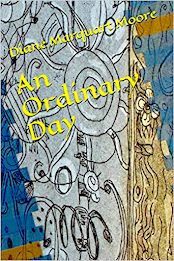
I had fun unwinding with light verse, and this morning I re-read a few Nash poems for inspiration. Nash, by the way, began making up his droll rhymes at age six and often crafted his own words when rhyming words didn't suffice for his comical verse. He dropped out of Harvard after one year and went to New York a few years later to sell bonds, but admitted that in two years he sold only one bond to his godmother.

Nash then began writing ads for streetcars and later spent three months working on the editorial staff for The New Yorker. After he married Frances Leonard, his fortunes began to pick up, and he published his first collection of poetry, Hard Lines, which brought him national attention. In his spare time, Nash appeared on radio comedy shows, but he was also respected by the literary crowd who wrote and critiqued more serious poetry. Theatre-goers may remember Nash's lyrics from the Broadway musical, One Touch of Venus.

The verse by Nash that I read this morning is entitled "The Anatomy of Happiness," and was longer than his usual snippets ("Candy is dandy/but liquor is quicker"). The long piece of verse spoke to my condition: "...Miracles don't happen every day,/But here's hoping they may,/Because then everybody would be happy except the people who pride themselves on creating their own happiness who as soon as they see everybody who didn't create their own happiness become happy they would probably grieve over sharing their own heretofore private sublimity,/A condition which I could face with equanimity."

An example of one of my non-rhyming poems from The Everyday Journal regarding the efficacy of chaos:

FLASH FLOODING

At lunch, she plays a podcast --
how chaos begets creativity,
"I have a dream," the spontaneous result,
a Civil Rights speech
carefully prepared and thrust aside
as Martin Luther King takes in
his people's heartbreak and struggle
and goes off line,
one of the finest pieces of rhetoric
delivered about the light of freedom,
eloquence born in chaos.

This broadcast plays while I am eating
black-eyed peas and rice,
digesting a poor man's fare
to be in touch with struggle,
rain still falling, puddling the yard.
The day is gray and unsettled enough
to engender creativity
in lieu of reading Trump's Tweets,
which bring up visions of him playing
an old army bugle, flatulent notes rising
on the threat of a massive flash flood.

Thursday, August 7, 2014

SMALL PLEASURES

My version of "when all else fails, do this..." has altered during the past few years. I was once inclined to say that "when all else fails, take a hot bath," but lately I've changed that sentence to read: "When all else fails, plant a garden," or "stroll through a garden" because I believe that flowers/plants have healing and soothing effects on humans.


Here on the Cumberland Plateau at Sewanee where I spend spring and summer, we have a small garden that would probably seem negligible as far as gardens grow, but it satisfies my sense of aesthetics and is a soothing sight every morning when I open the back door. Only this morning, I opened it and spied a red knockout rose blooming against the grey planks of the back fence. Of course, I have a black thumb and could describe my gardening expertise as much like that to which Ogden Nash laid claim: the skills of a "horticultural ignoramus." However, I do appreciate gardens as avenues for feeding the soul.

When I lived on the desert plains of Khuzestan in Iran for two years, I had a small rose garden, and the first book of poetry by a Persian writer that I bought was the Gulestan (The Rose Garden) by Sa'Di, who wrote:

"Of what use will a dish of roses be to thee?
Take a leaf from my rose garden.
A flower endures but five or six days
But the rose garden is always delightful."

Sa'Di also said that if he had only two loaves of bread, he'd sell one and buy hyacinths because they would feed his soul. Persians love gardens, and during the 1970's when I lived in Ahwaz, Iran, lush gardens enclosed by mud walls were scattered throughout the city of a half million inhabitants. Readers can imagine the vegetation that flourished in Iran by reading a long poem I wrote for The Holy Present and Farda, published in 2009, thirty-four years following my sojourn in this mid-eastern country:

KHUZESTAN COLOR

Touching down on flat Iranian plains,
the aircraft enters another West Texas,
a stark landscape of stone and sand.

"Where did all the flowers go?"
the tune replays in my mind
but it is a fleeting thing
this question about landscape,
some weeks later I have seen
lale', the wild tulip
growing spiritedly at Masjid-I-Suleiman,
blooms of beauty taken to Europe
during the Crusades
and wild garlic with red and green flowers
clustering in flower stalls.

Goats have stripped the stark plateau,
leaving only globe and artichoke thistle,
a few anemones and yellow daisies.
They have bypassed the caper plant,
spicy night bloomer,
its large white flowers wilting in sunlight,
at night its pickled buds
enhancing salads at dinner parties.

Plants within our reach,
wild marigolds at Andimeshk
near Choga Mish,
and farther into the Zagros Mountains
at Hamadan, Iran's red poppy,
closer home, cultivated gardens
of Persian cyclamen
showing off her heart-shaped base.

In my own garden
the yellow rose of Texas struggles
and is the household joke,
that I was lured to Iran by a spouse
who sang at my arrival,
"I didn't promise you a rose garden,"
then grew a neat row
of yellow and pink blooms.

We do not neglect the almond and pistachio
or the tall Lombard poplars favoring Isfahan,
nor can we forget the poisonous oleander,
nemesis of Ahwaz gardeners,
a plant that gave me a case of hayfever
endemic to more tropical climes,
reminding me of home,
Teche country—without walls—
but the same lushness enclosing.


The photograph at the top of this blog is a shot of the miniature garden in my backyard, a space where plants nod good morning every day and speak to my condition "when all else fails."