Showing posts with label Goat Man Murder. Show all posts

Saturday, December 19, 2015

ONE OF NEW IBERIA’S RENAISSANCE WOMEN

Rose Anne Raphael
Rose Anne Raphael
As I was leaving the home of Helen and Rose Anne Raphael here in New Iberia, Louisiana a few weeks ago, I noticed four exquisite hand-tinted etchings hanging in the foyer and asked who had done them. I wasn’t surprised to learn that Rose Anne had rendered them and had won an award for all four prints in the Yozo Hamaguchi Printmaking Scholarship Exhibition at the California College of the Arts in 2003. The coveted award recognized Rose Anne as an outstanding student in printmaking and was endowed by Yozo Hamaguchi and his wife Minami Keiko, artists of international reputation who were born in Japan and lived in France many years before going to San Francisco in 1982. Mr. Hamaguchi was a renowned master of color mezzotint printing, and Rose Anne’s award acclaimed her as a student who contributed substantially to the quality of printmaking.

Peace Loving Gadget, etching of Rose Anne Raphael's
"Peace Loving Gadget," etching
by Raphael
Rose Anne graduated from the University of California at San Diego with a B.A. in English and American Literature and received a Higher Diploma in post-graduate work in Anglo-Irish Literature from the University of Dublin, Trinity College, before migrating to San Francisco and settling in Berkeley. At Berkeley she established her own freelance public relations business, operating it for twenty years. In 2000, Rose Anne decided to concentrate on painting and drawing at the San Francisco Art Institute, then transferred to the California College of the Arts in Oakland, California where she received a BFA in 2004. During this time, she scheduled the printmaking class that fostered the exquisite, award-winning prints. She also participated in several Spring Shows at the San Francisco Art Institute in 2001 and 2002.


One of Rose Anne’s sideline vocations has been voice and singing, and she has performed as a voiceover artist for public service announcements in California, as well as subtitle readings for international children’s films. Recently, she did voice acting and crew work for By Mouth Only, a film produced by James Edmunds of New Iberia. Another art form in which Rose Anne excels is photography – she appeared in a 2003 National Juried Exhibition at the Artisans Gallery, Mill Valley, California, and won an honorable mention at LSU’s National Compact Competition in 2007. She also was a set designer for theatre in northern California for ten years.

Rose Anne did graduate work toward her MFA at UC Davis before moving back to New Iberia after her father, Morris Raphael, died in 2011. Since that time she has been busy putting his papers in order so that they could be housed in the archives at the University of Louisiana at Lafayette. She has become her mother Helen’s constant companion since moving to New Iberia.

The Big Idea, etching by Rose Anne Raphael
"The Big Idea," etching
by Raphael
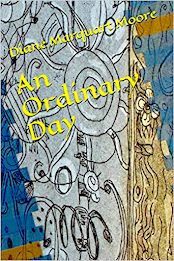
A modest person who has been among my closest friends for 35 years, Rose Anne says she doesn’t yearn for fame and recognition but enjoys her various occupations, all of which showcase her diverse gifts. She is a member of the Fortnightly Literary Club, the St. Martinville Garden Club, is a volunteer for the Bayou Teche Museum in New Iberia, a committee member for the Dave Robicheaux Literary Festival scheduled for April, 2016 in New Iberia, and sang in the choir of the First Presbyterian Church where her mother Helen has worshipped for many years. In her spare time, she works on her art, most recently in watercolors, and maintains a website on the Internet (www.raraphael.webs.com) that features a collection of art work she has done. She’s also working on a play based on one of my books, Goat Man Murder, which is set in her father’s birthplace, Natchez, Mississippi.

Rose Anne says she’s excited about being back in New Iberia where the cultural life is “amazing,” and New Iberia is excited about having her back in Teche country. She’s definitely one of those Renaissance women who’ll enrich the arts and culture in the Queen City, and we hope that her renewed thirst for bayou water will keep her here! 


Saturday, March 15, 2014

THE "RAPHAEL ROUTE" TO NATCHEZ

Raphael building, Natchez, MS
This week we took a short road trip with Helen and Roseanne Raphael, wife and daughter of Morris Raphael, (now deceased) to Natchez, Mississippi where Morris, a well-known southern author, spent his early life. Roseanne and I were also on a mission to find the site of the "Goat Castle" that I had written about in a mystery novel several years ago. Rosanne recently wrote an adaptation of my book, Goat Man Murder, for the theatre, so we had a mutual interest in locating the site.

Unfortunately, all that remains of the renowned Goat Castle, home of the famous couple accused (but not convicted) of the murder that rocked Natchez in the 1930's, is a street sign and a handsome brick home that had been built on the property where the Goat Castle stood for over 100 years. We viewed several thickets, one of which may have hidden the bullet-riddled body of the murdered Natchez woman on a humid August day in 1932.  This thicket is mentioned several times in my book and in Roseanne's play based on the much-publicized murder.

The Goat Castle case was a bizarre one, and the couple accused of the murder was just as bizarre. The eccentric pair had been prominent members of Natchez society but their social prominence and lifestyle had deteriorated during Reconstruction days. They lived together in a decaying mansion with a herd of goats that wandered in and out of the home and fed on antique furniture and books once treasured by the prominent antecedents of the "Goat Man." The couple lived near the murdered woman and aggravated her because of their decadent style of living, the goats often wandering onto her property. The murdered woman had also been an eccentric recluse who received "no visitors at her gate," and her stinginess had frequently been gossiped about in Natchez circles. This famous murder case was solved to the satisfaction of local authorities, and the Goat Castle couple was cleared but the story about them continues to shock visitors who come from throughout the world to enjoy the annual Natchez Pilgrimage or Tour of Homes. 

We traveled from the street site of the Goat Castle to a more pleasant site, the former home of Roseanne Raphael's grandparents, a white brick structure built by the Spanish government in 1786 and occupied by the parents of Roseanne's father, Morris, during his childhood and teen years. Morris's father, Khalil Monsour Rafoul (who later changed the family name to Raphael), migrated to the U.S. from Lebanon and sold general merchandise out of a Model T Ford, traveling to rural areas and to many of the old plantation homes in Natchez, selling wares from door-to-door. He was also a correspondent for the Arab newspaper, Al Hoda, published a book in Arabic, as well as articles that the Raphael family has never translated. "Monsour," as he was sometimes called, influenced Morris's love of books and writing and inspired his son to become a newspaper editor and author of many colorful books about Louisiana culture and history. The Raphael family story is chronicled in Morris's book, My Natchez Years, available at many bookstores throughout the South. 

We also visited historic Jefferson College in Washington, Mississippi, nine miles north of Natchez. The college has the distinction of being the oldest institution of learning in Mississippi (chartered in 1809) and was a prep school from 1866-1964, but it's now owned by the Mississippi Department of Archives and History. Washington is the site where Aaron Burr was arraigned for treason in 1807, as the village was the capital of Mississippi Territory from 1802-1817. In the small gift shop at Jefferson College, Roseanne discovered a copy of her father's book, My Natchez Years, and her delight at the discovery exonerated me because I had insisted that we visit the old site before we left the area. I had visited it years ago and had been impressed with the peaceful ambience of the old school surrounded by stately oaks. We talked about how the peacefulness seemed strangely antithetical to the fact that the site had been a military boarding school from the beginning of the 20th century until 1964—military drills and tactics had been part of the daily routine there.

Fig tree in winter
We also toured the "Oriental Villa," Longwood, which is the largest octagonal house in the U.S.; dined at Monmouth Historic Inn; and ate southern fried chicken and biscuits at the Carriage House in downtown Natchez. But the highlight of the trip was the walk around the old Raphael property, which led to the discovery of a huge fig tree, its bare, gray branches devoid of sweet fruit, that Khalil Monsour Rafoul had planted in memory of his beloved Lebanon during Morris's childhood.


Thursday, October 18, 2012

MIST

Louisiana Mist

This morning I woke up and looked out the window at a landscape veiled in mist, a familiar scene during the fall and winter here on The Mountain at Sewanee, Tennessee. It seems that I move between mists and mists. In the summer and fall, I live at Sewanee, a place where, as one of my poems reveals, “the mist stores itself/ between the dark tree trunks/obscures the valley, /the air dense and wordless.” In the winter I live in New Iberia, Louisiana where similar mists prevail. They were once captured in the paintings of Alexander Drysdale of New Orleans, Louisiana (1870-1934) who thinned his oils with kerosene to produce the shadowy landscapes that made him famous. In later years, photographer Debbie Fleming Caffery of south Louisiana was attracted to what she called “shades of mystery and shadow” and gained national recognition for the photography of sugar cane fields shrouded in Louisiana mists.
Writers and artists have always been intrigued by mist, the condensation of water vapor that dims and obscures landscapes, often hiding such brilliance as the flaming leaves now turning orange, yellow and red on The Mountain here. Tolstoy, Faulkner, Yeats, Dickens, to name a few writers, wrote about mists hiding the changes taking place in nature or obscuring human figures so that they weren't recognizable at a few yards. The famous novelist Stephen King wrote a novella entitled The Mist, a story about people experiencing terror in a small town in Maine when it was engulfed by mist, and otherworld creatures appeared.
Here on The Mountain, we get socked in by mists and delay going down to the valley for provisions of any kind until it burns off. Those socked-in days become ones involving indoor pursuits. I know that when I return to Louisiana, there’ll also be mornings when mist will hang over the slow-moving, brown waters of the bayou, and I’ll feel a certain malaise and sense of isolation provoked by the gray landscape.
The only places I've lived where mists didn't hover over the landscape are Ahwaz, Iran and Electra, Texas. In Iran, the sky seemed to always be like a blank sheet of blue copy paper – cloudless, mist-less, and filled with merciless desert heat. However, a calendar with a painting of a misty sky hung beside my old tin desk in the front room of my home in Melli Rah and made me nostalgic for the landscapes I’m now complaining about!
Mists have actually inspired my Muse to write poetry and full-length mysteries containing numerous mentions of “mist” which I used to portray the atmosphere of south Louisiana and Mississippi; e.g., (from Chant of Death), “Insects whirred monotonously and Malachi thought how like the monk’s chants their incessant steady singing was, only the insects never seemed to sleep…As his eyes adjusted to the darkness, he could see vague swirls of mist hanging over the lake…” Or from Goat Man Murder: “When Donald Majors returned to Pecan Grove as the sun pierced the morning mist, he discovered his sister Penelope already at breakfast…the long kitchen that faced a back gallery harbored a cheerful spirit not found elsewhere in the mansion…” (The latter mystery is presently being transposed into a script for a play by Rose Anne Raphael of New Iberia). Then there’s a scene from The Kajun Kween, my young adult book set in south Louisiana, in which Petite Marie Melancon goes into the swamp and encounters a loup garou (werewolf): “Out of the wispy mist ahead, something glowing yellow-white leaped up and floated toward the pirogue…”
There are many more allusions to mist in my writings, as well as in the works of more famous writers, and on such a misty day, I could probably spend the entire morning searching for such allusions. However, it’s 10 a.m; the bright fall leaves on the trees in my backyard are beginning to poke through the oppressive gray blanket, and I have packing to do to prepare for mists to come in bayou country.
Painting by my brother Paul Marquart
P.S. Coming Soon! A review of Dr. Victoria I. Sullivan’s and Susan Elliott’s newest book, Why Water Plants Don’t Drown, published by Pinyon Publishing, an excellent marsh plants guide with beautiful drawings and illustrations.