Showing posts with label Farda. Show all posts

Tuesday, February 26, 2019

THE ULTIMATE PURSUIT


Border Press announces the publication of Diane Marquart Moore’s latest book of poetry, The Ultimate Pursuit, which is now available. According to the blurb on the back cover, The Ultimate Pursuit includes explorations of a Persian transmigration inspired by the author’s lifetime readings of the Rubaiyat of Omar Khayyam and memories of Persia during her sojourn in this country, 1973-75.

This volume offers a brief glimpse into the culture and history of Persia in lyrics spoken by transmigrated souls, beginning with a rooster who crows day-long on the banks of a Louisiana coulee. The book offers a non-traditional excursion into a culture 2500 years old. The Ultimate Pursuit includes a section of poems about Persia selected from Farda, published in 2009. 

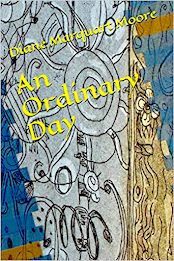
Moore’s deceased brother Paul painted the brilliant-hued cover and provided many paintings for covers of the poet’s 31 books of poetry. Rose Anne Raphael of New Iberia, Louisiana rendered the elegant, imaginative drawings within The Ultimate Pursuit.

During her sojourn in Persia, Moore wrote for The Yaddasht Haftegy in Ahwaz. She has also written non-fiction and young adult books about her life in the oil patch of Khuzestan Province.

A sample from The Ultimate Pursuit entitled “Unborn Tomorrow:”

“A lizard flicks his tail
against the dried mud wall,
always a wall surrounding the women
that men easily broke down;

she, receiving, still plays the lute,
her substance once a shrieking noise,
a rooster remade by the master potter
who gave her this garden —

the Holy Present — to live in,
a gracious trade,
her gowns as green
as the cypress in spring,

the purple desert
outside her window
a plot of dust
looming like tomorrow

into which she could become again,
a vessel broken into another face,
her veils cast down,
every former Self dying,

untrapped in one life
as she enters into dim awareness
of a mystical variance,
the moment of God.”


The Ultimate Pursuit is available online from Amazon and from Border Press, P. O. Box 3124, Sewanee, Tennessee.


Thursday, September 26, 2013

RUMINATIONS ABOUT PERSIAN RULERS

A few days ago, I attended morning services at St. Mary’s Chapel as I usually do on Tuesdays. It was a day overhung with thick fog, and I confess that my mind was as befogged as the outdoors when the lector began reading the Old Testament lesson. I was jolted awake by the names Cyrus and Darius, two Achaemenid kings who reigned over Persia during the fifth and sixth centuries BCE. I lived in Iran (contemporary name for Persia) during the 70’s and read a lot of history about the Persian Empire when it was at its apex during the two kings’ reigns, so the names caused me to pay more attention to the reading about Cyrus freeing the Jews from Babylon captivity and supporting the beginning of the rebuilding of the Jerusalem temple. I remembered that Darius, who followed Cyrus, continued generous funding for the reconstruction of this temple. This great Persian king ruled over forty different ethnic tribes in a domain that stretched from India into the Balkans, and his empire covered three million square miles.
Darius supported faiths and religions that were “alien” as long as they were peaceable, sometimes giving grants for their religious work. He favored Greek cults, supported Elamite priests, built the temple for the Egyptian god, Amun, and restored many other Greek temples that had been destroyed. In Persia he built Persepolis and Susa, promoted learning, agriculture and forestation, earning his name as the greatest of Persia’s kings. One of the sites I visited at Naqs-e-Rustam bore several inscriptions on Darius’s tomb, which was carved out of rock face, and the one that impressed me read: “I am Darius the Great King, King of Kings, King of countries containing all kinds of men. King in this great earth far and wide…”
The day following my reminiscences about Darius, I picked up the newspaper and read that the new president of Iran, Hasan Rouhani, has informed the UN General Assembly that he seeks to work with the international community, and Iran stands ready for “constructive engagement.” He has also freed political prisoners, replaced the military with the foreign ministry to lead nuclear negotiations, even acknowledged Jews worldwide by wishing them well on Rosh Hashanah. To me and many Americans, his words sound encouraging.
Having lived in Iran for two years, I have some sympathy for the people and the future of this country. My “what if” thoughts about Rouhani border on wild and crazy miracles when I express that I wish he’d take a leaf from history and would really return to the views of the ancient Achaemenian kings, Cyrus and Darius, who practiced tolerance for and generosity toward the faiths and religions of other countries.
However, most opinion pieces in the news are contrary to my “what if” feelings, and I do admit that I am skeptical about Rouhani’s declarations. A few years ago, I expressed that skepticism metaphorically in a poem entitled “Persepolis” in my book, Farda, the last verses appearing below:
“[Alexander] set fire to the state of the free,
the wealth of social accord,

destroying that final bloom,
imperial eastern civilization,

its art now reduced to building missiles,
its architecture to flimsy tents in hot wind,

ghazals about lost battles drifting…
across cloudy mirrors.”

The above picture is a segment of a painting done by Paul Schexnayder of New Iberia, Louisiana for the cover of my book, Sophie’s Sojourn in Persia.