Friday, January 30, 2009

THE PETITE ANSE AMATEUR


Last Sunday after Morning Eucharist at the Church of Epiphany, a friend and I began talking about Avery Island, one of the “islands” six miles south of New Iberia and four miles north of Vermilion Bay. The Island, of course, is not really an island but a huge mound that sits on top of a large salt dome, or monolith. It’s one of five famous salt domes of coastal Louisiana deposited by the sea some 200 million years ago. The Avery Island monolith juts upward 152 ft. above sea level, is eight miles deep, and one mile wide. Most people know the semi-tropical island for its red treasure, the world famous Tabasco sauce first made by Edmund McIlhenny.

The entire island is fascinating enough, but few people know about a small book given to me by Bobby and Margie Duncan, years ago, entitled the “Petite Anse Amateur.” The brown-paper covered volume was created from two bound collections of a little newspaper, three inches by four inches in format, published by children of the Avery-McIlhenny family. The children, aged 5 to 14, wrote this newspaper between the years 1879 and 1881 while living at Avery Island when the Island then bore the name Petite Anse Island…thus, the name of their newspaper bore a name with which many of us who live here in New Iberia today aren’t familiar.

The story of the “Petite Anse Amateur” centers around a tutor named James Mesner of Massachusetts, a Harvard graduate who was engaged to teach the Avery-McIlhenny children after Mrs. French, a friend of the family, died. One Christmas, Mr. Mesner presented the Avery-McIlhenny offspring with a small printing press he had received as a boy. He proposed that the Island clan print a newspaper as part of their education in English composition. At that time, the children lived in a sparse community that offered few intellectual pursuits, so they became excited about producing a newspaper of their own, quickly ordered printing paper, and began obtaining subscriptions and advertisements.

The opening article in the “Petite Anse Amateur,” contains a charming description of the Island written by Daniel Dudley Avery, Jr., complete with a notation about the famous salt mine that had first brought prosperity to the occupants of the Island and brief mention of how it fared during the War Between the States when a Union attack on the salt works sent the family fleeing to Texas. After a hiatus, family members returned and, ten years later, they revived the salt mining industry, which is still in operation today.

In the introduction to the “Petite Anse Amateur,” editor and publisher of the small facsimile of the newspaper and a descendant of an Island family, Kenneth Avery Ringle, describes the Island of the late 19th century as a place of abundant game and bayous filled with fish, crabs, and shrimp. He also mentioned the Avery-McIlhenny families’ nightly readings of the novels of Sir Water Scott and James Fenimore Cooper. Of particular interest to readers is the brief biographical sketch of E.A. “Ned” McIlhenny who became an Arctic explorer, founder of one of the nation’s first bird sanctuaries, which helped save the snowy egret from extinction, and promoter of the Tabasco sauce industry. E.A. McIlhenny also became nationally recognized as a big-game hunter and horticulturist.

Only 500 copies of the “Petite Anse Amateur” were printed at Allethaire Press and a limited number of them were bound in leather by Claudia Cohen, and I feel fortunate that Bobby and Margie Duncan presented me with this copy of a volume we’d probably call an “alternative newspaper.” Since I now live part of the year on The Mountain at Sewanee, TN., I was excited to see that one of the ads the children solicited for the “Petite Anse Amateur” was a small notice about the University of the South at Sewanee, which touted a grammar school, academic and theological departments in full operation, perfect climate, and moderate terms for schooling.

‘Sounds ideal, but judging from reports of sub-freezing temperatures on The Mountain right now, claims of a perfect climate at Sewanee might be somewhat exaggerated! And parents of offspring who attend the University of the South today would hardly call the tuition moderate!

Sunday, January 25, 2009

NOTHING FOR FREE


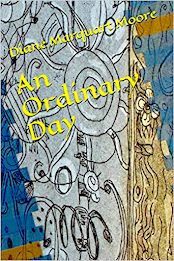
Two of my latest books from Border Press became available at amazon.com this week. One is a young adult book, the sequel to MARTIN’S QUEST entitled MARTIN FINDS HIS TOTEM, and the other volume is an adult “cozy” mystery set in Louisiana entitled NOTHING FOR FREE.

MARTIN FINDS HIS TOTEM was reviewed in an earlier blog and involves young Martin Romero’s fascination with voodoo following a major Louisiana hurricane that almost sweeps away his Grandmother Eulalie’s treating shed while she is in it, a disaster which causes her to become ill. Grandmother Eulalie’s opposition to voodoo influences Martin to search for a native American totem to help him extricate himself from his fascination with voodooiennes so that he can continue his work as a traiteur using native American and Cajun healing practices.

The second book, NOTHING FOR FREE, features Kate Patton, a woman who leaves her job as food editor with a New Orleans newspaper the day her husband threatens her life while they are netting crabs in Lake Pontchartrain. She flees to Robeline in central Louisiana, intending to write about food specialties of the area, and lands a job as a columnist for the Robeline newspaper. Kate is invited to dinner at Roselea Plantation, a place to which writers and painters often retreat to pursue their artistic projects. During a dinner held at Roselea, Kate witnesses the poisoning of a guest writer, and Amelia, a descendant of the People of Color, points a finger at several of the boarders at the plantation. When a plantation worker becomes a second victim of poisoning, local police arrest a guest painter, and all visitors become suspect. Kate, frightened by Amelia and her brother performing suspicious dances in the backyard of Roselea Plantation, is led to uncover a mystery involving the old plantation and its eccentric owner.

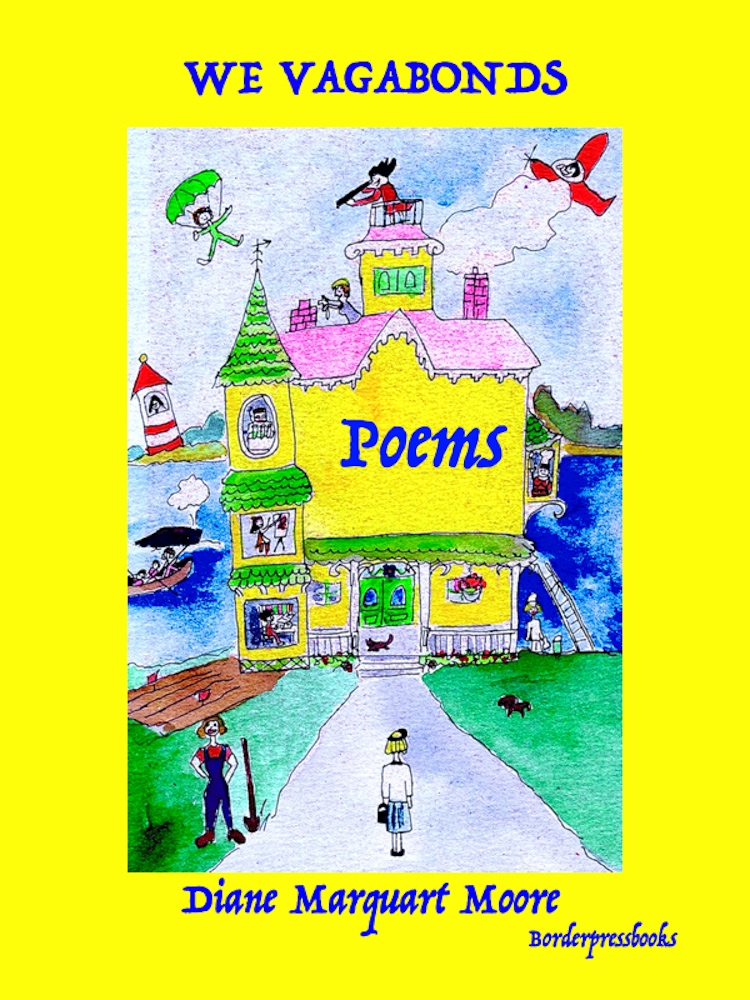
I’ve been working on another writing project daily, and the publishing of these two books is almost anticlimactic, but I’m pleased to see their bright covers on amazon.com. Both covers are derived from paintings by my brother Paul, who lives in California, and designed by my grandson Martin, who practices landscape architecture in Madisonville, Louisiana.

Readers can order copies of both titles, MARTIN FINDS HIS TOTEM and NOTHING FOR FREE, from amazon.com. I think you’ll enjoy my latest books… they’re suspenseful “reads.”

If you’re interested in other books I’ve written, log on to the Border Press (www.theborderpress.net)site. Thanks for being part of my reading public. Young readers have been asking for a sequel to MARTIN’S QUEST for several years, and might appreciate your ordering copies of MARTIN FINDS HIS TOTEM for them. NOTHING FOR FREE is my first adult fiction book to be published.

Friday, January 23, 2009

THE GRAND TOUR IN LITERATURE


Back in the late 80’s, I returned to college for a spell and was fortunate enough to land in honors classes at ULL in Lafayette, Louisiana, one of which particularly absorbed me, a course in American Literature taught by Dr. Mary Ann Wilson. Mary Ann not only re-awakened my interest in American Literature, she encouraged me many times when I went to her with complaints about my feelings of inadequacy as an older student. I remember that she made “The Scarlet Letter” come alive in a way that no teacher had ever been able to do, and, shortly after, when the movie by that name appeared, I knew every detail of the characters and plot as the film unfolded. She later became a close friend, and three years ago, after I had become an archdeacon in the Episcopal Diocese of Western Louisiana, when I had to deliver the homily for an incoming class of deacons, I turned to her for a reading and critique of the sermon. Again, she gave me wonderful support for the work, and I was inspired to deliver a homily she deemed “excellent.”

Mary Ann is a small, dark-haired woman of Italian descent who has published several critical works, one of which concerns a major 20th century American, Pulitzer Prize winning-writer, Jean Stafford, and she’s presently writing about the Louisiana literature of Grace King, New Orleans writer of the late 19th and early 20th century. Mary Ann is one of the best advocates for the advancement of women I know, personally, and has fostered Women’s Studies at ULL for many years. She has received the award for being a distinguished professor at ULL, and is an endowed Professor in the Humanities. Her credentials stretch further than this brief acknowledgement, but it’s perhaps expansive enough to call her the quintessential professor of the Humanities. A lunch session with her always inspires me to write and study. She’s an ardent proponent of T. H.White’s comment in The Once and Future King: “…the best thing for being sad is to learn something…”

Shortly after the New Year, Mary Ann invited me and former ULL professor, Vickie Sullivan, to lunch at a Thai cafĂ© in Lafayette and dessert afterwards at her home on Duncan Drive. She showed us a flier that she had prepared for a Study Abroad Program during the Summer of 2009 in Florence, Italy. The studies are English courses 206, American Literature II cross listed with English 435, American Realism and billed as “The Grand Tour in 19th century American Literature.” She advertises the courses as an exploration of four 19th century American writers – three male and one female – who were seduced by Italy. The writers include Nathaniel Hawthorne (why am I not surprised?), Mark Twain, Henry James, and Edith Wharton. Students will visit the gardens and villas of these writers while participating in their studies.

In English 380/Honors 385, Mary Ann has set up a course entitled “Desiring Italy: Women Writers and the Italian Experience,” an exploration of la dolce vita from a woman’s perspective. “Come with us to see how women writers in Italy write about food, about fashion, about landscape, about men,” she writes. … “What is it about this old world setting that inspires women writers and often changes their lives?” she asks. “From antipasto to dolce, we will savor the tastes, sounds, and sights of Italy through the lens of women writers…”

What a wow summer this should be! Students don’t need to be ULL students, but they do need to register as ULL students the summer they take the courses, May 27-July 8, 2009. Cost of $6600 will include round-trip airfare to Italy, transfers to and from the airport, housing for six weeks in furnished apartments with kitchens in the city center of Florence, summer school tuition; field trips to Pisa, Lucca, Siena, San Gimignano, and a four-day trip to Rome with admission to museums, palaces, and churches. However, students will be responsible for their own meals during the program. Students can earn up to nine hours of college credit. For more information, contact: Dr. Mary Ann Wilson at pasta@louisiana.edu. This is a once-in-a-lifetime experience with an outstanding guide and teacher!! P.S. She knows how to speak Italian.