Friday, July 10, 2009

THE HOLY PRESENT


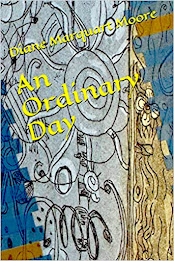
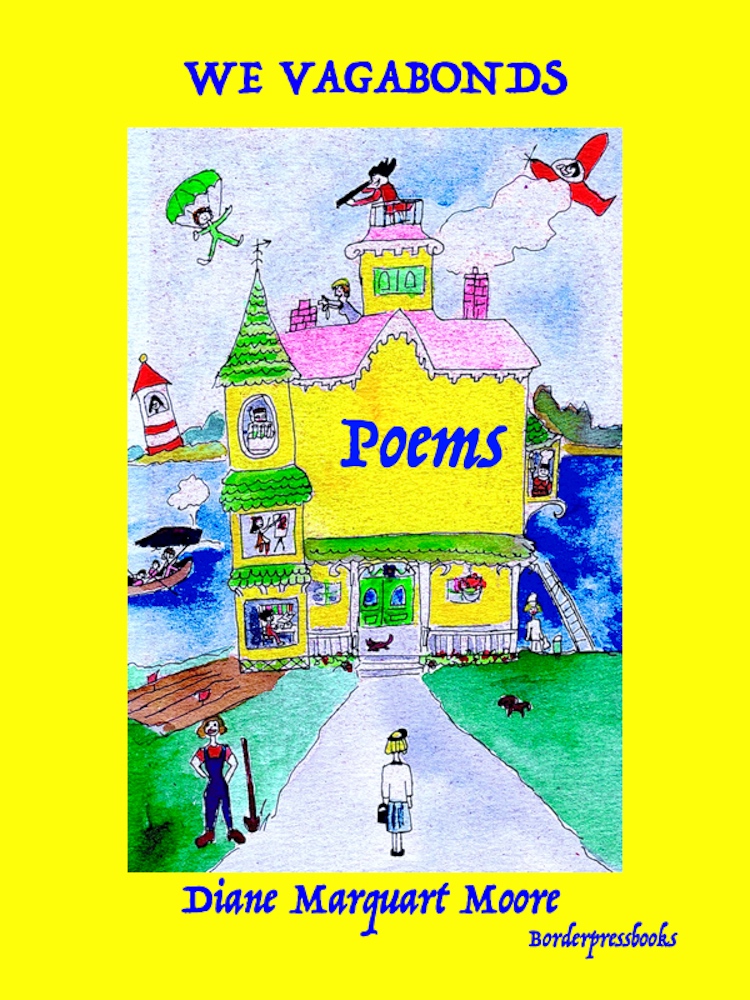
It’s difficult for me to let a year pass without putting together a chapbook of poetry, and next week, Border Press will publish another volume of my poetry that includes two collections. One collection includes poems about general topics; the other contains poetry about Iran. When the news about Iran’s botched presidential election was broadcast, I felt compelled to ready a book I had written last year entitled FARDA, poems about my sojourn in this mid-eastern country, 1973-75, before the Shahanshah was deposed.

In June I wrote a blog and mentioned the chapbook, publishing one poem about Persepolis, one of Iran’s historic ruins. Today, I’ll include a poem from THE HOLY PRESENT at the conclusion of this blog. Some of the poems in THE HOLY PRESENT appeared in previous blogs; other unpublished ones cover a period ranging from the 1970’s to the present and include poems about family, friends, life in Tennessee, musings about the human psyche, etc.

The cover of this chapbook is, again, a copy of an oil painting done by my brother Paul and is designed by my grandson Martin. Paul’s mystical painting aptly expresses the concept of THE HOLY PRESENT and was rendered before he developed glaucoma and became unable to see well enough to paint. I’m glad I have some of the art he produced when he could see the progress of his renderings of landscapes and seascapes – and the imaginary ones that emerged from memories and fantasies. He lives in his favorite place, California, at the edge of the Pacific Ocean, surrounded by redwood forests.

Paul began drawing when he was a young boy and also painted pictures to illustrate the stories my father ALWAYS told at bedtime, the varying adventures of a stuffed bear named Jimmy Bear. He actually put together a cardboard book with the Jimmy Bear drawings, but his first creation has been lost during the years following the death of my mother and father. I have more poems to share and a few more of Paul’s paintings that I hope to use on the covers of books before I exhaust his store of art.

Here’s a “minimalist” poem from THE HOLY PRESENT:

SECURITIES

Warrior sparrow beaks the web of a spider,
a net that holds dead caterpillars,

attempts to puncture the impenetrable
cocoon of dead prey and, daunted, flies away,

wing rising, seeking repositories of food
available through ruptures in loose skeins

of those who don’t protect their holdings,
who resist the spinning to risk all.

Sunday, July 5, 2009

ON THE RIGHT TRACK


Just south of the Great Smoky Mountains National Park lies Bryson City, North Carolina, population 1411, a small village in the Appalachians not far from hardwood forests and the white waters of Nantahala River. During the Fourth of July week-end, we visited this town and spent three restful days at West Oak Inn, enjoying 80 degrees temps in the daytime and 62 degree temps in the evening. Bryson City is located in Swain County, which includes over 40% of the Great Smoky Mountains National Park and is near Fontana Lake, a site that boasts the highest dam east of the Rocky Mountains.

I visited Bryson City in 1983 when it was just a small hamlet with a declining economy and stayed at the Fryemont Inn, now a major hospitality center in town. In 1983, Bryson was a dry (no liquor) town in a dry county, and during my recent visit I was surprised to see wine lists in restaurants and alcohol being sold in local stores. According to a clerk in the Smoky Mountain General Store, the conversion of the town from “dry” to “wet” didn’t alter the economy so much as the coming together of many entities to form the Great Smoky Mountain Railway which began running excursions to attract visitors to Bryson City. Today, over 200,000 passengers enjoy rides through beautiful scenery along the Tuckaseigee River, crossing over the Fontana Lake Trestle and into the Nantahala River Gorge.

I’ve been a train lover since childhood (when I coveted my older brother Paul’s train one Christmas), and I revel in the progress being made to restore some of our railways in the U.S. The American Heritage Railways purchased the Great Smoky Mountain Railroad in 1999, and the railroad schedules nearly 1,000 excursions yearly: Mystery Theatre Dining excursions, a wine-tasting train ride and Gourmet Dinner trips. For children, the railway features railfests like “Peanuts, the Great Pumpkin Patch Express.”

I visited the Smoky Mountain Trains Museum, which featured 7,000 model trains and one model train layout that spanned 21’ x 45’. The museum showcases models of trains from the earliest days of rail transportation to the present day, and the sleek replicas of trains made the small electric express I display every Christmas look like "The Little Engine That Could." The museum was a bit of unexpected serendipity for our week-end adventure in the North Carolina mountains.

The museum model trains evoked a bit of nostalgia in me as I remembered the last train ride I made during the 70’s when I traveled on the Iranian Railway from Ahwaz, Iran in the desert to Shimiran at the foot of the Elburz Mountains in Tehran. It was a precipitous ride on narrow rails overlooking deep gorges not unlike the Nantahala Gorge, which is framed by high cliffs that keep the gorge shadowed most of the day. During the Iranian train ride, we stopped at Qum at daybreak and watched women shrouded in chadors fill their water jugs at a small well near the train stop before we went into the dining car and ate a breakfast of crisp nahn, orange marmalade, and tea. The overnight train ride occurred on Friday, the Muslim Sabbath, and I was surprised to see Iranian men consuming many bottles of Tuborg beer during the trip.

I didn’t schedule a train ride on the Great Smoky Mountain railway, but I hope to return to Bryson City for a mystery dinner train ride in the near future. My one book purchase during the Bryson City adventure was a volume entitled TOURIST TRAINS GUIDEBOOK, a guide to railroad museums and places where trains run throughout the U.S. In case any of you train hobbyists are interested, the book describes 453 excursion trains, trolley rides, rail museums, and historical depots across the U.S. For those who once aspired to be train engineers, some places allow aspirants to operate a locomotive.

From my chapbook MORE CROWS, here’s one of my train poems:

FEAR OF DYING

Midnight train shrieks,
a warning signal,

the whistle of velocity
moving toward that final destination,

and in cold darkness, an old redcap
announces this place...

too far from home.

Monday, June 29, 2009

SECTION 3, ROW P, SEAT 8, GRAND OLE OPRY


A week’s hiatus in blogging seems like a month to me. I’ve been traveling apace around TN, showing my daughter Stephanie and her husband Brad the sights and sounds of my second home state. As a kick-off and with the heat index over 100 degrees, we engaged in a hot time in Bell Buckle, TN, the day following their annual RC-Moon Pie Festival. Twenty thousand people formed a big crowd on the Main Street of Bell Buckle businesses – the only strip of businesses in this small TN town. At this event, the largest moon pie in the world was cut, and we were sorry we hadn’t gone on the actual day of the slicing, but we were happy we hadn’t been part of 20,000 people milling around the antique shops and trying to get a bite to eat at the one restaurant in town, The Bell Buckle CafĂ©. The festival featured a king and queen enthroned on the back of an open convertible, similar to those in a Mardi Gras parade in Louisiana. This royalty threw moon pies to the crowd rather than beads. It was a momentous beginning for the vacation before we departed for Nashville and the Grand Ole Opry the following day.

I’ve been resident in TN for three years, and last week I enjoyed my first introduction to the Music Capital of TN. We stayed at the Gaylord Grand Ole Opry Hotel with its 40 acres of indoor gardens, waterfalls, a river that features a Delta flatboat, and a 27,000 sq. ft. fitness center. We had two rooms in the 2881-room hotel and enjoyed shuttle service to downtown Nashville and to the Grand Ole Opry. Several times we lunched at an Irish pub and at a Jack Daniels saloon in the complex but avoided the Godiva chocolatier, as well as the clothing and gift shops scattered throughout the complex.

I’ve never been a big fan of country music and have memories of being a bored teenager spending Sunday afternoons with the boyfriend of the moment listening to Hank Williams and Roy Acuff and lifting my “above it all” nose, denouncing the music as “hillbilly wailing.” At 74, I admit that I became deeply interested in this American phenomenon called country music and was fascinated with lyrics that recall old English ballads. I was surprised to learn that teenage Elvis Presley made his first and only performance at the Grand Ole Opry and was told by one of the managers that he should go home and continue his truck driving career. Presley swore never to return to the Opry and didn’t.

The Tuesday night performance I saw featured two musicians who were inducted as members of the Grand Ole Opry onstage that night, The Montgomery/Gentry duet, one of whom had emerged from a severely dysfunctional family and struggled ten years to reach the pinnacle of his career. Little Jimmy Dickens, who became popular in 1948, also appeared in his famous rhinestone-studded outfit to share his country humor. Dickens, a country music legend began his career crowing like a rooster on an old W.VA radio show and is famous for his unusual ballads (how about “Sleeping at the Foot of the Bed?”).

The magic for Grand Ole Opry performers is the six foot circle of dark oak wood on the Opry stage that is cut from the old Ryman Auditorium stage, former home of the Opry. New members stand on the spot where performers like Ernest Tubb, Hank Williams, and Patsy Cline once stood. A radio show since 1925, then sponsored by the National Life and Accident Insurance Company, the Opry was held in a number of homes before it settled in 1943 at the Ryman Auditorium. Ironically, The Ryman was built by a fast-living riverboat captain, Thomas Ryman, who got religion and constructed a huge building to house religious meetings and visiting evangelists! The Opry moved to a multi-million dollar complex in 1974 where we attended a two-hour performance and were enveloped by the sounds of music broadcast on a radio program that is the oldest continuous radio program in the U.S.

The present-day success of star music performers at the Opry reminds me of the success of popular American writers sponsored by media conglomerates and MBA’s who now control the publishing industry. In a book entitled WRITING IN AN AGE OF SILENCE, Sara Paretsky writes: “A star is basically a brand. A brand is… a content provider, whose name on the package guarantees a sale…”However, I have to admit that as I sat in the Opry auditorium, I felt the touch of ghosts of some mighty legends who helped create this phenomenon called “country music,” musicians who were blissfully unaware of marketing that concentrated on “brand,” “package” or “content providers” --with guitar and fiddle, sans electronic equipment, they performed music that expressed quality and individuality – otherwise known as Art.