Thursday, June 4, 2009

FARDA, THE NIGHTINGALES WILL SING


A few years ago, I read an article about one of my favorite poets, Naomi Nye (author of NINETEEN VARIETIES OF GAZELLE POEMS OF THE MIDDLE EAST). The article, written by Robert Hirschfield in “The Progressive” magazine, mentions that Nye, who is American-born but of Palestinian descent, writes poetry that reflects a deep listening quality. He also talks about Nye’s admiration for Shirin Ebadi, Iran’s Nobel Prize winner, and he quotes Ebadi: “When countries are in conflict, political conflict, it is more important than ever to share culture, to share literature.”

Nye’s postscript to this remark is simple counsel: “Read Rumi…poetry humanizes us in a way that news or even religion has a harder time doing…” I’ve read and re-read those lines many times, and a short time ago, inspired by Nye's comments, I wrote a volume of poetry about my sojourn in Iran during the 70’s. I had written two other books about my two-year experience there, but this was the first collection of poetry about this mideastern country that I had composed.

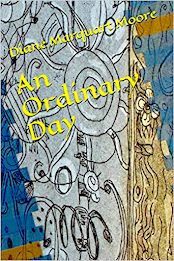
Next month, Border Press will issue a new chapbook of poetry entitled THE HOLY PRESENT and FARDA, two collections in one volume; the latter one being the book of poetry about Iran. Again, the cover of the book is a painting rendered by my brother Paul and designed by my grandson Martin. The painting above is by Oscar Ortiz and is actually the cover of my first book, IRAN: IN A PERSIAN MARKET (now out of print).

Here is a foretaste of my new chapbook, the last poem that appears in FARDA:

AT SADI’S TOMB

Sa’Di retired on the hill of Pahandez,
orator, poet, pilgrim to Mecca,

twice smashing idols in temples there,
not unlike His Holiness Christ in Jerusalem,

and not unlike St. Francis
he fed the poor, birds, and animals,

yet, was adored by Shiraz princes.
His mausoleum destroyed and built again,

a compound, underneath flowing
spring water as pure as his moral counsel,

pumped to the surface for his rose garden.
Sa’Di, an Isaiah of Persia,

chiding the kings to show justice and equity,
spoke with the heart of a deacon,

serve humankind, he exhorted,
protect the weak and oppressed,

penning 1300 pages of ethical verse,
moral excellence,

studied by Indian and Turkish monarchs,
proclaiming in intrepid lyric,

if we are unaffected by the afflictions of others,
we are not worthy to be called human.


As I write this, a news alert from "The Washington Post" informs me that President Obama, now in Cairo, says that "America and Islam share common principles of justice, progress, tolerance and the dignity of all human beings." Shades of Sa'Di?

Tuesday, June 2, 2009

THE FAMILY BUSINESS


For forty years, my Grandfather Paul Greenlaw, owned and operated a firm called Motor Sales and Service, a Ford truck and car enterprise, beginning with the advent of Henry Ford’s Model A and ending in the period following WWII when he was too ill to continue with the Ford franchise. I guess that cars are “in my blood” as I’ve always liked them, especially classic cars – and particularly Fords of the 1939 – 1947 vintage. As I’ve mentioned in a former blog, in 1946 our family traveled to Diddy Wah Diddy (California) in a 1941 sky blue Ford coupe, complete with waterbags on the hood for driving through the desert and with enough room to accommodate six people – two adults and four children, not to mention a cocker spaniel that lay at my feet the entire trip. When I look at pictures of that coupe online, I wonder how we all fit in, but photos of the back seat reveal a lot of space under that rear hump on the back of the coupe.

My father sold the coupe in 1949 when the style of the Ford became square, and none of us ever liked the ’49 car as much as the old hump-backed coupe. Nowadays, I could purchase a replica of the ’41 coupe for approximately $38,000, but I don’t love the car THAT much and will just have to live on the memory of it by attending movies such as “Walker” starring a red ’41 Ford coupe. Those wide whitewall tires take me back because my brother Paul and I, as teen-agers, once spent a lot of time scrubbing them white before we were allowed to use the car for double dates in Franklinton, Louisiana.

As far as I can tell, from stories told by my mother, my grandfather sold more Ford autos when the Model A was introduced. It’s reputed to have had streamlined Lincoln-like styling and a four cylinder engine, with prices beginning at $460. Nearly 5,000,000 of this model were sold until the production of it ceased in 1932. A dozen years later, I discovered an old gramophone in my grandfather’s attic and spent hours listening to a thick-bodied record of “Henry’s Made A Lady Out of Lizzie,” the promotion song for the wonderful Model A.

When business at Motors Sales and Service waned during WWII, I can remember going down to the office with my grandmother every afternoon around 3 p.m. -- after we had a nap and when we had bathed and dressed properly for “town.” In the office, I was allowed to run tapes on the sale of non-existent cars, write letters on the company stationery, and roam around in the shop attached to what we called “The Garage.” The aroma of oil and gasoline are still pleasing to me and are redolent of a family business that finally failed due to the hiatus in WWII car production.

Today, I feel relieved that Ford has avoided the bankruptcy of GM by mortgaging its assets to borrow 25 billion dollars and stay afloat. It’s the sole automaker to survive the economic downturn without government help and remains the healthiest Detroit automaker. I wish them continued health – although I have to admit, I drive a sky blue hybrid Honda! Below are the last two verses of a snippet about cars from a poem entitled “Classic Car Show” in my chapbook SOARING:

“The motors are noisy,
vrooming loudly,

overlaying everything,
the engine messaging,

Don’t stop until you reach central Texas,
climb above Buchanan Dam again,

retrace your childhood,
not regressing but recapturing innocence,

and perhaps that’s what classic cars are:
recapturing innocence.

Classic cars, a sheen so bright,
road dust a sacrilege,

rain an impiety,
evangelizing so well

the mission of adventure,
advertising leave it all behind,

just go and find
the soul complete…

in a V-8 engine.

Monday, June 1, 2009

SCOUTING SMALL CHURCHES


In the late 19th and early 20th centuries, transportation in the Tennessee hills and hollows was limited, and people walked or traveled by horse and wagon to church on Sundays. Because churches had to be built within a short distance from a cluster of homes, many of the worship centers sprang up in isolated spots in coves, hollows, and wooded areas. Episcopal missions and tiny churches burgeoned in middle Tennessee, and one of them is a small chapel approximately 30 minutes’ drive from Sewanee, tucked away on Ladds Cove and Kirby Tate Road with an address of Battle Creek, TN, a place reminiscent of a Civil War bivouac.

When we descend the Mountain toward Jasper and Kimball on Interstate 24E, we always encounter 18 wheelers and other vehicles whizzing down and causing me to have tachycardia, so I’m glad to get off the highway and explore some quieter road and calm down. In the three years we’ve been up here, we’ve passed the Martin Springs exit numerous times, wondering what serendipity lay down that road. Saturday, we set out, purposefully, to explore the region. On the recommendation of several friends, we sought an old mission, St. John the Baptist Episcopal Church, served by one of our friends at St. Mary’s of Sewanee, The Rev. Dr. Susanna Metz, who specializes in small church ministry and who was formerly Executive Director of the Center for Ministry in Small Churches.

Of course, we went in the wrong direction and had to double back on a road marked “Dead End,” (but which did not dead end at the small stone building that is St. John the Baptist Church). After we descended deeper into dense woods, we came upon a small clearing and there stood the chapel, resplendent with a typically Anglican, bright red door. The church is surrounded by a white picket fence, and is made completely of river stone, or creek stone, as we spied huge boulders of the same type of rock in the creek running alongside the road. St. John the Baptist isn’t far from Poor Hollow Farm where a hay baling operation is located, but we saw few residences along the way. Three huge white dogs ran out to greet us – strange furry creatures that looked like hybrids of huskies, German shepherds, and Labrador retrievers. When they greeted us, stretched to full length on hind legs, one of them was almost my height and nearly toppled me with his vigorous welcome.

Parishioners in this small church keep their saints huddled around them -- the front yard of St. John the Baptist is filled with tombstones and serves as the cemetery. We surmised that a huge rock standing in the yard was awaiting carving of the church’s name; otherwise, no signage welcomes visitors. Against the bright red door, a stone had been placed, and the dogs circled us as we gingerly removed the stone and went into a rather gloomy interior. Ten pews comprised the seating arrangements, and I estimated that a crowd of 50 might fit on a good Sunday. There were two altars – one against the wall, signifying the days when a priest celebrated with his back to the congregation, and one in front of that relic that allowed for priest and server to move around behind it to celebrate the Eucharist.

The cathedral ceiling of the church creates an illusion of space, and the huge, hand- hewn rafters appear to be very sturdy, having weathered 75 years. Only one service is held on Sundays at 10 a.m., with The Rev. Dr. Susanna Metz officiating, often after she has celebrated at St. Mary’s of Sewanee. Susanna is also a professor of Contextual Education and Field Education at the School of Theology, Sewanee, does workshops in music, visioning and goal setting, marketing, and in understanding the context of the small church in the Diocese of East Tennessee – and the larger Anglican fold, which includes the British Isles.

Susanna preaches on Tuesdays, a weekday when we usually attend the Eucharist at St. Mary’s and is the priest I’ve described as a woman with long auburn braids who wears bright colors and rings on every finger. She has given several pithy sermons about “love” and defines the love Christ speaks of as loyalty and commitment and not the “Valentine heart thing but a love committed to living the kind of life Christ lived.” She’s the perfect priest for St. John the Baptist and speaks extemporaneously most of the time – looking down at the open Bible, shutting her eyes and musing, then opening them and saying, “hmm,” letting the Spirit direct her spontaneous thoughts. She’s in Exeter working on a dissertation about small churches in England right now, and we miss her.

If you’re a rambler and frequently explore old structures, St. John the Baptist is a unique small church you might like to visit. The big white dogs are biddable, and the door is always accessible. Just roll away the stone and go inside for a little resurrection and renewal meditation.